Wall Painting Design: The Complete 2025–2026 Guide to Trends, Techniques, and Finishes

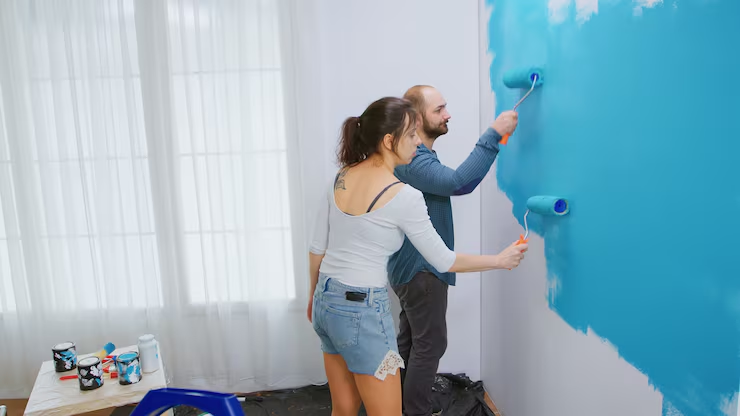
The wall as a surface has undergone a remarkable transformation. For decades, walls served as mere backdrops—neutral screens for furniture and artwork. Today, they have become inhabited elements, tactile surfaces with material presence that actively shape how a space feels and functions. This comprehensive guide explores every facet of wall painting design, from the latest trends and colour palettes to application techniques, finishes, and practical considerations for 2025–2026.
The Death of the Flat Wall: A Paradigm Shift
The most significant shift in wall painting design is the quiet rebellion against flat, predictable surfaces. Architects and designers are once again elevating the wall into an inhabited element rather than a cosmetic one. The rise of open-plan spaces, where circulation was prioritized over enclosure, led to walls becoming screens and backgrounds rather than tactile surfaces. This, combined with the need for “Instagrammable” backdrops, encouraged smooth plaster finishes and neutral paints to dominate.
That era is ending. “Flat paint feels too predictable for 2026,” explains Lauren Saab, founder of Saab Studios. “People want walls that look alive, with depth, movement, and a handmade feel”. The shift is toward layered finishes and pronounced surfaces that add richness and dimension to interiors.
2026 Paint Trends: What’s In and What’s Out
What’s Fading
| Trend | Status |
|---|---|
| Single painted accent walls | Losing charm; clients opting for more dramatic approaches |
| Flat matte paints | Being replaced by softer finishes like limewash and polished plaster |
| Shiplap | Officially over; designers breaking up with the farmhouse staple |
| Stark whites and clinical grays | Being replaced by warmer, more inviting neutrals |
What’s Gaining Momentum
1. Colour Capping
Move over colour drenching. Colour capping is the new painting technique taking over interiors in 2026. This technique involves painting a band of colour around the top part of your walls in a shade from the same palette as the adjoining wall and ceiling. The result draws the eye upward, making walls feel taller and spaces feel bigger. “Colour capping is set to be a big trend in 2026, as homeowners look for layered, bespoke ways to express personality in their interiors,” says Kunal Trehan, Interior Designer & Founder of Touched Interiors.
2. Darker Limewash
After nearly five years of whitish, chalky limewash dominating interiors, designers are shifting to darker, more dramatic applications. Saturated greens, deeper pinks, aubergine, and smoky graphite are replacing muted neutrals. Darker limewash is a signifier of the “lived-in look,” named the number one trend by Vogue in its 2026 forecast. The mineral-based coating produces a mottled look with soft colour variations that shift in response to light, ensuring walls never feel static or one-dimensional.
3. Tone-on-Tone / Colour Drenching
The tone-on-tone approach—often referred to as colour drenching—is here to stay in 2026. Homeowners are increasingly inclined to paint walls, ceilings, and trim in a single, immersive shade, creating a cocooned, high-impact atmosphere.
4. Layered Finishes and Texture
“Natural influence is taking a more textural, tonal form,” explains Floor & Decor’s 2026 Design Trends Forecast. “Colors drawn from earth, sand, and sky are interpreted through layered finishes and pronounced surfaces”. Designers are moving away from flat paints toward limewash, polished plaster, Venetian plaster, and other textured finishes.
2025–2026 Colour Palettes
Best-Selling Colors of 2025 (Behr Data)
Based on nationwide sales data from paint giant Behr, the most popular paint colours of 2025 spanned every colour family:
| Colour Family | Examples |
|---|---|
| Beige and Cream | Warm, inviting neutrals |
| Whites | Swiss Coffee, Blank Canvas (warm off-whites) |
| Browns | Grounded, earthy tones |
| Reds and Pinks | Bold, saturated hues |
| Blacks | Dark, dramatic statements |
| Grays | Warmer, less clinical |
| Blues | Rich, jewel-inspired |
| Greens | Deep, nature-inspired |
2026 Colour Direction
Warm Neutrals Dominate
“Creamy whites and soft off-whites such as Swiss Coffee and Blank Canvas are popular as homeowners gravitate toward warmer neutrals that feel comforting and inviting,” says Kayla Kratz, Behr’s senior director of colour and design strategy.
Earthy and Nature-Inspired Tones
Earthy, nature-inspired tones such as grounded greens, warm browns, and soft terracottas are bringing a sense of balance into the home.
Jewel Tones Gain Momentum
Jewel-inspired hues like deeper greens and rich blues are gaining momentum, offering more personality while still feeling livable.
Rich Browns and Deep Greens
“Rich browns paired with creamy whites and soft beiges will be prominent, while deep greens and burgundy tones offer a nice visual contrast when used to highlight elements such as doors and trim”.
The Common Thread: Warmth and Depth
Even with paler tones in the white or grey categories, people are gravitating toward enveloping hues that feel cozy and welcoming instead of stark or clinical.
Wall Painting Techniques and Finishes
Understanding Paint Sheens
Paint finish (sheen) significantly impacts how colour appears and how durable the surface is. Higher sheens reflect more light, making colours appear lighter and more vibrant. Matte finishes soak up light, giving a more muted, rich effect.
| Finish | Sheen Level | Best For | Characteristics |
|---|---|---|---|
| Flat/Matte | Lowest | Low-traffic areas, ceilings | Velvety, non-reflective, hides imperfections |
| Eggshell | Low | Most interior walls | Soft sheen, easier to clean than matte |
| Satin | Medium | High-traffic walls, trim, doors | Durable, washable |
| Semi-Gloss | High | Cabinets, trim, bathrooms | Highly durable, moisture-resistant |
| High-Gloss | Highest | Accent pieces, furniture | Mirror-like shine, extremely durable |
Popular Decorative Techniques
1. Limewash
An old-school technique using paint made from limestone, water, and pigments. Limewash gives walls a chalky, slightly cloudy, two-tone look. The technique involves painting in a figure-eight pattern to merge “clouds,” working fast to leave a wet edge as sections are blended together.
2. Venetian (Polished) Plaster
Lime-based, made from putty, marble dust, and pigments. Creates a thicker, more textured effect applied in thin layers with a trowel.
3. Sponging
Using a natural sea sponge to dab paint over a base coat, creating a soft, mottled finish. Layering different colours—starting with a darker base and working up to lighter tones—adds richness and depth.
4. Ombré
A subtle gradient transition from one colour to another, creating a dreamy, sophisticated effect.
5. Geometric Patterns
Clean lines and basic shapes such as rectangles, squares, or diagonal divisions. This style is ideal for those who prefer a structured, modern look without overwhelming patterns.
6. Two-Tone Split Walls
Painting the top and bottom halves of a wall in different colours or different shades of the same colour.
7. Stenciling
A fantastic way to add intricate designs without needing freehand painting skills.
Design Approaches and Applications
Beyond the Single Accent Wall
The trend of single accent walls is losing its charm. Designers and homeowners are now opting for more dramatic approaches:
Colour Drenching: Painting walls, ceilings, and trim in a single, immersive shade.
Layered Finishes: Combining textures and tones across all walls rather than isolating one.
Paneling: Vertical slats, inset moulding, and warm wood tones add instant dimension and create a sense of craftsmanship that paint alone cannot match.
Draped Fabric: Soft, textured fabric on walls is replacing harder, two-dimensional accent treatments.
Room-by-Room Considerations
| Room | Recommended Approach |
|---|---|
| Living Room | Limewash or Venetian plaster for depth; warm neutrals for inviting feel |
| Dining Room | Darker limewash for drama and sophistication |
| Bedroom | Soft, enveloping hues; colour drenching for cocooning effect |
| Bathroom | Satin or semi-gloss for moisture resistance |
| Kitchen | Eggshell or satin for easy cleaning; warm neutrals or earthy tones |
| Hallway/Entry | Bold colour or dark limewash for a “distinct architectural moment” |
| Small Spaces | Colour capping to make ceilings feel higher |
The Lived-In Look
Vogue named the “lived-in look” the number one trend in its 2026 forecast. These are spaces that feel like home, with design elements that look assembled over years or even decades. This translates to walls with texture, movement, and imperfection—the very qualities that limewash, plaster, and hand-applied finishes provide.
Application Best Practices
Preparation
Proper wall preparation is essential for a flawless finish:
- Clean walls thoroughly to remove grease, dust, and mildew
- Smooth out the surface; sand bare wood to 120-grit
- Apply primer to help paint stick and cover dark colours
- Tape off baseboards, edges, trim, windows, and doors
- Use drop cloths to protect furniture and floors
Precision Matters
For techniques like colour capping, precision is critical. “Use a spirit level or a good quality laser guide to ensure your paint line is crisp and consistent,” advises Kunal Trehan.
Professional vs. DIY
While some techniques like basic painting and even limewashing can be DIY projects, designers caution against DIY for more complex applications. “Limewash is beautifully forgiving, but very technical in application,” says Paris-born designer Guillaume Coutheillas. “The softness and depth people respond to comes from the hand of the artisan—the layering, and the irregularity”. A professionally limewashed room can cost $1,000 or more. The process typically takes two or three days, including wall preparation and application.
Sustainability Considerations
The “flat wall” is not sustainable; such surfaces thrive on disposability. Lightweight plasterboard systems are easy to install, paint, and eventually replace, offering ease but at the cost of being environmentally inefficient and heavily consumptive.
Sustainable alternatives include:
- Limewash: Made from natural limestone, water, and pigments
- Bamboo panels: Bamboo lasts longer than most wood-type products, is biodegradable, and contributes to reducing deforestation
- Eco-friendly paints: Low-VOC and zero-VOC options
- Plaster and cement-based finishes: Eco-friendly composition with a natural look
Cost Considerations
| Item | Estimated Cost (US) |
|---|---|
| Professional limewashed room | $1,000+ per room |
| Professional painting (standard) | Varies by region and room size |
| DIY limewash materials | Significantly less; 2-3 days labour |
| Paint (per gallon) | $30–$100+ depending on quality and type |
| Primer | $20–$50 per gallon |
| Supplies (brushes, rollers, tape, drop cloths) | $50–$150 |
Quick Reference: Wall Painting Design at a Glance
| Element | 2025–2026 Recommendation |
|---|---|
| Primary Trend | Layered finishes over flat paint |
| Hottest Technique | Colour capping |
| Rising Star | Darker limewash |
| Colour Direction | Warm neutrals + earthy tones + jewel accents |
| Finish Preference | Limewash, Venetian plaster, polished plaster |
| Accent Wall | Evolving; single painted accent walls losing charm |
| Alternative to Paint | Paneling, draped fabric |
| Key Principle | Walls should look alive with depth and movement |
Conclusion
Wall painting design in 2025–2026 is defined by a fundamental shift from flat, predictable surfaces to layered, textural, and alive walls. The era of the single painted accent wall and flat matte finishes is giving way to colour capping, darker limewash, Venetian plaster, and tone-on-tone colour drenching. Colour palettes are warming up, with creamy off-whites, earthy terracottas, grounded greens, and jewel-toned blues and burgundies leading the way.
Whether you choose to embrace the lived-in look with limewash, experiment with colour capping to make your ceilings feel higher, or commit to full colour drenching for a cocooning effect, the guiding principle remains the same: walls are no longer just backdrops. They are active, tactile, inhabited elements that tell a story and make a home feel truly lived in.