Steven Furtick House: Inside the Waxhaw Mansion, Cost, and Full Story (2026)

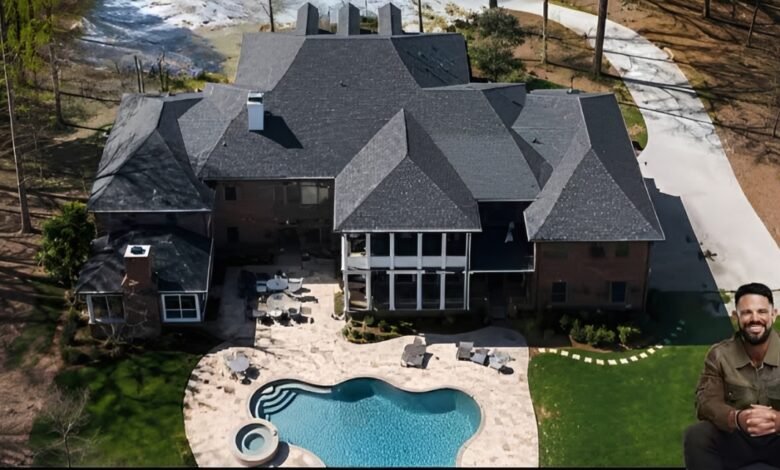
Few properties in American religious life have generated as much sustained public attention as the Steven Furtick house in Waxhaw, North Carolina. When local Charlotte news broke the story in October 2013 that the founder of Elevation Church was building a 16,000-square-foot gated estate on 19 wooded acres, the reaction was immediate and national. Reporters flew helicopters over the construction site. Christian media published opinion pieces for weeks. Church members argued in comment sections and Sunday school classes.
More than a decade later the debate has not fully resolved. The house still stands, still privately held under a revocable trust, still generating searches, questions, and strong opinions on both sides of the faith and finance conversation. This guide provides every verified fact about the property, the man who built it, the timeline of its construction, the sources of the money that paid for it, and the public debate it sparked and continues to feed.
In this guide you will find:
- A complete verified property breakdown with dimensions, rooms, and amenities.
- The full construction and financial timeline from land purchase to completion.
- Steven Furtick’s net worth and income sources explained in detail.
- The controversy, the criticism, the defence, and Furtick’s own response.
- A comparison with other megachurch pastors’ properties.
- A full FAQ answering every commonly searched question about the house.
1. Who Is Steven Furtick?
Steven Furtick is an American pastor, author, Grammy-nominated songwriter, and public speaker born on February 19, 1980, in Moncks Corner, South Carolina. He is best known as the founder and lead pastor of Elevation Church, a Charlotte-based megachurch he launched in February 2006 at age 26 with seven founding families.
The church’s growth has been extraordinary by any measure. From 121 people meeting in a high school auditorium at its founding, Elevation grew to over 17,000 weekly in-person attendees across 20 campus locations by 2024, making it consistently one of the fastest-growing churches in the United States according to Outreach Magazine’s annual rankings.
Beyond the pulpit, Furtick has built a significant secondary career as a publishing and music industry figure. His books have reached the New York Times bestseller list multiple times, including titles such as Greater, Crash the Chatterbox, and Sun Stand Still. Elevation Worship, the music ministry he leads, has produced Grammy-winning recordings and accumulated billions of streams on digital platforms. This publishing and music income, not his church salary, is the foundation of his personal wealth and the source he cites for funding his home.
Personal Background
Furtick holds a Master of Divinity from Southern Baptist Theological Seminary in Louisville, Kentucky. He married Holly Furtick in 2002, and the couple have three sons. Holly is an active co-leader in the Elevation ministry and appears regularly alongside Steven at services and events. The family has lived in the Waxhaw area since the mansion was completed, maintaining a deliberately private household profile relative to their public ministry prominence.
2. Steven Furtick House: Complete Property Overview
The Steven Furtick house is defined as a custom-built luxury estate on 19.25 acres of private wooded land in Waxhaw, North Carolina, comprising approximately 16,000 square feet of total structure including 8,400 square feet of heated living space, five bedrooms, seven to eight bathrooms, and an extensive amenities package including an indoor basketball court, swimming pool, tennis court, home theater, and converted guest barn.
| Property Detail | Verified Information |
| Location | Waxhaw, North Carolina (Union County). Near Providence Road, approx. 25 miles south of Charlotte. |
| Land Size | 19.25 acres of heavily wooded private land |
| Total Structure | 16,000 square feet under roof |
| Heated Living Space | Approximately 8,400 square feet (climate-controlled) |
| Additional Space | Covered porches, pavilions, garages, basement, attic, guest barn |
| Bedrooms | 5 bedrooms (main house) plus 2-bedroom guest barn |
| Bathrooms | 7 to 8 bathrooms |
| Land Purchase Price | $325,000 (June 26, 2012, public record) |
| Construction Cost | Approximately $1.4 million |
| Total Investment | Approximately $1.7 million (land plus construction) |
| Tax Assessed Value | $1.6 to $1.7 million (stable) |
| Current Market Estimate | $3 million to $5 million (2026) |
| Year Completed | 2013 |
| Title Holder | Revocable Trust (not held directly in Furtick’s name) |
| Funding Source | Book royalties and speaking fees (confirmed by church officials) |
| Security | Electric gated entrance, CCTV, private driveway, forested perimeter |
3. Architectural Design and Exterior Features
The Steven Furtick house architectural style is best described as custom Craftsman-influenced luxury estate with modern farmhouse elements. The building uses a combination of brick, natural stone, and wood siding that blends the structure into its heavily wooded 19-acre setting rather than imposing on it. Dramatic rooflines, large windows, and a multi-level footprint give the exterior an impressive visual presence without resorting to the kind of overtly ostentatious design that some celebrity properties adopt.
The property sits entirely out of view from the road. A long private driveway leads from a set of electric security gates through dense tree cover before arriving at the main structure. Aerial drone photography taken by local media during the controversy period showed the estate tucked deep within its wooded acreage with no sightlines from any public vantage point.
Key Exterior Elements
Porch space: Approximately 2,188 square feet of covered outdoor porch and pavilion area wraps around the main structure. This provides substantial shaded outdoor living space suitable for large gatherings.
Garage: A multi-car garage approximately 900 square feet in size provides vehicle storage and additional covered space. The property reportedly includes EV charging infrastructure.
Two barns: The estate includes two barn structures. One has been converted into a two-bedroom guest suite with full bathroom and private terraces. The second barn serves as storage and has architectural character consistent with the surrounding wooded setting.
Swimming pool: A pool complex including an infinity-edge design with jacuzzis is positioned on the property with views toward the wooded landscape. The setting gives the outdoor water area a resort-like quality.
Tennis court: A full-sized tennis court on the grounds provides recreational space for the family. This feature was noted in early reporting on the property as one of several amenities that drew public comment about scale.
Landscaping: The 19-acre lot has been professionally landscaped with preservation of the existing woodland as the dominant design principle. The grounds feel more like a private nature reserve than a manicured estate garden.
4. Inside Steven Furtick House: Room by Room
The interior of the Steven Furtick house is not open to public tours and has never been filmed in its entirety. What is known comes from architectural descriptions in public records, aerial photography, reporting from local Charlotte media at the time of construction, and details shared by individuals who have visited the property. The following breakdown is based on verified and widely reported information.
Main Living Areas
The primary living spaces feature soaring ceilings and large windows that bring the wooded exterior into every room visually. The open-plan layout connects the main living room, dining areas, and kitchen in a way that accommodates both intimate family use and larger gatherings. The furnishing style reported by visitors reflects the family-focused, ministry-oriented lifestyle Furtick describes in his public communications: comfortable, high-quality, and personal rather than purely status-driven.
Professional-Grade Kitchen
The kitchen is built for both daily family cooking and large-scale hosting. High-end stainless steel appliances, custom cabinetry, and expansive stone countertops configure the space for professional-level food preparation. A large kitchen island serves as both prep space and casual seating. A walk-in pantry and seamless flow into the adjacent dining area complete what is clearly the practical centre of the home.
Master Suite
The master bedroom occupies a private wing of the main floor and includes high ceilings, oversized windows facing the wooded property, and an ensuite bathroom with dual vanities, soaking tub, and separate shower. Walk-in closet space is extensive. The suite is positioned for maximum separation from children’s rooms and common areas, functioning as a genuine private retreat within the larger house.
Entertainment and Recreation Spaces
Indoor basketball court: A full-sized climate-controlled indoor basketball court is the property’s standout feature and the one most cited by commentators on the property’s scale. Furtick is known as a basketball enthusiast and the court reflects a personal priority rather than a standard luxury amenity.
Home theater: A dedicated cinema room with professional-grade audio-visual equipment and soundproofing. Seating capacity allows for family and small-group viewing.
Basement: The basement level contributes a significant portion of the 16,000 total square feet. It houses the entertainment complex, gym facilities, storage, and mechanical systems. Estimates place the basement at approximately 4,000 to 5,000 square feet of space.
Gym: A fully equipped private fitness area with professional-grade equipment.
Guest Barn
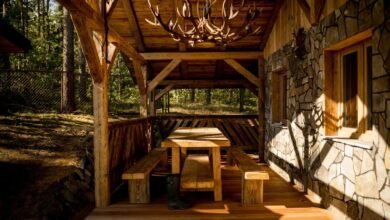
The converted barn provides genuinely separate guest accommodation, two bedrooms and a full bathroom, with a design that retains exposed beams and rustic materials while incorporating modern utilities. The separation from the main house ensures complete privacy for visiting family members, ministry colleagues, and guests. The estate has reportedly hosted notable visitors including Chris Pratt, Justin Bieber, and various other figures connected to the broader Elevation Church community.
5. Construction Timeline and Financial History
The Steven Furtick house has a documented public records history that allows a more precise reconstruction of its timeline than most celebrity properties. Here is the verified chronology:
| Date | Event | Source |
| June 26, 2012 | Steven and Holly Furtick purchase 19.25 acres in Union County for $325,000. | Union County public records |
| December 2012 | Furticks take out a construction mortgage in the name of their Revocable Trust. | Union County public records |
| Early 2013 | Construction begins on the main estate structure. | Charlotte Observer reporting |
| October 2013 | Charlotte Observer breaks the story. National media coverage begins. | Charlotte Observer, October 2013 |
| October to December 2013 | Furtick addresses critics from the Elevation pulpit. Church issues financial clarifications. | Elevation Church official communications |
| Late 2013 to early 2014 | Construction completes. Furtick family takes occupancy. | Media reporting |
| 2013 to 2015 | National Christian media continues coverage. Watchdog organisations investigate. | Various publications |
| 2015 to 2020 | Media attention subsides. Property value begins appreciating with Charlotte market. | Union County tax records |
| 2020 to 2026 | Charlotte metropolitan real estate market surges. Estimated current value reaches $3M to $5M. | Real estate market analysis |
Expert Insight: The property was placed in a Revocable Trust rather than Furtick’s personal name, a standard privacy and estate planning move used by public figures, attorneys, and wealthy individuals nationwide. This is not unusual and carries no legal implication of impropriety. It simply means the property title does not appear directly linked to Furtick in a basic name search.
6. Steven Furtick Net Worth and Income Sources
Steven Furtick’s net worth is estimated between $55 million and $60 million as of 2026, according to multiple financial profiling sources. This figure reflects accumulated income from book publishing, music royalties, speaking fees, and digital content, not his pastoral salary, which Elevation Church has declined to disclose publicly.
Income Source Breakdown
| Income Source | Description | Est. Annual Contribution |
| Book royalties | Multiple NYT bestsellers including Greater, Crash the Chatterbox, Sun Stand Still. Backlist royalties plus new releases. | Significant, multi-year stream |
| Book advances | Publishers pay advance fees upon signing. Furtick’s advances grew with each bestseller cycle. | Variable, per book deal |
| Speaking fees | Conference keynotes, church events, and corporate speaking engagements worldwide. | Substantial per engagement |
| Elevation Worship royalties | Grammy-nominated music ministry. Billions of streams on Spotify, Apple Music, YouTube. | Growing digital stream |
| Digital content and media | Online sermons, YouTube channel, podcast reach. Advertising and licensing revenue. | Increasing annually |
| Church salary | Set by an independent compensation committee of five external pastors. Amount undisclosed. | Unknown, not church public record |
Furtick has stated directly: ‘I didn’t even build that house with money from the church. I built it with money from my books.’ Elevation Church’s CFO Chunks Corbett confirmed this publicly, noting that personnel costs at Elevation represent 29 per cent of church income, compared to a national average of 40 per cent. The church donated approximately $2.5 million annually to charities including Samaritan’s Purse, which Corbett cited to contextualise the church’s financial priorities.
7. The Controversy: Faith, Wealth, and the Public Debate
The Steven Furtick house controversy is not simply a real estate story. It is a concentrated version of a much larger American cultural debate about megachurch leadership, prosperity theology, pastoral compensation, and the expectations placed on religious figures that would not apply to secular public figures of equivalent wealth and influence.
The Core Criticism
Critics argued on several grounds. First, the scale of the property, 16,000 square feet on 19 acres, seemed incongruent with the pastoral call to servant leadership and financial modesty that many Christians associate with ministry. Second, the lack of salary transparency at Elevation Church meant that verification of Furtick’s claim that the home was funded purely by book income was impossible for outside observers. Third, the compensation committee structure, five external pastors rather than elected local church members, struck critics as lacking the accountability structures expected of non-profit leadership.
The Charlotte Observer’s original reporting noted that while Furtick himself said he deserved no credit for the success of his books, the scale of a $1.7 million mansion built during a period of rapid church growth made the separation between personal and institutional success difficult for many to accept on faith.
Furtick’s Defence
Furtick addressed the controversy directly from the pulpit, a notable choice that reflected his pastoral instinct to confront rather than avoid the issue with his own congregation. He said the criticism was the most painful professional experience of his life, that he had not anticipated the reaction, and that he was genuinely sorry for the strain the situation placed on church members who had to answer questions from friends and family about their pastor’s home.
He maintained that the money came from his books and that he had not been funded by the church. He also made the theological case that his view of God’s blessing did not preclude material success, a position that reflects a stream of American evangelical thinking that is legitimately contested within Christianity but not inherently dishonest.
Supporter Arguments
Many Elevation members and broader evangelical voices defended Furtick. The arguments were that book income and speaking fees are legitimate personal earnings; that Furtick had built an organisation worth billions in social capital and reach from nothing; that penalising financial success in ministry leadership discourages entrepreneurial church building; and that comparable secular public figures who build organisations of similar scale to Elevation Church are not subjected to the same scrutiny about their personal property choices.
Pro Tip for Readers: When researching this topic, it is worth distinguishing between two separate questions: Was the house funded by church donations? (Evidence says no, based on public records and church official statements.) Was building such a house an appropriate choice for a Christian pastor? (This is a theological and ethical question that depends on one’s view of faith, wealth, and pastoral identity. It has no single answer.)
8. Steven Furtick House vs. Other Megachurch Pastor Homes
The Steven Furtick house did not emerge in isolation. Several other prominent American megachurch pastors have faced similar scrutiny over their residential properties. The comparison below uses publicly reported figures.
| Pastor | Church | Property | Est. Value | Controversy Level | Funding Source Claimed |
| Steven Furtick | Elevation Church, Charlotte NC | 16,000 sq ft, 19 acres, Waxhaw NC | $1.7M built, $3M to $5M now | Very High (2013) | Book royalties and speaking fees |
| Joel Osteen | Lakewood Church, Houston TX | 17,000 sq ft mansion, River Oaks Houston | $10.5M est. | Very High (ongoing) | Books and media empire |
| TD Jakes | The Potter’s House, Dallas TX | Multiple properties, Plano TX estate | $3M to $5M est. | High | Books, films, speaking |
| Joyce Meyer | Joyce Meyer Ministries, Fenton MO | Multiple properties including main residence | Several million est. | Very High (2009) | Ministry and book income |
| Rick Warren | Saddleback Church, Lake Forest CA | Relatively modest OC home | Under $1M est. | Low | Reversed salary, book income |
| Andy Stanley | North Point Ministries, Alpharetta GA | Upscale Atlanta suburb home | Moderate | Low | Undisclosed |
Context note: Rick Warren publicly reversed his 25-year salary from Saddleback Church and returned it when The Purpose Driven Life became a bestseller, a gesture frequently cited in contrast with other megachurch financial approaches. Warren represents one pole of the pastoral wealth debate; Osteen and Furtick represent another. Neither position is without both supporters and critics within mainstream Christianity.
9. Current Status of the Property in 2026
The Steven Furtick house remains the family’s primary residence as of 2026. There is no public indication of a planned sale or relocation. The property is not listed on any real estate platform and the Furtick family has maintained continuous occupancy since completion.
The Charlotte metropolitan real estate market, including the Union County areas of Waxhaw and Weddington, has seen significant appreciation since 2013. Properties in the same general area have roughly doubled in value in many cases. The 19-acre land holding alone, independent of the structure, carries substantial value in what is now one of North Carolina’s most desirable suburban markets. Current estimates from real estate analysts familiar with the area place the property’s total market value between $3 million and $5 million, though the private nature of the holding makes precise current valuation impossible without a professional appraisal.
Is the House For Sale?
No. As of July 2026, the Steven Furtick house is not for sale and there is no public record suggesting it will be. The property is held under a revocable trust and continues to function as the family’s private primary residence.
Can the Public Visit?
No. The estate is entirely private. The electric gated entrance, no trespassing signage, heavily wooded perimeter, and long private driveway all ensure that the property is inaccessible and invisible to the public. Attempting to access the property would constitute trespassing under North Carolina law.
10. Frequently Asked Questions About Steven Furtick House
Where is Steven Furtick’s house located?
Steven Furtick’s house is located in Waxhaw, North Carolina, in Union County, approximately 25 miles south of Charlotte. The estate sits on 19.25 acres of wooded private land accessible via a gated private driveway off Providence Road. The property is not visible from any public road.
How much did Steven Furtick’s house cost?
The total investment in the Steven Furtick house was approximately $1.7 million. This comprises $325,000 for the 19.25-acre land purchase in June 2012 and approximately $1.4 million in construction costs. The tax-assessed value is listed at $1.6 to $1.7 million, though current market estimates for the property range from $3 million to $5 million based on Charlotte area real estate appreciation since 2013.
How big is Steven Furtick’s house?
The structure totals approximately 16,000 square feet under roof. Heated living space is approximately 8,400 square feet. The additional square footage comprises covered porches and pavilions (approximately 2,188 square feet), a multi-car garage (approximately 900 square feet), basement, attic, and converted guest barn. The property sits on 19.25 acres of land.
Did the church pay for Steven Furtick’s house?
No, according to confirmed public statements from both Furtick and Elevation Church’s CFO. Furtick stated: ‘I didn’t even build that house with money from the church. I built it with money from my books.’ Elevation’s CFO Chunks Corbett confirmed the home was funded through book advances and personal income, not church salary or tithes. Independent verification is not fully possible due to Furtick’s undisclosed salary structure, but no evidence has emerged to contradict the church’s stated position.
What amenities does Steven Furtick’s house have?
The property includes an indoor basketball court, home theater, fully equipped gym, swimming pool with infinity edge and jacuzzis, outdoor kitchen, tennis court, professional-grade indoor kitchen, master suite with luxury ensuite bathroom, converted two-bedroom guest barn, covered porches totalling over 2,000 square feet, multi-car garage, basement entertainment complex, and 19 acres of private woodland.
What is Steven Furtick’s net worth?
Steven Furtick’s net worth is estimated at $55 million to $60 million as of 2026, according to financial profiling sources. This wealth derives primarily from book royalties across multiple New York Times bestsellers, speaking fees, music royalties from the Grammy-nominated Elevation Worship recordings, and digital content income. His pastoral salary from Elevation Church remains undisclosed.
Why is Steven Furtick’s house controversial?
The controversy stems from the perceived incongruity between the scale of a 16,000-square-foot, $1.7 million mansion and the Christian pastoral call to servant leadership and financial modesty. The lack of salary transparency at Elevation Church made verification of Furtick’s funding source claim difficult, and the compensation committee structure involving external rather than local church oversight drew criticism from church governance advocates. The house became a focal point for broader national debates about megachurch wealth and pastoral accountability.
Is Steven Furtick’s house the same as a parsonage?
No. A parsonage is a home provided to a pastor by their church as part of their employment arrangement. The Steven Furtick house is his personal private property, funded by his own income, held under a personal revocable trust, and entirely separate from Elevation Church’s property holdings. Furtick explicitly confirmed this distinction.
Has Steven Furtick responded to criticism about his house?
Yes. Furtick addressed the controversy from the Elevation pulpit, calling it the most painful experience of his professional life. He said he regretted the difficult conversations it created for church members, maintained that the home was purchased with book income and not church money, and made a theological case that personal financial success is not incompatible with pastoral calling. He characterised the home as ‘a gift from God.’
What is the current value of Steven Furtick’s house in 2026?
No official appraisal is publicly available. Based on Charlotte metropolitan and Union County real estate market trends since 2013, analysts estimate the current market value between $3 million and $5 million. The 19.25-acre land holding alone represents substantial value in what is now one of North Carolina’s most sought-after suburban markets. The tax-assessed value remains listed at approximately $1.6 to $1.7 million, which often lags behind market value in rapidly appreciating areas.
11. Conclusion
The Steven Furtick house in Waxhaw, North Carolina is a 16,000-square-foot estate on 19 wooded acres that has spent more than a decade at the centre of one of American Christianity’s most persistent conversations about wealth, leadership, and accountability. Three facts emerge clearly from everything the public record contains.
First, the property was funded by book royalties and speaking fees, not church donations, based on all available evidence including statements from Furtick, his church’s CFO, and the construction mortgage filed under a personal revocable trust. Second, the scale of the property, six times the size of the average American home, sitting on land equivalent to many small farms, is genuinely extraordinary for a pastoral context regardless of funding source. Third, the house’s value has likely appreciated significantly from its 2013 cost, and as a real estate investment in the Charlotte market it has performed extremely well.
Whether the property represents success, excess, or somewhere in between depends on theological and ethical perspectives that this guide does not adjudicate. What it provides are the verified facts from which readers can form their own informed view.
Next Steps: If you found this guide useful:
- Bookmark this page for the most up-to-date information on Steven Furtick house in 2026.
- Read our related guides on other notable American pastor and celebrity properties.
- Share this article with anyone researching the topic for accurate, source-referenced information.