Roof Cleaning Pressure Wash: The Complete Guide to Safe and Effective Roof Maintenance

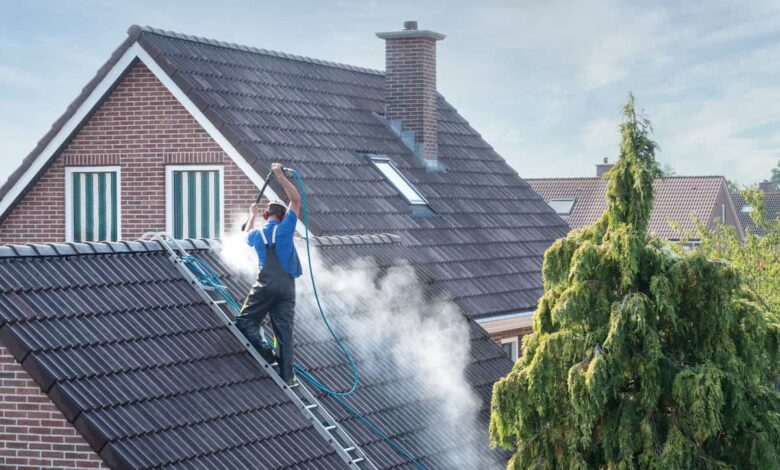
Your roof takes a beating every single day. Rain, wind, UV rays, humidity, and biological growth like moss and algae work against it season after season. Most homeowners focus on the inside of the house while the roof quietly accumulates years of damage right above their heads. Roof cleaning pressure wash is one of the most effective ways to stop that damage in its tracks — but only when it’s done correctly.
This guide covers everything you need to know: whether pressure washing is even right for your roof, what PSI levels are safe, which chemicals actually work, how soft washing compares, and when calling a professional makes more sense than doing it yourself. By the end, you’ll know exactly how to approach roof cleaning without accidentally turning a maintenance job into an expensive repair.
Is Pressure Washing Your Roof a Good Idea?
The honest answer is: it depends. Pressure washing works brilliantly on some roofs and causes serious damage on others. The difference comes down to roofing material, the extent of contamination, and whether the right technique is used throughout the process.
Moss, algae, lichen, and mold are the primary reasons most homeowners look into roof cleaning in the first place. These organisms don’t just look bad — they actively break down roofing materials. Algae holds moisture against shingles, accelerating deterioration. Moss roots grow under shingles and lift them, creating pathways for water infiltration. Lichen bonds so aggressively to roofing surfaces that improper removal causes more damage than the lichen itself. Pressure washing addresses all of these threats, but the technique must match the material.
For durable surfaces like concrete tiles, metal roofing, and certain slate applications, moderate-pressure washing delivers excellent results. For asphalt shingles — by far the most common residential roofing material in the United States — soft washing is almost always the safer and more effective approach. High-pressure water strips granules from asphalt shingles, and those granules aren’t decorative — they protect the underlying material from UV degradation and regulate surface temperature. Once they’re gone, the shingles age rapidly and the roof’s remaining lifespan shortens significantly.
When Pressure Washing Makes Sense
Pressure washing earns its place in specific scenarios. Metal roofs, concrete tile, and fiber cement roofing can tolerate moderate pressure without sustaining damage, provided the nozzle angle and distance are appropriate. It also works well on roof-adjacent surfaces — gutters, fascia boards, and roof valleys where debris accumulates — where the high-pressure stream clears blockages quickly and thoroughly.
When to Choose Soft Washing Instead
Asphalt shingles, clay tiles, cedar shake, and slate all require soft washing. These materials are either too fragile for direct high-pressure contact or structured in ways that allow pressurized water to penetrate beneath the surface layer, creating leak pathways that weren’t there before the cleaning began. Soft washing uses low-pressure water combined with specialized chemical solutions to dissolve and lift biological growth without the mechanical force that causes damage.
What PSI Do You Need for Roof Cleaning Pressure Wash?
PSI — pounds per square inch — measures the force of water expelled from a pressure washer. Getting this number right is the single most important technical decision in any roof cleaning job. Too low and you won’t clean effectively. Too high and you’ll cause damage that costs far more to repair than the cleaning saved.
| PSI Range | Method | Best For | Risk Level |
| 50–150 PSI | Soft Washing | Asphalt shingles, clay tiles, slate, cedar shake | Very Low |
| 1,000–1,500 PSI | Low Pressure Wash | Concrete tile, certain metal roofs | Low |
| 1,500–2,000 PSI | Medium Pressure Wash | Concrete, metal, roof edges | Moderate |
| Above 2,000 PSI | High Pressure Wash | Driveways, not roofs | High — avoid on roofs |
Low PSI for Sensitive Roofing Materials
The 1,000 to 1,500 PSI range represents the upper limit for most residential roof cleaning applications. At this pressure, dirt and loose biological growth lift away without the kind of force that dislodges granules or drives water beneath shingles. Even within this range, nozzle selection matters — a 40-degree nozzle spreads water across a wider surface area and reduces the effective impact force compared to a 25-degree or 15-degree nozzle.
Soft Washing PSI and Why It Works
Soft washing operates between 50 and 150 PSI — roughly equivalent to a garden hose with good pressure. At these levels, water carries the cleaning solution across the roof surface and rinses it away without any mechanical scrubbing force. The cleaning is done entirely by the chemistry of the solution, not the pressure of the water. This is why soft washing produces results that last significantly longer than pressure washing alone — it kills the biological growth at the cellular level rather than simply blasting visible portions off the surface.
What Chemicals Are Used to Pressure Wash a Roof?
Water alone won’t get a roof genuinely clean. Biological growth embeds itself into roofing materials at a microscopic level, and dislodging it mechanically while leaving the root structure intact guarantees the same problem returns within months. The right chemical solution kills the growth entirely and prevents rapid regrowth — making chemistry the most important element of an effective roof cleaning pressure wash.
Sodium Hypochlorite
Sodium hypochlorite — the active ingredient in household bleach — is the industry standard for roof cleaning, and for good reason. It kills algae, moss, mold, and lichen effectively, works quickly, and costs very little compared to specialty alternatives. Roof cleaning applications typically use a diluted solution of 1% to 3% concentration, far lower than undiluted bleach, to balance effectiveness with material safety.
The primary concerns with sodium hypochlorite are runoff onto landscaping and potential surface damage if applied at too high a concentration. Wetting surrounding plants before application and rinsing thoroughly after reduces landscape risk considerably. It should not be applied in direct intense sunlight, as rapid evaporation reduces contact time and effectiveness.
Hydrogen Peroxide
Hydrogen peroxide offers a less aggressive alternative to bleach-based solutions. It breaks down into water and oxygen, making it genuinely biodegradable and safe around plants, pets, and water features near the home. For homeowners with extensive landscaping or proximity to natural water sources, hydrogen peroxide-based cleaners provide a responsible option that still delivers meaningful results against organic growth.
The trade-off is potency — hydrogen peroxide requires longer dwell times and may need repeated applications on roofs with heavy lichen or established moss colonies. For moderate algae growth, however, it performs well and leaves no harmful residue.
Surfactants and Detergents
Surfactants don’t clean roofs on their own but dramatically improve the performance of whatever cleaning agent they’re paired with. They reduce water’s natural surface tension, allowing the cleaning solution to spread more evenly across the roofing surface and penetrate into pores and crevices where biological growth anchors itself. Commercial soft washing solutions almost always include surfactants as a base component, precisely because their presence extends the contact time between the active chemical and the contaminant.
Specialized Algae and Mold Removers
Purpose-formulated roof cleaning products have grown significantly in quality over the past decade. Products designed specifically for roof applications — often labeled as “roof wash” or “algae remover” — balance cleaning power with material safety in ways that generic bleach solutions can’t always achieve. Many are biodegradable, certified for use near waterways, and formulated to remain active on vertical or angled surfaces long enough to penetrate deep into biological growth colonies.
| Chemical | Best For | Environmental Impact | Dwell Time |
| Sodium Hypochlorite | Algae, moss, mold, lichen | Moderate — rinse thoroughly | 15–30 minutes |
| Hydrogen Peroxide | Light to moderate organic growth | Low — biodegrades cleanly | 20–45 minutes |
| Surfactants | Used with other chemicals | Low | Applied with base solution |
| Specialized Roof Wash | All organic growth types | Low to moderate | Per product instructions |
| Biodegradable Cleaners | Eco-sensitive properties | Very low | 30–60 minutes |
What Is the Best Solution for Roof Soft Washing?
Soft washing has effectively become the professional standard for residential roof cleaning, and understanding why helps homeowners make better decisions about how their own roofs should be maintained. The method combines chemical treatment with low-pressure delivery to produce results that genuinely last — typically 18 months to 3 years before significant regrowth appears, compared to 6 to 12 months for pressure-washing-only approaches.
The Soft Washing Process Step by Step
A professional soft washing service follows a consistent sequence that protects both the roof and the surrounding property. The process begins with a thorough inspection — identifying the types of biological growth present, noting any existing damage that could be worsened by water exposure, and assessing which areas require pre-treatment or targeted attention.
The cleaning solution is then applied from the bottom of the roof upward, working against the natural direction of water flow to ensure even coverage and prevent streaking. This counterintuitive approach allows the solution to dwell on the surface rather than running off immediately. Most professional-grade solutions require 15 to 30 minutes of contact time to fully penetrate and neutralize biological growth.
Rinsing follows at low pressure, working from the ridge downward in the natural direction of water flow. The combination of gravity and gentle pressure carries the dissolved biological material off the roof without forcing water beneath shingles or tiles. A final inspection confirms that growth has been fully addressed and that no cleaning residue remains on surrounding surfaces.
Soft Washing vs. Pressure Washing — A Direct Comparison
| Factor | Soft Washing | Pressure Washing |
| PSI Used | 50–150 | 1,000–4,000 |
| Risk to Shingles | Very Low | Moderate to High |
| Kills Growth at Root | Yes | No |
| Results Duration | 18 months–3 years | 6–12 months |
| Safe for Asphalt | Yes | Not recommended |
| Safe for Clay/Tile | Yes | Use caution |
| Environmental Impact | Low (with right chemicals) | Water waste, runoff risk |
| Cost | Moderate | Lower upfront |
How Often Should You Clean Your Roof?
Cleaning frequency depends on where you live more than almost any other factor. Humid climates — particularly in the Southeast, Pacific Northwest, and coastal regions — create conditions where algae and moss establish themselves within a single season. Homes surrounded by trees receive less direct sunlight and stay damp longer, accelerating biological growth significantly.
As a general benchmark, most residential roofs in humid climates benefit from professional cleaning every one to two years. Roofs in drier climates with high sun exposure may go three to five years between cleanings without significant biological accumulation. The appearance of dark streaks — typically the blue-green algae Gloeocapsa magma — is the clearest visible signal that cleaning is overdue, though by the time streaking becomes obvious, the growth has usually been established for a full season already.
Proactive cleaning before growth becomes visible consistently produces better outcomes than reactive cleaning after significant accumulation. A thin film of algae responds to a single soft washing application. An established moss colony rooted beneath multiple shingles may require pre-treatment, mechanical removal of heavy growth, and follow-up chemical application — a considerably more involved and expensive process.
DIY Roof Cleaning vs. Hiring a Professional
The case for DIY roof cleaning pressure wash is primarily economic. Equipment rental costs range from $50 to $150 per day for a quality pressure washer, and the cleaning chemicals required for a standard residential roof cost between $30 and $80. Against a professional soft washing quote of $300 to $600 for an average home, the savings look significant on paper.
The case against DIY comes down to three factors: safety, technique, and outcomes. Working on a roof surface carries genuine fall risk — the leading cause of fatal home improvement injuries in the United States is falls from ladders and elevated surfaces. A wet roof during cleaning becomes dramatically more slippery than a dry one, and the positioning required to reach all roof sections comfortably from a ladder creates unstable postures that experienced professionals know to avoid.
Technique errors in DIY roof cleaning are also more costly than they initially appear. Stripping granules from asphalt shingles, forcing water beneath tiles, or applying cleaning chemicals at incorrect concentrations can shorten roof life by years — turning a maintenance task into an accelerated depreciation event. Professional roof cleaners carry liability insurance that protects homeowners if something goes wrong during the process, a protection that DIY work entirely eliminates.
For homeowners committed to DIY maintenance, soft washing is the approach to use. Rent or purchase a low-pressure pump sprayer rather than a full pressure washer, apply a pre-diluted commercial soft wash solution, allow adequate dwell time, and rinse gently from the ridge downward. Never pressure wash asphalt shingles. Never work on a wet roof surface. Always use a properly secured ladder and have another person present.
Roof Cleaning as Part of a Preventative Maintenance Plan
A clean roof doesn’t exist in isolation — it’s part of a system that includes gutters, downspouts, fascia, soffits, and attic ventilation, all of which affect each other’s performance. Clogged gutters overflow onto fascia boards, promoting rot that eventually compromises the roof edge. Blocked downspouts force water back toward the foundation and create the standing moisture that moss and algae thrive in. Inadequate attic ventilation traps heat and moisture that degrades roofing materials from the inside.
Integrating roof cleaning with gutter cleaning, downspout flushing, and a basic exterior inspection twice a year produces dramatically better long-term outcomes than cleaning the roof in isolation. The investment in preventative maintenance consistently costs less than the reactive repairs that neglect eventually demands — a new roof installation currently averages between $8,000 and $25,000 depending on size, pitch, and material, while comprehensive annual maintenance runs a fraction of that figure.
Frequently Asked Questions
Is pressure washing a roof safe for asphalt shingles?
High-pressure washing is not recommended for asphalt shingles. It strips the granules that protect shingles from UV rays and weather, significantly shortening their lifespan. Soft washing at 50 to 150 PSI is the correct approach for asphalt roofing.
How long does soft washing a roof last?
A professionally executed soft wash typically keeps biological growth suppressed for 18 months to 3 years, depending on climate, tree coverage, and roof material. Humid climates with heavy shade see shorter intervals between cleanings.
Can I use bleach to clean my roof?
Yes — diluted sodium hypochlorite at 1% to 3% concentration is the industry standard for roof cleaning. It must be applied carefully to avoid landscape damage and rinsed thoroughly after the appropriate dwell time.
What causes black streaks on a roof?
Black or dark green streaks on roofing are almost always caused by Gloeocapsa magma, a cyanobacteria that feeds on the limestone filler in asphalt shingles. Soft washing with a bleach-based solution removes it effectively.
How much does professional roof cleaning cost?
Professional roof soft washing typically costs between $300 and $600 for an average single-story home, with larger or steeper roofs reaching $800 or more. The investment is considerably less than the cost of premature roof replacement caused by neglected biological growth.
Should I clean my roof before selling my home?
Yes. A clean roof dramatically improves curb appeal and signals to buyers that the home has been well maintained. Dark streaks and visible moss growth frequently appear in listing photos and raise concerns that buyers factor into their offers.
Conclusion
Roof cleaning pressure wash done correctly extends roof life, protects your home’s structural integrity, and prevents the kind of slow, invisible damage that moss, algae, and lichen cause over years of unchecked growth. Done incorrectly, it accelerates exactly the damage it was meant to prevent.
The key decisions are straightforward: match the pressure to the material, use the right chemical solution, prioritize soft washing for sensitive roofing surfaces, and treat cleaning as a recurring preventative investment rather than a one-time cosmetic fix. Whether you handle it yourself or hire a professional, a clean roof is one of the highest-return maintenance tasks a homeowner can commit to — and the cost of getting it right is always less than the cost of getting it wrong.