Signs of Mold in House (Before It Ruins Your Health)

What are the signs you have mold in your house? Many homeowners ignore the early signs of mold in house, which can lead to serious health and property problems if not addressed quickly. Mold is a kind of tiny plant which is called a fungus. It can be thought of as a very small version of mushrooms. Mold grows everywhere in the wild and thus helps to decompose old leaves and dead things. However, when mold grows inside homes, it can be a real source of human problems.
How Mold Gets Into Houses
Mold can produce little seeds known as spores. These seeds are so tiny that no person can actually observe them. They drift around in the air in the form of dust particles which are invisible. When these spores land on the wet things inside houses, they begin to grow mold anew.
The first two vital signs of mold in house growth are water and food. The food for mold can be such things found in houses as wood, paper, cloth, and even dust. However, mold has no possibility of growth unless there is water or wetness.
What Makes Houses Wet Enough for Mold
Many factors can get houses too wet and thus mold can grow. Running water pipes that have a leak or are broken cause the wet spots that mold thrives to grow in. When there are holes on the roof, the rain water will get inside the house and dampen some areas. Sometimes water from outside gets into the basement which becomes a flood.
Even the typical things a person might do every day make houses wet. Hot showers can create steam. Food cooking produces steam. Wet clothes from the washing can be the result. There is too much humidity in the air if the wet air doesn’t escape, thus causes mold growth.
When air does not go through the house well from outside, the warm moist air gets caught and that makes the mold grow at the walls, windows, and other areas.
How to Know if There are Signs of Mold in House
Things You Can See
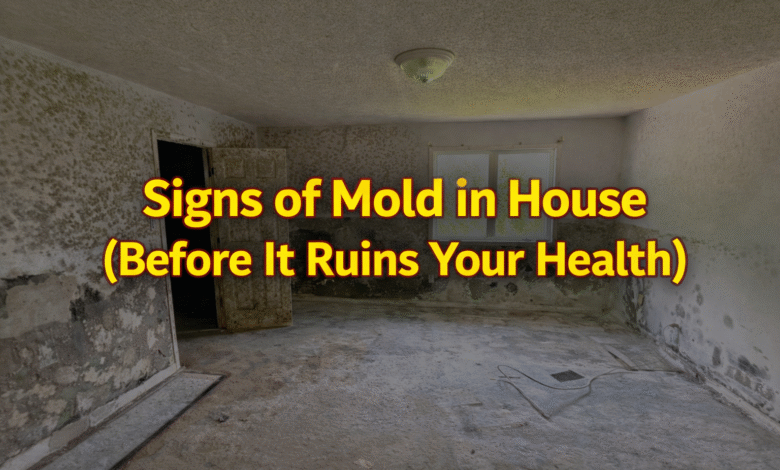
Many people search for signs of mold in house pictures to compare what they see at home with real examples of mold growth. Oftentimes people see mold on the walls of their homes. Mold could show a different appearance such as furry or slime-like patches. Mold exists in many different shapes. It might be black, green, brown, white, or gray.
What you have to do is to check if there are colored spots or streaks on walls and ceilings. Check if the paint is peeling off them or if the wallpaper is coming loose. These things show themselves when water has gotten behind the wall covering.
Yellow or brown spots on the walls and ceilings usually mean that water has been held there for some time. Where we see water stains, we can also expect to see mold with it too.
Things You Can Smell
Mold has its unique smell which is remarked on by most people in the beginning. A musty smell is often one of the early signs of mold in apartment, even before visible spots appear, similar to old drenched clothes or a basement after the rain. If indeed a room smells like that, there probably will be mold somewhere even though people might not see it yet.
Special Places to Check for Mold
Bathrooms
Bathrooms are generally humid, so they have the tendency to be the locations to host the most mold growths. Check out dark spots in the tub and shower wall intersection. Also, take a look at shower curtains and bath mats that stay damp.
All window mirrors or mirrors if covered with water drops all the time might indicate to abnormal wetness in the air. This wet air speeds up the growth of mold in the corners and hidden areas.
Hidden Mold
Some of the places where signs of mold in home can grow are hardly visible to the human eye. It might grow behind wallpapers, under carpets, or even inside the walls. People would possibly smell the musty odor but not see any sign of mold around.
In case people feel sick only when they are at home but feel better outside, it can be that the mold is hidden in the house. Mold hiding in walls or venting systems can make people sick even if they cannot see it.
How Mold Can Make People Sick
Common Sickness from Mold
When people spread mold spores into their respiratory system, it is likely they will get sick. Many people may have symptoms similar to allergies or colds. It’s possible for a nose to run or be stuffed up, as well as the eyes to water or be itchy. When the breathing process is affected they might cough and wheeze.
Some people suffer from headaches when there is mold in their house. Others feel extremely tired or have rashes on their skin. These symptoms are usually reduced when people go outside or leave the house.
Signs of Mold in House in Kids
Parents should pay close attention to signs of mold in house in kids, as children are more sensitive to mold exposure than adults. The infants and young children who reside in moldy houses are much more likely to acquire asthma. A study revealed that babies in homes with mold have a threefold higher chance of getting asthma by the age of seven.
Entire families might notice that children, especially when they are young, keep coughing nocturnally. Common colds tend to be a more common complaint among them, as well. Some children experience stomach aches and skin rashes that do not subside.
Serious Health Problems
When people live with mold for a long time, the more serious the sickness may be. Some of them are unable to think clearly or remember things. They might get a feeling of dizziness or confusion.
Troubles in breathing become more severe in people suffering from asthma who have to live in a house with mold. Other people will start to develop new allergies they never had before.
Testing for Mold
If people talk of seeing or smelling mold, they often do not have to carry out testing to know the problem. The best course of action is to clean it up and repair where it got wet. however, testing is necessary so that the spots with invisible mold can be found.
Testing may also be effective for those who smell mold but cannot see it. It can also be helpful to diagnose cases where people feel unwell at home but there are no visible signs of any mold invasion.
Types of Mold Tests
Home Test Kits
Generally, people trying to detect the presence of mold would use sample test kits that are available at stores. These kits cost between 10 and 60 US dollars. The methods are used for catching mold spores from the air or snatching the samples off the surfaces. Nonetheless, these methods are not always spot-on, and they could be misleading.
Professional Testing
Professional mold testers are professionals who are equipped to find the hidden molds. They use special equipment to see through walls for the presence of moisture. Also, they may take air samples and send them to a lab to check the kind of mold in the air.
Professional testing is more expensive, often costing between three and eight hundred dollars for a whole house. However, it gives more precise information than home test kits.
Getting Rid of Mold
Prior to attempting any mold cleaning, people have to mend any malfunction responsible for wet conditions. For water leaks, that means they should be fixed immediately. If a room is too humid, people should look for ways to reduce the humidity. The only permanent solution to the mold problem is to fix the water problem first, clean the existing mold, and then keep the area dry.
Sometimes, when the mold has only covered a small area (less than ten square feet, such as a three by three foot square), people could clean it themselves. For their own security, they should wear gloves, goggles, and a mask when doing this.
They need to get rid of the mold by washing it with soapy water on hard surfaces such as glass, tile, or painted walls. The use of hard scrubbing and final rinsing of the surfaces with plain water is the way of getting the mold out of the area. They should then dry away every single thing at a time.
Some people think the specific case of bleach is if it is mixed with water in the way of one cup of bleach in one gallon of water gets a mold-killing effect on the hard areas. However, people do not need to combine bleach with other cleaning products as it will cause a gas formation and oftentimes it contains toxic gases.
Stopping Mold Before It Starts
Controlling Wetness
To prevent the growth of mold the first thing to do is to provide the homes with a view of the sunshine to keep them dry all the time. Dehumidifiers are machines that can draw the water from the air. They are important appliances in places where the indoor air should be dehumidified.
If pipes, ceilings, or windows are leaking, there is a slight problem with these things and even these things should be repaired ASAP. Do not let any surface go more than one or two days with standing water. Dry wet clothes and towels quickly.
Improving Air Movement
Good air circulation is the main factor that helps to keep the rooms dry. One way to achieve this goal is to use fans in bathrooms during and after the showers. Another is to use fans when cooking. Moreover, opening the windows when the weather is good can allow fresh air in.
Regular Cleaning and Checking
Bathrooms should be wiped out as often as possible especially the empty spaces between tiles. Puddles must be cleared as soon as they are spotted. Look around basements, attics, and other areas that could become defective with leaks for early indications like water stains, peeling paint, or musty smells. If there are imperceptible issues that deteriorate it will lead later to big issues like mold.