Signs of Foundation Problems: Early Warning Signs Every Homeowner Must Know

Every home relies on a solid foundation to stay upright. When that base starts shifting, foundation issues in your house often whisper before they scream. A tiny crack in a wall or a stubborn door might seem minor, but these subtle clues can be signs of foundation problems that shouldn’t be ignored. In fact, experts note that the earliest signs are typically sticking doors and windows, hairline cracks in interior walls (especially around door frames), and minor unevenness in floors. Spotting these issues early can save you thousands in repairs and keep your home safe.
Before the trouble escalates, let’s dive into what causes foundations to fail and the warning signals to watch for. Understanding how and why foundations shift will help you catch problems while they’re still small, keeping your home on solid ground.
What Causes Foundation Problems
Foundations don’t crack by magic – there’s usually a root cause behind any movement. In most cases, water and soil are the chief culprits. Too much moisture or not enough can wreak havoc on the ground beneath your home. When soil stays wet, it swells; when it dries out, it shrinks. As one foundation specialist puts it, “water – either too much or too little – is the main cause of foundation problems.” Heavy rains or flooding can erode soil under your foundation, while drought can make certain clay soils pull away, both leading to instability.
For example, homes built on expansive clay soil are prone to cracking. Clay expands dramatically with moisture and then cracks when dry, creating hydrostatic pressure or voids that damage foundation walls. Similarly, poor drainage around the house can let water pool by the foundation, accelerating these cycles. Other causes include plumbing leaks or broken gutters that dribble water near the base of your house. Even weather extremes like frost heave (ground freezing and thawing) can push foundations out of alignment.
Finally, construction and maintenance matter too. A poorly built foundation (with inadequate footings or materials) or one that wasn’t compacted properly can settle unevenly right from the start. Over time, foundation damage may result from such flaws. Older homes or those with wood-framed foundations can also suffer if beams rot or sink. In short, anything that disturbs the soil – and especially water – can trigger structural problems.
Common Warning Signs in Walls and Floors
Even before a foundation bows or sinks, the house will often show inside clues. The most obvious are cracks. Not all cracks are equal – small hairline cracks can be normal shrinkage, but larger or patterned cracks raise red flags. Look for these patterns:
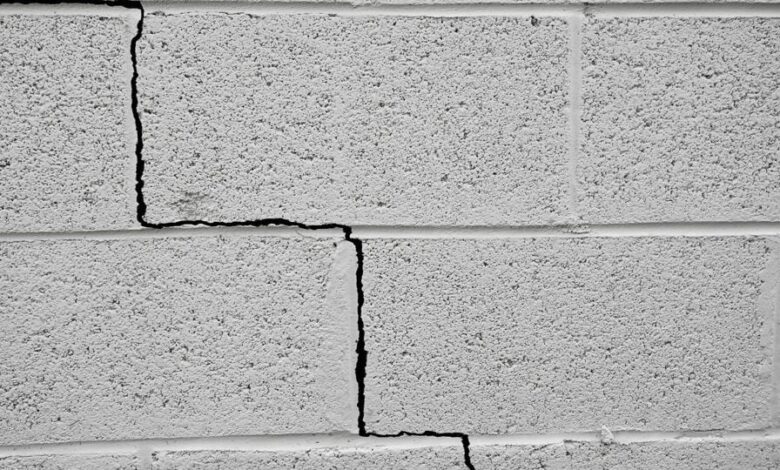
- Diagonal or stair-step cracks in walls: Cracks running at an angle, especially near corners of doorways or windows, often signal the slab or footings are shifting unevenly. Stair-step cracks in brick veneer indicate differential settlement (one side of the foundation sinking more than the other).
- Horizontal cracks in concrete block or basement walls: A crack running straight across a block wall can mean soil is pushing inward. This is serious because it suggests pressure against the foundation, which can lead to bowing or collapse.
- Widening gaps at wall joints or ceilings: If you notice a visible gap between your wall and ceiling or floor, it could be the foundation moving and pulling walls apart.
- Cracked or buckling floor tiles and slabs: Rigid floor materials like ceramic tile will crack if the underlying concrete slab shifts. A row of broken tiles can trace the path of a foundation crack beneath the floor.
Sticking Doors, Windows, and Trim
Have you ever noticed a door suddenly sticking or a window that won’t close smoothly? That can be more than an annoyance—it’s a warning sign of foundation movement. When your foundation shifts even a little, it distorts the house frame. Door and window frames go out of square, causing misalignment. According to experts, “when a foundation shifts, door and window frames go out of square”, making doors that “suddenly won’t latch, swing open on their own, or stick at the top”.
Likewise, watch baseboards and crown moldings. Gaps forming around trim or between walls and ceilings indicate the studs have moved. One roofing specialists notes that “gaps between interior walls and ceilings, baseboards pulling away from walls, [or] crown molding separating” are clear signs that something’s shifting beneath the surface. In practice, if your once-snug door now drifts open or a window jams where it didn’t before, log it as a data point. Mark how much it sticks or the width of a gap, and monitor any changes over weeks. These subtle misalignments are often among the first signs of foundation issues in a house.
Uneven or Sloping Floors
A level floor is not supposed to be a see-saw. If you notice a room feels tilt or a ball rolls on its own, your foundation may have one corner lower than another. Sloping or bouncing floors are classic trouble signs, especially in slab foundation homes. One foundation company even suggests a simple test: place a ball on the floor and see if it rolls. If it moves on what should be a flat surface, something is off.
Causes of floor unevenness can vary: it might be soil under one part of the slab settling more (sinkholes, voids), or pier-and-beam supports rotting or eroding under one section. The key is to compare different areas of your home. If your bathroom floor is noticeably higher or lower than the hallway, or if a floor slopes more than about 1 inch over 15 feet, get it checked. Also watch for any bouncy or spongy feeling, which can signal weak supports, often due to moisture damage.
Basements, Crawlspaces, and Water Woes
Water is a silent enemy of foundations. If your basement or crawlspace is wetter than usual, it can corrode supports and wash away soil. Standing water, mold growth, or musty smells down below are red flags. Foundations that have cracks can let water in, making the problems grow. As one repair expert warns, “water anywhere in your house except drains… is a sign of serious trouble.” Dampness under the house can accelerate sagging or sinking, just like pouring water on dry clay makes it shrink.
Check the exterior too: gutters overflowing or grading that slopes toward the house will channel water directly at your foundation. Over time, this saturates the soil and magnifies any existing cracks. Even minor leaks from plumbing or appliances, if unnoticed, can flood crawl spaces. Essentially, water issues can both indicate and worsen foundation problems. Persistent moisture or visible leaks should prompt immediate action. Improve drainage (keep gutters clear, downspouts pointed away) and consider sump pumps or crawlspace encapsulation if needed.
Exterior Red Flags
Outside your home, watch for indicators like cracks in the foundation itself, leaning chimneys, or sagging porches. Walk the perimeter and eyeball the concrete or block. Small hairline cracks in concrete might be harmless, but cracks wider than 1/4 inch or any horizontal/stair-step patterns need evaluation. A chimney that’s pulling away from the house or tilting is a dramatic sign the soil beneath that corner is moving. Similarly, bowed or bulging basement walls — often seen in daylights windows — are structural emergencies indicating severe soil pressure.
Another clue: check exterior brickwork and mortar. Gaps between bricks, mortar crumbling, or stair-step cracks on the façade all hint at foundation shift. Even cracks in walkways or driveways can signal earth movement. In essence, exterior cracks plus interior signs together usually spell “foundation”. If you see multiple symptoms lining up – for instance, a cracked block wall outside and sticky doors inside – have a professional inspect immediately.
Differentiating Settling from Serious Foundation Issues
Some settling is normal, especially in a new house as the soil compacts. The trick is knowing when settling crosses the line into trouble. Normal settling tends to be uniform and slow. That might cause tiny hairline cracks that never grow, or floors that were always a tad uneven. By contrast, problematic settling is uneven and progressive.
As one construction guide explains: “Settling is slow, uniform, and expected; foundation problems are uneven, worsening over time, and often cause structural distortion”. In practical terms, vertical thin cracks (especially straight up and down) are often just cosmetic shrinkage. Horizontal cracks, wide diagonal cracks, or ones that continue to widen or multiply are worrisome.
Another point: if your home is older than 10-15 years and suddenly new cracks or misalignments appear, that’s not normal settling – it’s likely a problem. Also, if you notice a cluster of symptoms (say, a crack plus uneven floors plus sticking doors), that constellation indicates active movement, not benign settling.
Quick differentiation checklist:
- Crack orientation: Vertical hairline cracks usually fine, but horizontal/stair-step cracks often need attention.
- Crack size: Anything over about 1/8 to 1/4 inch wide is a red flag.
- Progression: Cracks or gaps that grow each month are bad; stable hairlines usually are not urgent.
- Sticking doors: A door that gets permanently stuck or misaligned usually means trouble, whereas a door that unsticks in different seasons is often just humidity changes.
What To Do If You Spot Warning Signs
If you start seeing multiple signs, act quickly:
-
Document Everything. Take photos of cracks, stick doors, and any shifting features. Mark the current width of cracks with a pencil on the wall and date it. Keep a log of changes each month.
-
Test Your Floors. Use a bubble level or tape to measure any slopes. Set a marble or toy car on your floors to check for hidden tilts (and mark its spot).
-
Check Water Management. Ensure gutters and downspouts are clear and directing water away. Fix any drainage issues around the home’s perimeter.
-
Call a Professional Inspector. A licensed foundation engineer or repair specialist can diagnose the issue. Most offer free or low-cost inspections. They’ll tell you if a fix is needed and which solutions (like underpinning with piers or crawlspace repair) are best.
-
Plan Timely Repairs. If problems are confirmed, addressing them early will save money. As one industry source notes, catching a small issue (a $500 crack repair) can prevent a $15,000 foundation failure later.
Here’s a quick reference for common warning signs and actions:
| Warning Sign | What It May Indicate | Suggested Action |
|---|---|---|
| Hairline cracks (in drywall) | Often normal settling; monitor for growth | Mark and watch over time; inspect annually |
| Diagonal/stair-step wall cracks | Differential settling or foundation shift | Get a professional inspection |
| Doors/windows that stick** | Frames out of square due to foundation movement | Measure misalignment; document changes |
| Uneven/sloping floors | Foundation sinking or weak under slab | Use a level/marble test; call inspector |
| Gaps in trim or masonry | Home settling unevenly, pulling walls apart | Photograph, monitor widening |
| Moisture in basement/crawlspace** | Cracks allowing water ingress or poor drainage | Improve drainage, dehumidify, inspect foundation |
| Bowed/leaning basement walls | Lateral soil pressure (urgent) | Immediate professional evaluation |
| Chimney or porch pulling away | Localized settlement or rot under that structure | Repair foundation/support immediately |
Preventing Foundation Problems
Once repaired or inspected, prevention matters. Keep the soil around your home stable: grade the yard so water flows away, maintain gutters, and consider installing a French drain if heavy rains pool near the foundation. Trim tree roots that can wick soil moisture. In hot, dry climates, even watering the soil around the foundation during drought can prevent excessive shrinking. Essentially, you want steady moisture levels, not extreme swings.
Regular maintenance is key. Check your foundation yearly and after big storms. Even simple fixes like replacing a leaking downspout can avert damage. By staying proactive—just like fixing a drip before it floods a basement—you protect your biggest investment.
Conclusion
Watching for signs of foundation problems in your home is a bit like maintaining your health: a little vigilance goes a long way. By learning the red flags – from cracks and crooked doors to wet basements – you can catch issues before they force costly repairs. Remember, “the earlier you identify foundation problems, the better your chances of mitigating potential damage”. So keep an eye out for any unusual changes, document them, and act quickly. When in doubt, reach out to a foundation professional. After all, fixing a small crack today could save your house (and wallet) from a big collapse tomorrow.