Imagine cooking dinner on a quartz countertop that looks like marble but is tougher than steel. These engineered stone surfaces blend the elegance of natural rock with rock-solid performance. They resist stains, scratches and heat, and they never need sealing thanks to a non-porous finish. In this guide, we’ll dive into what makes quartz countertops special – from how they’re made to how they compare with granite, plus color options, prices per square foot, care tips, and the pros and cons you need to know.
| Feature | Quartz Countertops |
|---|---|
| Composition | Engineered stone (≈94% crushed natural quartz + resin binders) |
| Durability | Extremely hard; scratch‑ and stain‑resistant; tolerates heat up to ~400°F |
| Maintenance | Low – non-porous (no sealing needed); simply wipe with mild soap and water |
| Colors | Huge palette: classic whites/creams, deep blacks, bold reds, greens, grays, etc. |
| Installed Cost | Roughly $60–$90 per sq ft (material + install) |
| Warranty | Typically 10–15 years (some brands offer lifetime) |
Understanding Engineered Stone
What are quartz countertops? They’re not solid quartz like a rock slab, but engineered stone. Manufacturers mix about 94% ground quartz with polymer resins and pigments. This molten blend is then baked under high heat and pressure into uniform slabs. The result is a countertop that mimics natural stone patterns – manufacturers can even add glass or metallic flecks to mimic marble veining. In fact, modern quartz slabs can look nearly indistinguishable from granite or marble, but with the consistency of a factory-made product.
Once formed, slabs are polished or finished (polished, honed, textured, etc.) to fit your style. Because quartz is non-porous, it won’t absorb spills or harbor bacteria. This makes it an inherently hygienic surface – perfect for busy kitchens or bathrooms. Quartz surfaces also come in larger uniform sections (often up to 10×5 feet), allowing nearly seamless runs of counter with almost invisible joints.
Quartz vs Granite: How Do They Compare?
Quartz and granite countertops often compete in the same market. Is quartz better than granite? In many ways, yes – quartz is engineered for toughness. It never needs yearly sealing (unlike granite) and it resists staining inherently. It also offers consistent coloring, whereas granite’s beauty comes from natural variation. However, some still prefer natural stone’s unique patterns. In terms of price, quartz and granite are in the same ballpark. Expect to pay on average about $60–$90 per square foot (installed) for either material. Both are premium choices: a recent industry guide notes granite typically costs $50–$100 per sq ft installed, often slightly less than high-end quartz. In short, quartz usually wins on maintenance and design flexibility, while granite wins on natural authenticity.
| Feature | Quartz Countertops | Granite Countertops |
|---|---|---|
| Composition | Engineered stone (crushed quartz + resins) | Natural igneous rock (mined slab) |
| Porosity | Non-porous (never needs sealing) | Porous (needs periodic sealing) |
| Durability | Extremely hard; resists scratches/chips | Hard, but can chip on edges; requires care |
| Maintenance | Low – just wipe with soap; no sealant needed | Medium – clean with stone cleaner; reseal yearly |
| Cost (installed) | ~$60–$90 per sq ft (mid-range) | ~$50–$100 per sq ft |
| Heat Resistance | Up to ~400°F (use trivets) | High (can tolerate more heat, but avoid extremes) |
| Colors/Appearance | Uniform patterns/veins in almost any color | Natural swirls and minerals (varies slab-to-slab) |
| Outdoor Use | Not recommended (UV can fade or warp) | Some granites are outdoor-friendly |
Quartz Countertops Colors and Styles
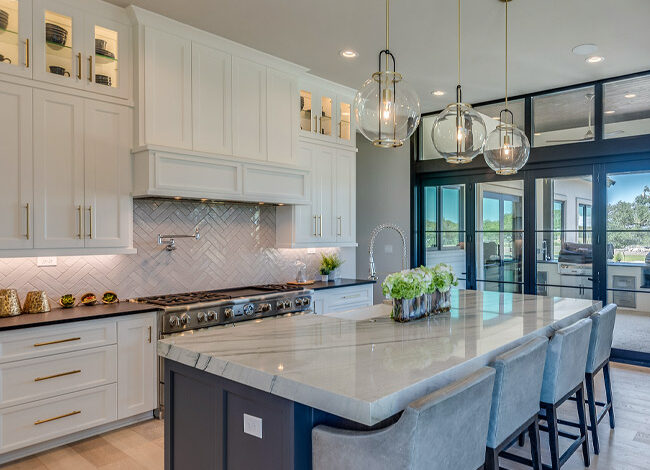
Quartz countertops come in every color you can imagine. The classic top-seller is a crisp white quartz countertop with gray veining – it looks like marble and brightens any space. Many modern kitchens use it for a clean, timeless feel.
But whites are just the start. You can also find Quartz Countertops in Black (often with speckles of white or metallic for interest). For example, black quartz countertops with tiny quartz crystal flecks create a dramatic, glittering effect. Earthy beiges and grays are common too – mimicking limestone or concrete – as are bold colors like fire-engine red or forest green. Manufacturers even offer porcelain finishes and matte honed looks to match different aesthetics. In summary, quartz lets you pick virtually any style, from stone-like patterns to solid or speckled surfaces, to fit your decor.
Popular quartz color ideas include:
- White/Marble: Bright white with gray or gold veins. (See image above.)
- Gray/Beige: Neutral gray or warm beige with subtle sparkle or veining.
- Black: Deep black with white or silver flecks – great for dramatic contrast.
- Bold Colors: Reds, blues, greens, or jewel tones (more unique, often for accent islands).
Pricing Quartz Countertops
How much do quartz countertops cost? Generally, think of quartz as a mid-to-high-end material. According to This Old House, installed quartz runs about $60–$90 per square foot on average. Recent surveys echo this: most kitchens end up around $70–$100 per sq ft (including materials and labor). Entry-level builder-grade quartz might start around $50–$60 per sq ft, while luxury slabs (nearly 100% quartz with exotic patterns) can exceed $100–$200 per sq ft.
Several factors influence price beyond material grade: slab thickness, edge profile (simple edges cost less), sink cutouts, and kitchen layout complexity. For example, a large island or tight corners can raise fabrication costs. The bottom line: quartz countertops per square foot is a useful budgeting figure – check local quotes for your exact kitchen.
To compare, granite countertops typically cost about $50–$100 per sq ft installed, often a bit less than top-tier quartz. Remember to include professional installation in quotes, as these slabs are heavy and require skill to fit.
Pros and Cons of Quartz Countertops
Pros:
- Durable & Hard: Quartz is one of the hardest countertop materials, so it resists everyday dings and scratches.
- Low Maintenance: Non-porous surface means no sealing ever. You just wipe it clean with mild soap and water for routine care.
- Hygienic: The non-porous finish also makes quartz naturally antimicrobial – germs and spills sit on top and wipe off easily.
- Design Flexibility: Available in tons of colors and patterns, including slabs large enough for seamless island tops. Fabricators can even bend thin quartz sheets into sinks or backsplashes.
- Consistent Beauty: Unlike natural stone, quartz slabs from the same lot match in color and pattern, which gives a uniform, high-end look.
Cons:
- Costly: Quartz costs about as much as granite – roughly $60–$90 per sq ft installed. This is much higher than laminate or wood counters, so it’s an investment.
- Heat Sensitivity: Though heat-resistant up to ~400°F, a very hot pan or extreme temperature shock can crack the resin binder. Always use trivets or hot pads to protect the surface.
- Not Outdoor-Friendly: Prolonged sun exposure can fade or warp quartz. It’s not recommended for uncovered outdoor kitchens.
- Heavy/Professional Install Only: The slabs weigh hundreds of pounds. Handling errors can cause breaks, so always hire certified installers.
- Less “Natural” Appeal: Some purists prefer real stone. Quartz is man-made, so it lacks the unique geological origin story of granite or marble (though it offers more consistent patterning).
What is the downside of quartz countertops?
Cost and heat limits top the list. Besides the higher price, quartz can’t handle extreme heat like some stones can. And because it’s engineered, you’re relying on a manufacturer – if you hate synthetic materials, that might be a downside. But for most kitchens, the upsides (low care and durability) outweigh these points.
Maintaining Quartz Countertops
Cleaning is a breeze. Just wipe the surface with a soft cloth and warm, soapy water. For tougher spots, mild non-abrasive cleaners or even a quartz countertops cleaner spray are fine. Avoid bleach or harsh chemicals, and never use scouring pads – these can dull the finish. Because quartz is non-porous, it won’t stain from grape juice, tomato sauce, wine, etc., making daily cleanup worry-free.
To keep quartz looking its best: immediately blot up acidic spills (like citrus or wine), and always use hot pads under heavy cookware. Avoid direct flame or prolonged heat on the surface. Also, don’t cut directly on quartz – use a cutting board. With simple care, quartz holds up like new for decades.
Quartz Countertops Cleaner and Care Tips
- Daily Cleaning: Mild dish soap + water or a 50/50 vinegar-water spray (if disinfection is needed).
- Avoid: Bleach, abrasive powders or pads, acetone, or any product that could dull resin.
- Deal with Tough Messes: For dried-on substances (e.g., paint, gum), gently scrape with a plastic putty knife and then clean. Some brands sell specific quartz countertop cleaners formulated to protect the finish, but these are optional.
Choosing and Installing Quartz Countertops
If you decide on quartz, consider slab thickness (thicker = more luxurious weight and slightly more heat tolerance) and edge profile. Hire a professional installer: Quartz slabs are very heavy (20–25 lbs per sq ft) and can crack if mishandled. Installers will template your counter, fabricate it precisely, and set it on cabinetry. No plywood underlayment is needed – slabs sit directly on supports.
Conclusion
Quartz countertops offer a winning combination of beauty and brawn. They mimic the look of stone while being practically maintenance‑free. You’ll pay a premium, but many homeowners feel the durability and lifetime of clean looks justify it. From classic white islands to sleek black or colorful accents, quartz brings high style to any kitchen. Weigh the higher cost and heat sensitivity against its easy-care advantages, and you’ll see why quartz is one of the most popular countertop choices today.
Frequently Asked Questions
What exactly are quartz countertops?
They are engineered stone made of about 90% crushed quartz crystals bound with resins. This makes a very hard, non-porous slab. They look like marble or granite but have a uniform pattern.
Is quartz better than granite?
It depends on what you value. Quartz is better for easy care (no sealing ever) and consistent looks. Granite is better if you love 100% natural stone with unique patterns. Both cost about the same per sq ft, so maintenance and style often tip the scales.
Is quartz cheaper than granite for a countertop?
Generally, no – they’re in the same price class. Standard granite runs about $50–$100/sq ft installed, similar to mid-range quartz. High-end quartz (nearly all quartz, little resin) may be pricier. Always compare quotes from local suppliers.
What is the downside of quartz countertops?
The main trade-offs are cost and heat limits. Quartz costs more than laminate or tile, and if you place a very hot pan on it, it could crack the resin. Also, UV sunlight can fade it, so it’s not suited for sunny outdoor areas.
How do I clean and maintain quartz countertops?
Very easily! Use a soft cloth with warm water and mild detergent for everyday cleaning. For tougher spots, non-abrasive cleaning sprays (even general-purpose cleaners) work fine. Avoid harsh chemicals or steel wool. Thanks to the non-porous surface, quartz resists stains and germs, so routine wiping is usually all you need.