Painting a room or refurbishing furniture is exciting, but the waiting game can test anyone’s patience. After a fresh coat, it’s natural to wonder: how long does paint take to dry? The answer is (as with many home-improvement questions) it depends. Dry time hinges on the type of paint you used (oil-based vs water-based), the ambient conditions, and even how thick your coats are. This guide breaks down those factors—temperature, humidity, paint chemistry, and more – so you know exactly when your paint is truly dry and ready for the next step.
Drying vs Curing: What’s the Difference?
First things first: dry time and cure time are not the same thing. Dry time (sometimes called dry-to-touch) is how long the paint takes to feel solid to a light touch. Cure time is how long it takes for the paint film to fully harden and reach maximum durability. For example, acrylic and latex paints often feel dry-to-touch within an hour or two, but they may take two to three weeks to fully cure. Oil-based paints generally feel tacky longer (around 6–8 hours to be touch-dry), but they chemically cure more quickly – often in about five days. In short, dry to the touch , fully dry. Always wait the recommended time before scrubbing or heavy use, even if the surface feels dry; paint can still be curing underneath.
Oil-Based vs Water-Based (Latex) Paint

The two most common paint categories are oil-based and water-based (latex) paints, and they behave quite differently. Latex paints (a common water-based variety) are known for quick drying. They rely on water evaporation, so you might see a fresh latex coat dry to the touch in about an hour. Oil-based paints, on the other hand, use solvent that evaporates more slowly, so expect roughly 6–8 hours to dry to touch. Because of chemistry, oil-based paints actually cure sooner (in days) than latex (which can take weeks). Water-based paints are easier to clean up and shrink less, but oil-based finishes can be harder and more durable once cured. Also remember that primer coats usually dry faster than topcoats – for example, a latex primer might go tack-free in 30–60 minutes, letting you move on quickly to the color coat.
Paint Finish Types and Drying
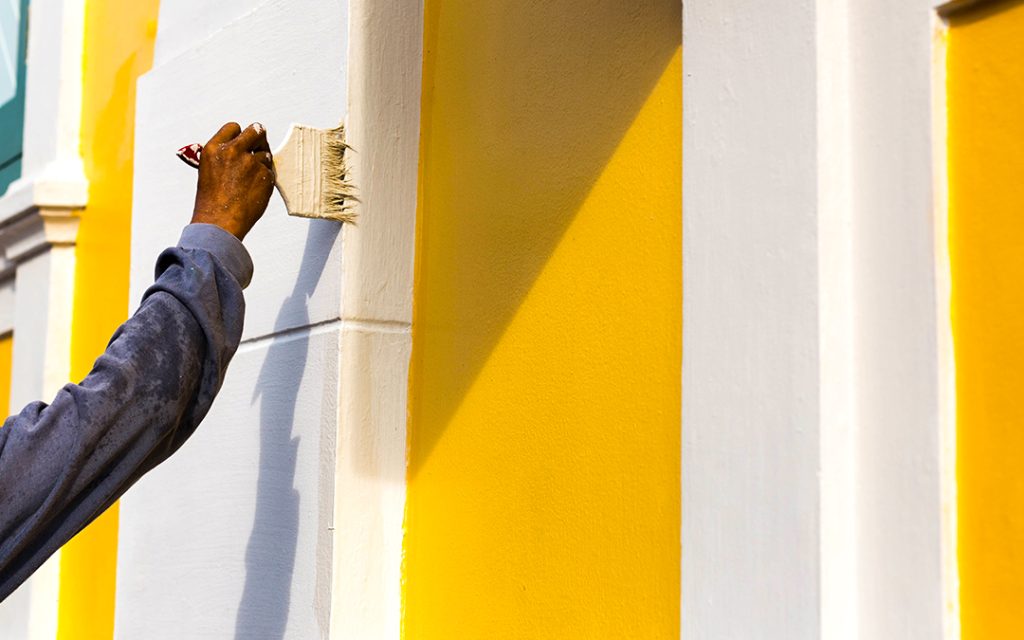
The paint’s sheen or finish also affects drying time. Flat or matte paints have fewer resins and dry the fastest. High-gloss and semi-gloss paints contain more binder (to produce shine), which slows evaporation. In practice, a flat latex wall paint might be dry to the touch in 30–60 minutes, while a glossy trim paint could take 1–1.5 hours. Eggshell and satin sheens fall in between. Keep this in mind: glossier finishes often need a bit longer to truly dry. If you’re switching from a flat to a glossy finish, budget extra drying time between coats (or sanding) to avoid smearing or tackiness.
Environmental Factors: Temperature, Humidity & Ventilation
Temperature
Paint loves mild conditions. This shows that the ideal paint drying temperature is often around 70–75°F. Most manufacturers recommend painting when it’s above about 50°F but below 90°F. Latex paints typically dry best in the 50–85°F range, and oils in roughly 45–90°F. If it’s too cold, drying can stall (below ~35°F, paint may never fully set). If it’s too hot (above ~90°F), paint can flash-dry on the surface, causing brush marks, uneven texture, and poor leveling. In practice, sticking around 70–75°F is ideal for most projects.
Humidity
The humidity effects on paint are dramatic. High humidity slows evaporation, so the paint remains tacky longer. Professional painters warn that humidity above ~50% can double or triple drying times and even cause bubbling or poor adhesion. It’s best to paint when indoor humidity is around 40–50%. On very humid days, even running the shower can extend how long the paint takes to dry, so take care.
Ventilation
Good airflow is one of the simplest tricks to help paint dry. Use fans or AC to move air across the surface. Sherwin-Williams advises closing windows on a humid day and using dehumidifiers or fans to whisk moisture away. The goal is to keep air moving – a ceiling fan or portable fan (set on low) helps the paint cure evenly. Just don’t blast direct, scorching heat on the paint; that can backfire on color and finish.
Application and Coating Tips
Apply Thin, Even Coats
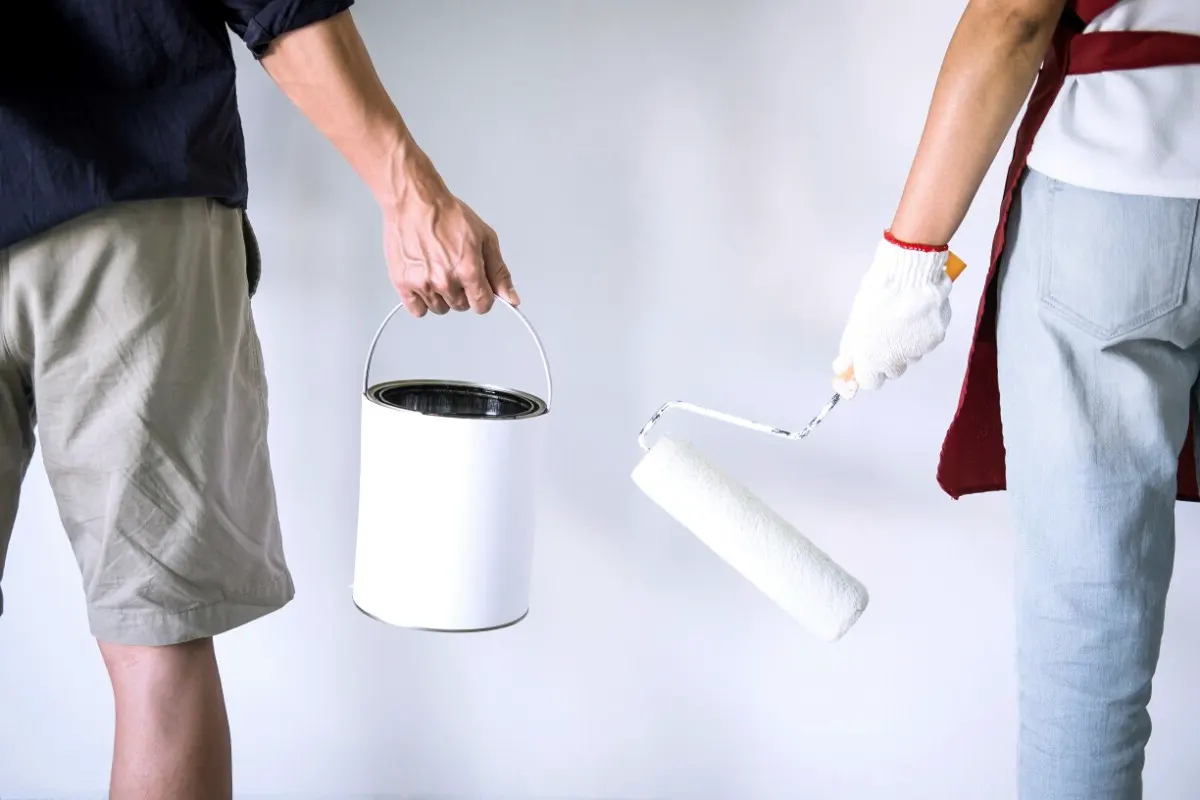
One of the biggest mistakes is applying paint too thickly. Thick layers take far longer to dry and often dry unevenly. Instead, aim for two (or more) thin, even coats rather than one thick one. Thin coats allow solvents or water to evaporate faster and more uniformly. It might take an extra pass, but the total waiting time can actually be shorter – and you’ll avoid runs or discoloration.
Priming and Prep
Preparing the surface and using a primer can also speed things up. A good primer seals pores and gives paint something smooth to stick to, which means your topcoat can dry consistently. Water-based primers are especially quick – as mentioned, latex primer often dries in under an hour – so consider priming bare drywall, wood, or patched areas to get the job done in fewer rounds of paint.
When to Apply a Second Coat
When in doubt, wait longer. As a rule of thumb, most latex paints can be recoated after about 3–4 hours, and oil-based after roughly 24 hours. If you paint the next coat too soon, the still-wet underlayer can lift or mix, causing streaks, bubbles, and other imperfections. Always do a simple feel test: if a spot is still tacky or peels up on a fingernail, give it more time.
How to Speed Up Paint Drying
Sometimes you’re on a deadline and need tips to accelerate drying. Here are some proven tricks:
-
Improve ventilation: Circulate air with fans or AC to whisk away moisture.
-
Use the right temperature: Keep the room warm but not scorching. Paint dries quickest around mid-70s°F. On cooler days, a safe space heater can raise the temp (just avoid direct heat on the paint).
-
Try fast-dry products: Look for quick-dry paints or additives. Some paints are formulated to dry faster, and oil paint driers (siccatives) can speed curing. Use these as directed.
-
Thin, even coats: As always, less paint per coat means faster drying. Applying paint in controlled strokes (rather than slapping it on) prevents excess material that stays wet longer.
Typical Dry Times for Common Paints
Different products have different schedules. The table below shows ballpark dry-to-touch and recoat times for some common paints. Always follow the manufacturer’s instructions on the can, as formulations vary:
| Paint Type | Dry to Touch | Recoat Time |
|---|---|---|
| Latex (water-based interior) | ~1 hour | 3–4 hours |
| Oil-based enamel | 6–8 hours | 24 hours |
| Primer (latex) | 30–60 minutes | 1 hour |
| Primer (oil-based) | 1–3 hours | 24+ hours |
Conclusion
How long does paint take to dry really depends on many factors: the kind of paint, the weather, and your technique. Latex dries quicker than oil, flat dries quicker than gloss, and warm, dry, well-ventilated conditions are ideal. By following the tips above (thin coats, proper temperature/humidity, and patience), you’ll avoid smudges and get great results. With this knowledge, you can confidently plan your painting project and know when it’s safe to handle or recoat your freshly painted surfaces. Armed with these tips, you’ll never have to second-guess how long paint takes to dry—you’ll know exactly what to expect!
Frequently Asked Questions
Q: How long does paint take to dry on average?
A: It depends on the paint type and conditions. In general, water-based latex paints dry much faster than oil-based. A typical interior latex coat will be dry to the touch within 1–2 hours and ready for a second coat in about 4 hours. Oil-based paints usually take 6–8 hours to feel dry and up to 24 hours to recoat. Remember this is just a ballpark – check your paint can for exact instructions.
Q: Why is my paint still tacky after several hours?
A: Tacky paint often signals an environmental or application issue. High humidity or low temperatures can dramatically slow drying. Also, if the coat is very thick or the paint isn’t high-quality, it will take longer to dry. Make sure you used thin coats and keep the room well-ventilated and warm (around 70°F) to help it dry. In really humid spaces, a dehumidifier or fan can make a big difference.
Q: Can I apply a second coat before the first one is fully dry?
A: It’s generally best to wait until the first coat is dry-to-touch before recoating. For most latex paints that’s around 3–4 hours, and for oil paints about 24 hours. Putting a wet second coat on top of a wet first coat can ruin the finish (you might see streaking, bubbling, or peeling). If you are in doubt, do a touch test: if the paint feels cool or sticky, give it more time.
Q: Does humidity or cold weather affect paint drying?
A: Yes, both humidity and temperature have major effects. Paint dries by solvent evaporation or water release, so if the air is already saturated, drying slows dramatically. Cold weather (below 50°F) also slows drying; very low temps can prevent paint from setting at all. If you must paint in a marginal climate, use a dehumidifier, heater, and good airflow, and choose a paint formulated for lower temperatures.
Q: What’s the difference between a paint being ‘dry’ and fully cured?
A: As mentioned earlier, dry usually means dry to the touch or ready for a recoat, whereas cured means fully hardened. Dry-to-touch means you can handle the item carefully, but the paint is still chemically hardening. Fully cured paint has developed maximum hardness and durability. Latex paint, for example, is often ready for light use in a day or two, but it can take up to a month to cure completely. Oil paints cure faster (often in a week or so) but remain soft longer initially. Keep this in mind when planning furniture or high-traffic use.