Home Theater Power Manager: Power Conditioning & Protection Guide
Home Theater Power Manager

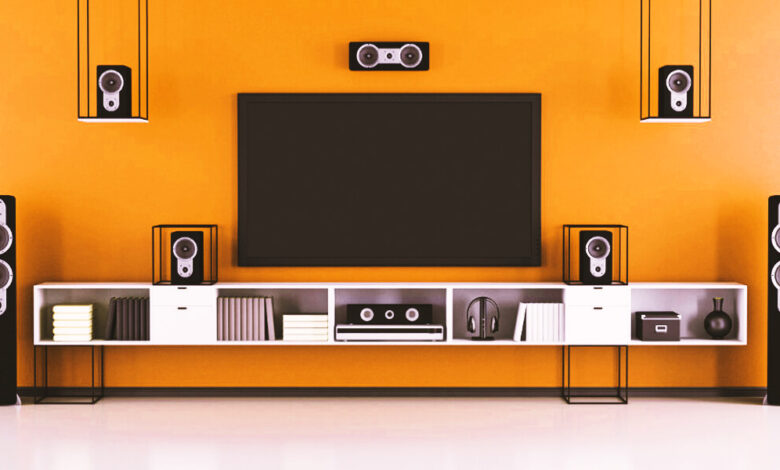
A home theater power manager (also called a power conditioner) is a dedicated device that ensures only clean, stable electricity feeds your entertainment gear. Think of it as more than a fancy surge protector – it actively regulates voltage, suppresses spikes, and filters out electrical noise. By plugging all your components (TV, receiver, speakers, etc.) into one power manager, you centralize control and protect expensive equipment from surges and dirty power. Modern power managers even include smart features like automatic shut-off on bad voltage, remote control via an app, and sequential outlet triggering. In short, these units safeguard your gear and can even improve audio/video clarity. Below is a quick overview of what power managers do:
| Feature | Description |
|---|---|
| Also Known As | Power Conditioner or AVM (Automatic Voltage Monitoring) Filter |
| Main Functions | Regulates AC power, suppresses spikes, and filters noise |
| Key Benefits | Protects equipment from damage, improves sound/video quality, and consolidates power cables |
| Typical Features | Multiple outlet banks, surge-absorbers (MOVs), RFI/EMI filtering circuits, and digital meters or remote apps |
| Popular Brands | Panamax (Nice), Furman, AudioQuest, Tripp Lite |
What Is a Home Theater Power Manager?
![Best Home Theatre Power Managers in [year] | Become Singers](https://www.becomesingers.com/wp-content/uploads/image.jpeg)
A home theater power manager is a device built to protect and optimize your AV system. It’s essentially a high-end power strip that regulates AC voltage and filters out interference before it hits your electronics. For example, a Panamax M8-AV-PRO unit will disconnect power if it detects dangerous over-voltage or brownouts, then automatically restore power when conditions are safe. These units “ensure that clean, stable energy flows” into your components, shielding them from spikes, surges, and spikes that basic strip won’t handle. In fact, one expert notes a power manager “filters power, eliminates noise, and provides surge protection,” whereas a typical surge protector “does not filter electricity” at all. In practical terms, plugging your TV, receiver and other devices into one unit means one switch can power everything on or off, simplify cable clutter, and give you peace of mind.
Definition and Synonyms
-
Surge Protector vs. Power Manager: Unlike a cheap power strip, a power manager (aka power conditioner) goes beyond mere surge arrest. It cleans and stabilizes power. Technically, it combines surge protection with high-frequency noise filtering and often automatic voltage monitoring.
-
Power Conditioner: Many manufacturers and buyers use “power manager” and “power conditioner” interchangeably. Both terms mean a device that conditions the AC power for home theater use.
-
Home Theater Use: These devices are sized for entertainment gear – they often look like rack components or compact boxes with multiple rear outlets (and sometimes coax/RJ11 jacks).
Why You Need One
Even in a modern home, the electrical supply can be unpredictable. Voltage can sag, surge or become “dirty” from other appliances or grid issues. A home theater power manager makes surges and drops virtually invisible to your system. It not only protects but often improves performance. Clean power means your receiver hears every detail and your display shows a steadier picture. For people who have invested in quality AV gear, a power manager is a smart insurance policy. It maximizes equipment life by cutting off dangerous spikes and by reducing electrical noise that can degrade sound or video.
How Does a Power Manager Work?
Power managers use a few key technologies under the hood:
Surge Protection & Voltage Monitoring
Most power managers include surge suppression (often with metal-oxide varistors or special circuits) to shunt extra voltage away from your devices. Premium units like the Panamax M8-AV-PRO use an exclusive “Protect-or-Disconnect” circuit: in a huge spike (think lightning), they completely cut power off to safeguard your gear. Many also feature AVM (Automatic Voltage Monitoring). AVM continuously watches the line voltage and shuts off the output if it strays too low or too high, then reconnects when it stabilizes. This means brownouts or overvoltage events won’t fry your components or cause glitches. For example, Panamax advertises that its AVM will “disconnect your equipment in the event of an over voltage or undervoltage… reconnecting when voltage returns to a safe level”.
Noise Filtration (RFI/EMI Filtering)
Besides spikes, dirty power has lots of low-level noise (radio-frequency interference and electromagnetic interference) from neighboring devices and broadcast signals. Power conditioners combat this with RFI/EMI filters, essentially iron-core inductors and capacitors that bleed off the noise. In practice, this cleans up pesky hums, hisses or picture artifacts. Panamax’s M8-AV-PRO boasts “Power Cleaning and Premium Filtration” that “eliminates common symptoms of contaminated power (including loss of detail, hisses, hums and visual artifacts)”. The result is quieter background noise – you might even hear details in music or see finer contrast in video that were previously masked by interference.
Sequencing, Triggering & Remote Control
Power managers often offer multiple outlet banks with features for control. For instance, some units have two electrically isolated banks so that noisy amplifiers in one bank won’t pollute a TV in the other. Many also support a 12V trigger or remote logic line: you can wire a trigger cable so that turning on a receiver automatically turns on certain outlets. Advanced IP power conditioners (like those with Panamax’s BlueBOLT) add network control: you can reboot a frozen device from your phone. Modern power managers can even reboot your router when the Internet drops, thanks to automated routines. Panamax’s DC12-IP DC Power Manager “provides remote power + energy management” and “reduces equipment issues/service calls with remote reboots”. In short, these features let your system come up in the right order and stay running smoothly.
Key Features to Look For
When shopping, prioritize these features:
-
Surge & Spike Suppression: Look for high joule ratings (the energy absorption) and quick response. A higher joule rating means it can absorb bigger hits before wearing out. For example, Panamax’s Power360 P360-8 has an Energy Dissipation of 1620 joules, which is “best in class” for its size.
-
Automatic Voltage Monitoring (AVM): Ensures safe cut-off on dangerous voltages. This protects against brownouts and overvoltage that a normal surge protector alone can’t handle. Panamax’s AVM technology is a highlight on units like the M8-AV-PRO.
-
RFI/EMI Filtration: Reduces high-frequency noise. A good unit will advertise RFI/EMI filter performance (measured in dB at certain frequencies). Even if not specified, any reputable power conditioner will mention “noise filtration” on its feature list.
-
Multiple Outlets (including High-Current): For flexibility. Many managers provide 6–12 outlets, often with a mix of “filtered” (full conditioning) and “surge-only” or “high-current” outlets for big amps. The Furman M-8Dx, for instance, has 8 rear outlets (3 spaced for transformers) plus 1 front–perfect for smaller blocks.
-
Remote/App Control: Increasingly important. Look for IP power conditioners or units branded “BlueBOLT enabled”. For example, Panamax offers BlueBOLT 2.0, a cloud-based power management platform, complete with a remote mobile app. This lets you schedule power cycling, get alerts on voltage, and reboot equipment from anywhere (even via a universal smartphone remote or automation system).
-
Additional Protections: Many models protect not just AC lines but also coaxial (cable/satellite) and telephone/LAN lines. The M8-AV-PRO, for example, has built-in coax and RJ11/RJ45 surge protectors, shielding your cable box and network hardware from line transients too.
Together, these features give a power manager real power to both guard and optimize your system.
Benefits of Using a Power Manager
Using a dedicated power conditioner offers several clear advantages.
Equipment Protection & Longevity
By cutting off life-threatening surges and filtering irregular voltages, power managers extend the life of your components. Manufacturers emphasize that “power management is critical to the safety, performance, and longevity of your valuable electronics.” In other words, the few dollars spent on a good power manager can save you the cost of a blown receiver or TV later.
Cleaner Audio and Video Quality
Many high-end AV enthusiasts insist their system sounds and looks better with a power manager. With “dirty” power tamed, speakers reveal more detail and displays show steadier pictures. For example, after connecting a reference system to an AudioQuest Niagara 1200 power conditioner, reviewers noted that “the reproduction is more three-dimensional and has more depth.” This isn’t magic. With less electrical noise, your gear can operate at its best.
Convenience and Centralization
Beyond technical benefits, these units solve practical headaches. Instead of a tangle of surge strips, a single power conditioner can power up to a dozen devices neatly. You can shut everything on or off with one switch or command. Many managers offer master switches or remote on and off features, which means you can eliminate phantom power draw at night. They streamline your setup with less clutter and, in some cases, visual indicators such as Panamax’s “Circle of Protection” lights for quick status checks.
Energy Savings
Some smart power managers allow you to cut power to idle equipment. For example, BlueBOLT’s scheduled conservation can turn off outlets on a timer, reducing vampire power draw. Over time, this approach can modestly lower energy bills while reducing environmental impact.
Peace of Mind
Knowing your 4K TV, AV receiver, game console, and modem are all protected by a robust unit adds stress-free confidence. There is no need to worry about a neighbor’s power tool triggering a surge. If something does go wrong, a power manager can prevent a frantic and costly service call.
In sum, a power manager both protects your investment and enhances your entertainment experience. It remains a practical accessory for any home cinema setup, especially if you have invested heavily in quality equipment.
IP Power Conditioners & App Control
The latest power managers come with networking and app features. These IP-connected power conditioners allow you to control and monitor power remotely.
Panamax BlueBOLT 2.0
Panamax offers the BlueBOLT platform for their enabled units. Through the BlueBOLT app or web interface, you get real-time cloud-based monitoring of voltage, power usage, and device status. You can schedule power-cycling routines, such as rebooting your router if it goes offline, and receive alerts on your phone. For example, Panamax notes that you can perform “hard reboots” of locked equipment from any web-enabled device using BlueBOLT.
Remote Smart Control
Besides apps, some power conditioners integrate with home automation systems. You might trigger them via RS-232, IR, or even a universal TV remote using an IR blaster. Imagine using your TV’s power-on command to automatically power up the AV receiver through the power manager’s trigger output. While specifics vary by model, modern power managers often include triggers or ports designed for linking to universal remotes or smart home hubs.
Stand-Alone Control Apps
In general, look for units that explicitly advertise a home theater power manager app or network control. These apps simplify system maintenance. For instance, instead of crawling under the TV stand to power-cycle a frozen cable box, you can simply tap the app.
Energy Monitoring
Cloud-enabled units can also log energy usage. Panamax’s DC12-IP allows you to view amperage and wattage per outlet, making it easier to identify unusually high power draw that could signal a faulty device, even when you are away from home.
Scheduled Conservation
Many apps allow you to set schedules, such as turning off game console outlets after midnight or powering the subwoofer only during movie mode. These smart features support energy savings while adding everyday convenience.
Panamax Power Management Solutions
Among power management brands, Panamax (now under the Nice/BlueBOLT umbrella) is especially prominent. They offer a range of power conditioners and surge protectors tailored for home theaters. A selection of Panamax/Nice power management products includes the Power360 strip, M8 rack unit, and BlueBOLT modules. Panamax (Nice) provides surge-protected, filtered power conditioners for home theaters and studios, with a strong emphasis on robust protection.
Power360 P360-8
For example, their Power360 P360-8 is a compact 8-outlet floor strip with an additional 4 USB ports. It features “Protect-Or-Disconnect” circuitry along with SmartGuard over-voltage and under-voltage monitoring. The company advertises this series as offering “best-in-class protection” for a home entertainment setup. The P360-8 also includes a “Circle of Protection” status indicator that alerts users to wiring faults and live power conditions.
M8-AV-PRO
This rackmount model is a classic. It has 8 total outlets divided into two banks and includes built-in coax and telephone surge protectors. Its patented AVM shuts the system down during unsafe voltage conditions, and if a catastrophic surge occurs, it disconnects power entirely. The result is that “voltage irregularities are eliminated, and your AV system is protected.” Panamax also highlights how the M8-AV-PRO’s filtration improves picture and sound by removing hisses, hums, and other electrical noise. This model is frequently recommended for professional theaters and studios due to its combination of surge protection, filtration, and trigger control, including a 12V trigger input for component sequencing.
DC12-IP
For smart setups, Panamax offers the DC12-IP, a 12-output rack unit designed for low-voltage devices. It functions as an IP Power Manager. According to its specifications, the DC12-IP protects connected equipment from power surges and dangerous voltage conditions while also providing remote power and energy management. It is BlueBOLT-enabled, allowing users to monitor each output through the cloud. This makes it suitable for protecting low-voltage gear such as access points, modems, and surveillance cameras while enabling scheduled power control.
Other Panamax Surge Protectors
Beyond these models, Panamax offers stand-alone surge protectors and power strips, including the MR4300 9-outlet model and compact wall taps. Although positioned as lower-end options, they still rely on the Protect-Or-Disconnect design. Panamax also produces add-on modules for coaxial and phone line protection, along with battery backup units. Across all these products, the focus remains on heavy-duty surge suppression combined with noise filtering.
Panamax “Power360” Line
The “Power360” branding refers to this compact series, which includes models such as the P360-8 and P360-DOCK. It highlights Panamax’s ability to span both professional rackmount solutions and consumer-friendly power strips. Throughout the line, the emphasis remains on effective filtration and automatic shutoff during over-voltage or under-voltage conditions.
Comparing Top Home Theater Power Managers
Several models stand out in reviews as best home theater power conditioners. Here are a few often recommended:
-
AudioQuest Niagara 1200: This is an audiophile-grade conditioner with 7 outlets (2 high-current for amps, 5 filtered for others). It uses a proprietary Ground Noise-Dissipation System. Reviewers cite it as highly effective: it “can withstand surges and spikes up to 6000 volts”, far above typical protectors. One writer called the Niagara series “one of the best home theatre power manager solutions money can buy”. The Niagara focuses on pure filtration and non-sacrificial surge arrest (it drops into shutdown on over-voltage rather than let energy through). It’s pricey, but is often listed as a top-tier home theater power conditioner.
-
Panamax M8-AV-PRO: As described above, Panamax’s M8-AV-PRO is a strong performer and more affordable. Its eight outlets, combined surge and filtering technology, and AVM cover all bases. It’s a common choice in custom installs.
-
Furman M-8Dx (Merit Series): Furman is another respected brand. The M-8Dx is an 8+1 outlet, 15A power conditioner. It provides “standard level surge/spike protection” and RFI/EMI filtration. Notably, it includes a built-in digital voltmeter (to watch wall voltage) and two retractable lights for rack illumination. It has 150 joules of surge absorption, which is less than some, but Furman focuses on clean sound. Many live-sound professionals use Furman conditioners to clean mixers and amps on stage. It’s a solid mid-range home theater power manager.
-
Tripp Lite IPS1000 & Other Models: (Note: If you have a data service, you might see references to UPS units with power conditioning. Some UPS combos act as conditioners, but they add battery backup.) For pure conditioners, Tripp Lite’s MHT or Monster’s HTS series are more mainstream options. They offer basic surge protection plus light RFI filtering. While not citation-based, they often come up in consumer shopping lists.
-
Best Value Picks: Some bundle brands like Monoprice or Furman’s entry lines (like the M-8×2 Merit) give fair power management at lower cost. They filter noise and give basic surge protection. If budget is tight, a dedicated unit is still better than a plain strip. Even the Panamax Power360 P360-8 (about $100 retail) brings advanced features (4 USB, coax protection) to a desktop strip form.
| Model | Outlets | Surge Suppression | Voltage Reg. | Filtration | Controls/Extras |
|---|---|---|---|---|---|
| AudioQuest Niagara 1200 | 7 (2 high, 5 filtered) | 6000V non-sacrificial (drop out) | No AVM (sacrifices on fault) | High, ground noise system | None (passive design) |
| Panamax M8-AV-PRO | 8 AC outlets | 1875 J (Protect/Disconnect™) | AVM (90V–142V limits) | EMI/RFI filtering | 12V trigger, coax/phone line protect |
| Furman M-8Dx | 8+1 outlets | 150 J (standard surge) | No (voltmeter only) | Standard RFI/EMI | Digital voltmeter, lights |
| Panamax P360-8 | 8 AC + 4 USB | 1620 J (Protect/Disconnect™) | SmartGuard shutoff | EMI/RFI filter (spec 53 dB @ 100kHz) | USB chargers, “circle of protection” LEDs |
Power Manager vs Surge Protector
It’s important to differentiate. A basic surge protector is essentially a multi-outlet strip with metal oxide varistors that clamp spikes. It does not clean noise or regulate voltage. By contrast, a home theater power manager combines that surge protection with power conditioning.
-
Protection Scope: A surge protector only guards against high-voltage spikes, dumping extra energy to ground. A power manager adds AVM and filters, so it also blocks undervoltage and steady low-frequency noise.
-
Noise Filtering: Power managers include capacitors/inductors to remove RFI/EMI. Surge strips typically have no filtering circuitry.
-
Outlets & Control: Power managers often let you switch banks of outlets or use triggers. A strip just provides uncontrolled outlets.
-
Performance: You may not notice a difference with cheap gear. But with high-end amplifiers and digital video, clean power from a conditioner can yield measurable improvements in noise floor and signal fidelity.
| Feature | Power Manager | Basic Surge Protector |
|---|---|---|
| Surge Protection | Yes (often heavy-duty) | Yes (varistors only) |
| Automatic Voltage Monitoring | Yes (cuts off on bad voltage) | No |
| Noise Filtration (RFI/EMI) | Yes (common mode filters) | No |
| Outlets Switching/Sequencing | Often (master/trigger outputs) | No |
| Data/Coax Line Protection | Often included (coax/RJ ports) | Rare or none |
| Smart/App Control | Some models (IP-enabled) | No |
Conclusion
A dedicated home theater power manager (power conditioner) is a wise upgrade for any serious AV system. By combining robust surge suppression, automatic voltage monitoring, and noise filtration, it protects your devices and can enhance sound and picture quality. Modern units like Panamax’s M8-AV-PRO or Furman’s M-8Dx pack multiple outlets, advanced filtering, and even smart control features. Whether you’re a casual movie watcher or an audiophile, a power manager offers peace of mind – one less thing to worry about in your home cinema setup.
With a clear understanding of features and benefits, you can choose the best power manager for your needs. Remember the key LSI concepts: surge protector vs power conditioner, brands like Panamax, and innovations like BlueBOLT remote management. Invest in clean power, and your home theater will thank you with better performance and longevity.
FAQs
Do I really need a home theater power manager?
Yes, especially if you use mid-to-high-end AV gear. It protects against power spikes, voltage drops, and electrical noise. For a basic TV setup, a standard surge strip may be enough.
How is a power conditioner different from a surge protector?
A power conditioner does more than stop spikes. It also filters noise and regulates voltage. A surge protector only blocks sudden voltage surges.
Can a power manager improve sound quality?
It can. Cleaner power reduces electrical noise, which may improve clarity and detail, especially in high-quality audio systems.
Can I control it with a remote or app?
Yes. Many modern units support mobile apps and universal remotes. Platforms like BlueBOLT allow remote monitoring, scheduling, and power cycling.
How many outlets should I choose?
Count all your devices and add extra capacity. Most units support 15 amps, but large amplifiers may need high-current outlets. Always choose more outlets than you currently need.