Why Your Washing Machine Gets Dirty
Every wash cycle leaves something behind. Detergent residue, fabric softener film, body oils, lint, and minerals from your tap water all accumulate inside the drum, rubber seal, filter, and pipes over time. The machine creates a warm, moist environment after every cycle — ideal conditions for bacteria, mildew, and black mould to grow.
Most people wash at low temperatures (30–40°C) to save energy and protect fabrics. That is good practice for your clothes, but these temperatures are not hot enough to kill the bacteria and mould spores building up inside the machine. Without regular cleaning, your washing machine becomes one of the dirtiest appliances in the home despite its job being to make things clean.
The result is a machine that works harder, uses more electricity, and returns clothes that smell worse than when they went in. Knowing how to clean a washing machine properly is the most cost-effective maintenance habit any homeowner can build.
A study from the Wfk Institute for Applied Research found that washing machine drums can harbour significant bacterial populations — including faecal bacteria — especially in machines used regularly at low temperatures. Regular hot cleaning cycles disrupt this build-up before it becomes a hygiene problem for your family.
8 Signs Your Machine Needs Cleaning Right Now
How to Clean a Washing Machine — Step by Step
Work through these steps in order before running your hot cleaning cycle. Cleaning the parts first means any loosened debris gets flushed away when the cycle runs at the end.
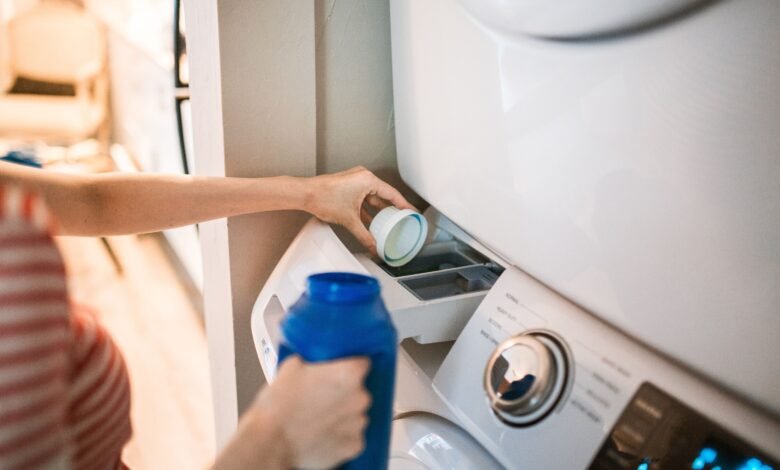
Clean the detergent drawer
Pull the drawer out completely — most have a release tab you press while sliding. Soak it in a bowl of hot water with a few drops of dish soap for 15 minutes. Scrub every compartment with an old toothbrush, especially the back corners where mould hides. Rinse thoroughly and let it dry fully before putting it back.
Scrub the rubber door seal (front-loaders)
Peel back every fold of the rubber gasket — mould collects in layers invisible from the outside. Mix equal parts white vinegar and warm water and wipe deep into the folds. For stubborn black mould, apply a paste of bicarbonate of soda and a little water with a toothbrush. Wait 10 minutes, then wipe clean. Dry the seal completely with a soft cloth afterwards — moisture left behind causes immediate regrowth.
Clean the filter
On front-loaders, the drain filter sits behind a small panel at the bottom front of the machine. Place a tray and old towel in front before opening — water will spill out. Unscrew the filter slowly, drain the water, then remove it. Pull out any trapped lint, hair, coins, or debris. Rinse under a hot tap, scrub the housing cavity with a toothbrush, then screw it back in firmly. A loose filter causes leaks.
Wipe down the drum interior
Spray white vinegar or an all-purpose cleaner onto a microfibre cloth and wipe the inside of the drum, including around the drum holes where residue collects. Avoid spraying vinegar directly onto the rubber seal repeatedly — acetic acid degrades rubber over time.
Run a hot empty cycle with cleaner in the drum
This is the most important step. Place your chosen cleaning product directly in the empty drum — not the detergent drawer, where it dilutes before reaching the drum interior. Select your machine’s drum clean programme, or set the hottest available temperature (60–90°C). Heat activates the cleaning agents and destroys bacteria, mould spores, and biofilm throughout the drum, pipes, and heating element.
Final wipe and leave the door open
Once the cycle finishes, wipe the door seal and drum interior with a dry cloth to remove any loosened debris. Leave the machine door slightly open. This single habit — letting air circulate after every wash — prevents the moisture build-up that causes 90% of mould and odour problems.
Many modern washing machines — including Bosch, Samsung, LG, Beko, Hotpoint, and Miele — have a dedicated “Drum Clean,” “Self Clean,” or “Tub Clean” cycle. This runs hotter and longer than a standard 90°C wash, often reaching 95°C, and is specifically designed to reach parts of the machine a regular cycle cannot. If your machine has this setting, use it monthly.
Natural Cleaning Methods That Actually Work
Before reaching for commercial products, many households prefer natural methods. Here is an honest look at what works, what does not, and for which problems:
| Method | Best for | Kills bacteria | Removes limescale | Removes mould |
|---|---|---|---|---|
| White vinegar | Light odours, surface deodorising | Partial | Weak | Light mould only |
| Bicarbonate of soda | Deodorising, light grime on seals | No | No | No |
| Soda crystals | Detergent residue and fabric softener build-up | No | No | No |
| Citric acid | Limescale (hard water areas) | No | Yes | No |
| Hydrogen peroxide (3%) | Mould on the rubber seal | Yes | No | Yes |
The most effective natural approach is to combine methods to target different problems. For a monthly drum clean, pour 500g of soda crystals directly into the drum and run a 60°C empty cycle. For mould on the seal, use the vinegar-and-bicarb paste method. For descaling in hard water areas, use citric acid dissolved in water in the drum once every two to three months.
Do not mix bleach and white vinegar in the same cycle. Together they produce chlorine gas, which is toxic. Use one or the other — never both in the same wash. Also avoid applying vinegar to the rubber door seal more than once a month; repeated contact with acetic acid degrades the rubber and shortens the seal’s lifespan.
Commercial Cleaners: Which to Use and When
When natural methods are not enough — particularly after months of low-temperature washing — commercial washing machine cleaners offer targeted formulations that cover multiple problems in a single cycle.
Enzyme-based tablets
These contain protease (breaks down proteins like pet hair and body oils), lipase (dissolves grease and fabric softener), and amylase (clears starch and detergent residue). They are the most complete option for a monthly deep clean and work especially well in households with pets.
Oxygen bleach cleaners
Products like Dylon 5-in-1 or OxiClean washing machine cleaner disinfect the drum and remove staining. Effective for hygiene but limited against limescale. Good option for households without hard water problems.
Citric acid descalers
Essential for anyone in a hard water region — these dissolve the limescale coating the heating element that other cleaners miss entirely. Use every two to three months in hard water areas, every six months elsewhere.
Dedicated disinfectant cleaners
Brands like Dettol Washing Machine Cleaner or Persil Machine Cleanser specifically target bacteria and odour-causing organisms. Run one dose at 60°C on an empty drum. Most effective when used after the manual cleaning steps above rather than as a standalone solution.
Check your machine manufacturer’s guidelines before using any commercial cleaner. Some brands — particularly certain Miele and AEG models — specify approved cleaning products that will not void your warranty. Using unapproved bleach-based cleaners may damage seals or internal components.
Front-Load vs Top-Load: Key Cleaning Differences
The cleaning principles are the same for both machine types, but there are important practical differences:
| Feature | Front-load machine | Top-load machine |
|---|---|---|
| Rubber door seal | Needs regular scrubbing — main mould risk | No seal — one less problem area |
| Filter location | Bottom front panel | Inside drum or agitator — check manual |
| Drum clean method | Add cleaner to drum, run hot cycle | Fill with hot water, add cleaner, soak then drain |
| Mould risk | Higher — door seals trap moisture | Lower — open top allows drying |
| After-cycle habit | Leave door ajar — essential | Leave lid open — good practice |
| Clean frequency needed | Monthly minimum | Every 6 weeks for light use |
How to deep-clean a top-load washing machine
Set the machine to its hottest cycle and the largest load size. Let it fill completely with hot water, then add your cleaning product directly to the drum. Let the machine agitate for two minutes to mix, then pause the cycle and allow it to soak for 30 minutes to an hour. Restart and let the cycle complete. Run an additional plain hot rinse cycle to flush out any remaining residue.
Your Washing Machine Cleaning Schedule
How often you need to clean your washing machine depends on your wash frequency, water hardness, and whether you have pets. Use this schedule as a baseline and adjust based on what you observe:
- Remove clothes promptly from the drum
- Leave the door or lid open to air out
- Wipe seal dry if doing a heavy load
- Wipe door seal dry with a cloth
- Wipe inside of detergent drawer
- Check filter area for visible leaks
- Full clean: drawer, seal, and filter
- Wipe drum interior
- Run hot empty cycle with cleaner in drum
- Use drum clean programme if available
- Descale with citric acid (hard water areas)
- Deep-clean filter housing
- Inspect door seal for wear or cracks
- Check external hoses for kinks or leaks
If you wash more than 6 loads a week, have pets, use only cold cycles, or live in a hard water area, move your full monthly clean to every two to three weeks. Soft water areas with light laundry use can stretch to every six weeks between deep cleans, provided you do the weekly wipe-downs consistently.
Frequently Asked Questions
How often should I clean my washing machine?
Once a month is the standard recommendation for most households. If you wash at low temperatures (30–40°C), have pets, do many loads per week, or live in a hard water area, clean every two to three weeks. The weekly habit that makes the biggest difference is simply leaving the door open after every cycle — this alone prevents most mould and odour problems from developing.
Can I use vinegar and baking soda together?
You can use them separately in different cycles — vinegar in one hot empty wash, baking soda in a second. Using them together simultaneously causes a chemical reaction that largely cancels out both ingredients before they can clean anything. Use them in sequence for better results, and avoid applying vinegar directly to the rubber door seal more than occasionally, as it degrades rubber over time.
What temperature should I run the cleaning cycle at?
60°C to 90°C for a standard cleaning cycle. If your machine has a dedicated drum clean or self-clean programme, use that — it runs hotter and longer than a standard 90°C wash. The heat is essential: it activates cleaning agents and kills the bacteria and mould spores that accumulate from washing at lower everyday temperatures.
Why does my washing machine still smell after cleaning it?
Check three places: the rubber door seal folds (mould hides in layers that are easy to miss), the filter housing (stagnant water trapped here causes persistent odour), and the standpipe or drain connection (external drain gases can flow back into the machine). If the machine has run primarily at 30°C for months, one clean may not be enough — run two or three consecutive hot cycles a week apart to fully clear deep-seated bacterial build-up.
Is it safe to put cleaning products in the drum instead of the drawer?
Yes — for dedicated washing machine cleaners, placing them directly in the drum is actually recommended. Products placed in the detergent drawer dilute with water before reaching the drum and may not penetrate internal components effectively. Check the product instructions; most specialist cleaners specify going into the drum on an empty hot wash.
Can I use dishwasher tablets to clean a washing machine?
Many people do, and they produce reasonable results because dishwasher tablets contain surfactants and some descaling agents. However, they are not formulated for the specific residue in washing machines — particularly pet hair proteins and fabric softener deposits. A dedicated washing machine cleaner or enzyme-based tablet will consistently outperform a dishwasher tablet for this task.
How do I know if my water is hard and whether I need to descale?
Hard water contains high levels of dissolved calcium and magnesium that leave limescale deposits on heating elements and pipes. Signs include white crusty deposits around taps and showerheads, soap that does not lather well, and a film left in kettles. If you see any of these, use a citric acid descaler in your washing machine every two to three months to protect the heating element and maintain efficiency.
Does knowing how to clean a washing machine properly actually save money?
Yes, in measurable ways. Limescale on the heating element can increase electricity consumption by up to 40% per cycle. Regular descaling alone pays for itself in energy savings within a few months. Beyond that, consistent cleaning extends machine lifespan significantly. A washing machine that lasts 12 years instead of 8 represents thousands of dollars or pounds saved — and avoids the environmental cost of premature appliance disposal.
The short version
To clean a washing machine properly: remove and scrub the detergent drawer, wipe mould from every fold of the rubber seal, clean the filter, then run a hot empty cycle with your chosen cleaner placed directly in the drum. Do this monthly. Leave the door open after every single wash. That one habit — which costs nothing and takes zero extra time — prevents the vast majority of mould, odour, and bacteria problems before they start.