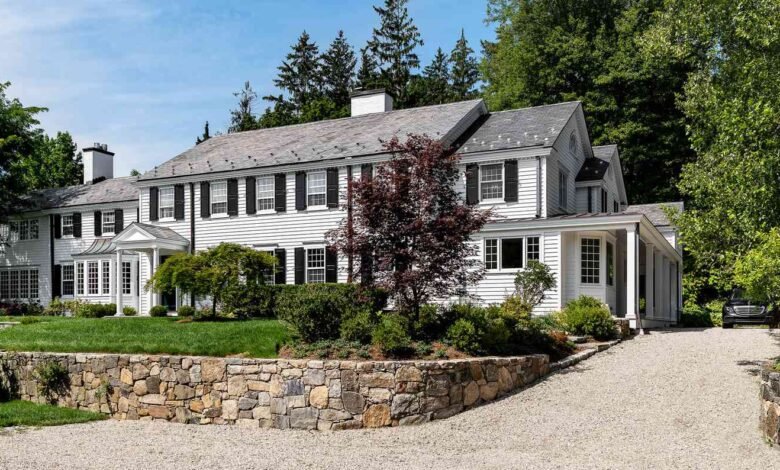
The United States is home to a remarkable mix of architectural styles, shaped by waves of European settlement, regional climate, and shifting cultural tastes over more than 300 years. The 14 styles covered here, including Colonial, Victorian, Craftsman, Tudor Revival, Mediterranean Revival, Ranch, and Mid-Century Modern, represent the styles most homeowners, buyers, and design enthusiasts actually encounter when they search for “what style is my house.” Each style has identifiable features like roofline, window shape, and exterior material that let you date and classify a home in minutes, even without architectural training.
Drive through almost any American neighborhood and you’ll see a patchwork of house styles stacked next to each other: a brick Colonial beside a stucco Mediterranean, a steep-roofed Tudor across from a low, sprawling Ranch. That variety isn’t random. It’s a direct record of who settled where, what materials were available, and which design movements were fashionable at the moment a neighborhood was built.
This guide breaks down 14 of the most recognizable architectural styles in the U.S., what defines each one, when it was popular, and where you’re most likely to find it today. Whether you’re trying to identify your own home, shopping for a new one, or just curious about the houses on your street, you’ll be able to spot these styles on sight by the end.
14Styles covered
1600s-NowTime span
300+ yrsOf design history
1. Colonial
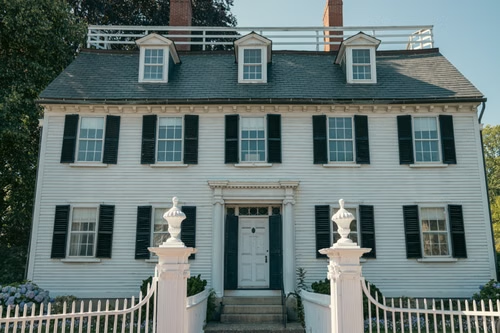
Popular: 1600s-1800s (and continuously revived since) | Common in: Northeast, Mid-Atlantic, nationwide as “Colonial Revival”
Colonial homes are defined by strict symmetry: a centered front door, evenly spaced windows on either side, and a simple rectangular or square footprint. Most are two stories with a side-gabled roof, brick or wood-clapboard siding, and minimal ornamentation beyond a pedimented entryway. Because settlers arrived from England, France, the Netherlands, and Spain, “Colonial” actually covers several regional sub-styles, but the symmetrical, classically proportioned facade is the thread that ties them all together.
2. Cape Cod

Popular: 1600s-1950s | Common in: New England, nationwide post-WWII
A close cousin of Colonial, the Cape Cod style is typically one to one-and-a-half stories with a steep, side-gabled roof designed to shed heavy snow. Expect a centered front door, multi-pane double-hung windows, and modest dormers tucked into the roofline. This style boomed again after World War II as an affordable, efficient starter home, which is why you’ll still find entire postwar subdivisions built almost entirely of Cape Cods.
3. Victorian (Queen Anne)
Popular: 1860-1900 | Common in: San Francisco, Northeast, Midwest river towns
If a house looks like a colorful dollhouse, it’s almost certainly Victorian, and specifically Queen Anne, the most ornate and recognizable sub-style. Look for steep, irregular roof lines with multiple gables, a round or polygonal corner tower, wraparound porches, patterned shingles, and elaborate “gingerbread” trim. The Industrial Revolution made mass-produced decorative woodwork affordable for the first time, which is exactly why Victorian homes are covered in more ornamentation than almost any other style on this list.
4. Craftsman / Bungalow
Popular: 1905-1930 | Common in: California, Chicago, Pacific Northwest, Texas, Florida
The Craftsman style, often called a bungalow, was a direct reaction against Victorian excess. It favors low-pitched gabled roofs with wide, overhanging eaves, exposed roof rafters, tapered porch columns set on stone or brick piers, and natural materials like wood and stone over heavy ornamentation. Architects like Greene & Greene helped define the look in California, and it remains one of the most beloved and widely renovated styles in older American neighborhoods today.
5. Tudor Revival
Popular: 1890-1940 | Common in: Northeast, Midwest suburbs
Tudor Revival homes borrow from medieval English architecture, featuring steeply pitched, asymmetrical rooflines, decorative half-timbering on the upper stories, tall narrow windows with small diamond panes, and prominent stone or brick chimneys. The style took off during the 1920s suburban boom and ranges from grand, castle-like estates to the smaller, affordable “Stockbroker’s Tudor” homes built throughout middle-class suburbs.
“Once you learn to spot a steep, asymmetrical roofline with half-timbering, you’ll start noticing Tudor Revival details on houses you’ve driven past a hundred times without ever clocking the style.”
6. Mediterranean Revival
Popular: 1920s-1930s, ongoing in the Sun Belt | Common in: Florida, California, Arizona
Mediterranean Revival homes were built for warm climates, drawing on Spanish and Italian coastal design. Expect smooth stucco exteriors, low-pitched red clay tile roofs, arched windows and doorways, wrought-iron balcony railings, and courtyards. Architect Addison Mizner popularized the look in Palm Beach in the 1920s, and it has remained a defining look across Sun Belt resort towns ever since.
7. Spanish Colonial / Mission Revival
Popular: 1890s-1930s | Common in: California, Arizona, New Mexico, Texas
Closely related to Mediterranean Revival but rooted specifically in California’s mission history, Mission Revival and Spanish Colonial Revival homes feature white or earth-toned stucco walls, curved parapets reminiscent of old mission churches, red tile roofs, and deeply recessed arched doorways. The 1915 Panama-California Exposition in San Diego helped popularize the look nationwide, and it remains one of the defining residential styles across the Southwest.
8. Georgian
Popular: 1700-1780 | Common in: New England, Mid-Atlantic, the South
Predating the Colonial Revival, true Georgian architecture was the dominant style for American homes in the 18th century. It draws on Italian Renaissance and English classical design, with strict symmetry, a centered entrance often topped with a decorative pediment, paired chimneys, and a boxy, formal silhouette. Surviving examples are concentrated in historic East Coast cities like Boston, Philadelphia, and Annapolis.
9. Greek Revival
Popular: 1820s-1860s | Common in: The South, Midwest, Northeast
Greek Revival homes were the young republic’s way of visually connecting itself to ancient democracy. The hallmark feature is a bold front porch supported by full-height classical columns, paired with a low-pitched or flat-topped gable roof designed to mimic a Greek temple. Increased anti-British sentiment after the War of 1812 helped push American tastes away from Georgian and toward this distinctly classical, columned look.
10. Italianate
Popular: 1840s-1880s | Common in: Northeast, Midwest, San Francisco
Despite the name, Italianate architecture actually originated in England before spreading to the U.S. as a romantic, picturesque alternative to rigid classicism. Look for tall, narrow windows with arched or curved tops, low-pitched roofs with widely overhanging eaves supported by decorative brackets, and sometimes a square cupola or tower. It’s a style that often overlaps with Gothic Revival and Second Empire detailing from the same era.
11. Ranch
Popular: 1930s-1970s | Common in: Nationwide, especially the Midwest, West, and Sun Belt
The Ranch style, with roots in earlier Spanish Colonial homes, became the dominant suburban house style of the postwar boom. It’s almost always a single story, built low and long along a horizontal footprint, with an attached garage, large picture windows, and a simple low-pitched roof. Ranch homes remain one of the most common house styles across dozens of U.S. states today, prized for their accessibility and easy single-level living.
Key Insight
Ranch and Colonial-style homes together still make up a huge share of the U.S. housing stock. If you’re house hunting, recognizing these two styles alone will help you correctly identify a large percentage of homes on the market.
12. Mid-Century Modern
Popular: 1945-1970 | Common in: California (Palm Springs), Midwest, nationwide
Mid-Century Modern architecture emerged from the European Modernist movement led by figures like Le Corbusier and Walter Gropius, then took on a distinctly American character after World War II. Defining features include flat or low-sloped roofs, clean horizontal lines, floor-to-ceiling windows, open floor plans, and a strong visual connection between indoor and outdoor living spaces. Palm Springs remains the country’s most iconic showcase of the style.
13. Farmhouse
Popular: 1800s originally, major revival since the 2010s | Common in: Rural and suburban nationwide
Traditional Farmhouse architecture grew out of practical, working rural homes: simple gabled rooflines, wraparound porches, and a straightforward rectangular layout. The modern “Modern Farmhouse” revival, popularized heavily through home renovation media over the past decade, reinterprets that look with board-and-batten siding, black-framed windows, metal roof accents, and a mix of rustic and minimalist interior finishes.
14. Contemporary
Popular: 1970s-present | Common in: Nationwide, especially in custom and architect-designed homes
Unlike historical revival styles, Contemporary architecture reflects whatever design ideas are current right now, which means it constantly evolves. Today’s Contemporary homes typically combine clean geometric forms, mixed exterior materials like wood, metal, and glass, asymmetrical rooflines, and large expanses of glazing. It’s consistently one of the most sought-after styles among newer home buyers, particularly in major metro markets.
How to Identify Your Own Home’s Architectural Style
Most American homes aren’t a textbook example of a single style. Decades of additions, renovations, and regional builders mixing influences mean plenty of houses blend two or three of the styles above. To narrow it down, start with the roofline (steep and asymmetrical points toward Tudor or Victorian, low and horizontal points toward Ranch or Mid-Century Modern), then look at window shape and exterior material, and finally check when the neighborhood was actually developed, since most subdivisions were built in a tight window of just a few years.
Pro Tip
City and county property records often list the year a home was built. Cross-referencing that date against the popularity windows listed above (for example, 1925 lines up with Tudor Revival, Mediterranean Revival, or Mission Revival) is one of the fastest ways to confirm a style guess.
Frequently Asked Questions
What is the most common architectural style in the U.S.?
Ranch and Colonial (including Colonial Revival) are widely considered the most common residential styles across the country, thanks to decades of postwar suburban construction.
How can I tell if my house is Craftsman or Bungalow style?
Look for a low-pitched gabled roof with wide overhanging eaves, exposed rafter tails, and a front porch with tapered columns resting on stone or brick piers; these are the clearest signs of a Craftsman bungalow.
What’s the difference between Mediterranean and Spanish Colonial Revival?
Both use stucco walls and red tile roofs, but Mediterranean Revival draws more broadly on Spanish and Italian coastal design, while Spanish Colonial and Mission Revival reference California’s specific mission-era history, often with curved parapets and simpler facades.
Why do so many U.S. suburbs have the same architectural style?
Most subdivisions were built quickly by a single developer over just a few years, using the popular style and floor plans of that exact era, which is why entire neighborhoods often share one dominant look.
Is Modern Farmhouse the same as traditional Farmhouse style?
No. Traditional Farmhouse architecture reflects practical 19th-century rural homes, while Modern Farmhouse is a 2010s-era design trend that reinterprets that look with board-and-batten siding, black window frames, and contemporary interior finishes.
What architectural style is best for resale value?
This varies heavily by region and local buyer preference rather than a single universal answer; Colonial, Craftsman, and Contemporary styles consistently rank among the most sought-after nationally, but a local real estate agent can speak to what performs best in your specific market.
Conclusion: Key Takeaways
America’s architectural landscape is essentially a timeline you can read just by walking down the street. From the strict symmetry of Colonial and Georgian homes to the ornate excess of Victorian design, the warm-climate practicality of Mediterranean and Spanish Colonial Revival, and the clean lines of Mid-Century Modern and Contemporary architecture, each architectural style tells you something specific about when and why a home was built.
- Roofline, window shape, and exterior material are the three fastest clues for identifying any architectural style.
- Ranch and Colonial Revival remain the most widespread styles across the U.S. housing market today.
- Many homes blend two or more styles, so don’t expect every house to match one category perfectly.
- Cross-checking a home’s actual build year against a style’s popularity window is one of the most reliable ways to confirm an architectural style.