The Ultimate Guide to Salt Free Water Softeners: How They Work, Benefits, and Costs

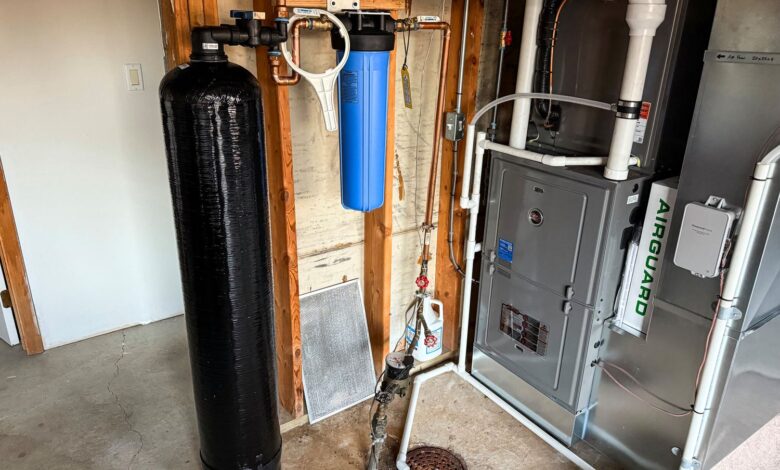
Salt free water softeners, also known as water conditioners, offer a modern solution for households with hard water. These systems provide an alternative to traditional salt-based softeners by changing the way minerals behave in the water. Rather than removing hardness minerals like calcium and magnesium, salt-free systems prevent the formation of scale by altering how these minerals interact with surfaces in your plumbing and appliances.
This guide will explain how salt-free systems work, discuss their advantages and disadvantages, and answer some of the most frequently asked questions. We will also compare salt-free models to traditional salt-based softeners and explore whether they are suitable for well water or municipal water.
What is a Salt-Free Water Softener?
Salt-free water softeners are devices that prevent scale buildup by altering the properties of minerals found in hard water, such as calcium and magnesium. Rather than removing these minerals, salt-free systems crystallize them so they no longer cling to surfaces. This helps protect your plumbing, appliances, and fixtures without the need for salt or chemicals.
How It Works
Most salt-free systems use technologies like Template Assisted Crystallization (TAC), which allows minerals to form tiny, stable crystals that remain suspended in the water. These crystals do not stick to pipes or appliances, preventing scale from forming. Other types of salt-free water softeners utilize magnets or coils to create a magnetic field that alters the charge of the minerals, stopping them from attaching to surfaces.
How Does a Salt-Free Water Softener Work?
Salt-free softeners, or water conditioners, use a variety of methods to handle hard water. The most common approach is Template Assisted Crystallization (TAC). In this process, water flows over a special media where calcium and magnesium ions bond to nucleation sites. Tiny hardness crystals form and detach, staying dissolved in the water and preventing the minerals from attaching to pipes and surfaces as scale.
Electromagnetic/Electronic Systems

These systems use coils wrapped around pipes and plugged into power. The magnetic field changes the charge of minerals, preventing them from sticking. These are compact and easy to install, making them a popular choice for smaller homes.
Polyphosphate Feeders
Polyphosphate feeders add phosphates to bind calcium and magnesium, preventing them from forming scale. These systems are more commonly found in commercial applications but can be used in some residential setups.
Pros and Cons of Salt-Free Water Softeners
Pros
-
Low Maintenance: Salt-free systems require minimal maintenance. They don’t need regular salt refills or brine cycles, and the system generally lasts 10–20 years.
-
Eco-Friendly: Since no salt is used, there’s no brine wastewater. This makes salt-free systems a good choice for homes with septic systems or in drought-prone areas.
-
Health Benefits: Salt-free systems don’t add sodium to the water, so they retain healthy minerals like calcium and magnesium, which are beneficial for your health and taste.
-
Simple Installation: Many salt-free systems are easy to install. Some are DIY-friendly, with systems that simply clamp onto your plumbing or plug into an outlet.
Cons
-
No True Softening: Salt-free systems don’t remove hardness minerals from the water. This means you won’t experience the smooth, “soft” water feel. Soap will still lather less effectively compared to traditional softeners.
-
Not Suitable for Well Water: Salt-free systems struggle with well water that contains iron or manganese. These minerals can coat the media, making the system less effective.
-
High-Temperature Limitations: Salt-free systems can face challenges in very hot water, such as in recirculating boilers or coffee makers, where the crystals can dissolve back into their ion form, leading to scale.
Salt-Free Water Softeners for Home Use vs. Well Water
For homes with city or municipal water, salt-free systems work well, especially when your water is treated and does not contain iron or manganese. These systems can protect appliances, such as tankless water heaters, washing machines, and showers, from scale buildup without the need for salt.
However, if your home uses well water, you need to be cautious. Well water often contains iron or manganese, which can damage salt-free softener media. In these cases, a traditional salt-based water softener is usually a better choice. Some homeowners with well water use a combination of sediment filters and salt-free conditioners, but this depends on the water quality.
Salt-Free Water Softener Price
The price of a salt-free water softener can vary greatly depending on its size, features, and brand. Basic models can start at around $350 for smaller, single-tank units. High-end systems with additional filtration or UV features can cost between $1,200 and $2,300.
The average price range for a salt-free system is typically between $400 and $800. For installation, you can expect to pay anywhere from $800 to $4,000, depending on the complexity of the installation. Many systems are DIY-friendly, which can save you the cost of professional installation.
While salt-free systems tend to have a higher upfront cost compared to salt-based softeners, they offer long-term savings by eliminating the need for salt refills.
Frequently Asked Questions
Do Salt-Free Water Softeners Actually Work?
Salt-free water softeners do work, but not in the traditional sense. They do not “soften” water by removing hardness minerals. Instead, they reduce scale buildup by crystallizing minerals so they won’t adhere to surfaces. This is especially effective in protecting appliances and plumbing from limescale.
Is There a Way to Soften Water Without Using Salt?
Yes, there are alternatives to traditional salt-based water softening methods. Reverse osmosis (RO) is one option, although it is not practical for whole-house filtration. Some softeners use potassium chloride, which is technically not sodium-based but still a salt mineral. Salt-free conditioners, like the ones we discussed, are another option that helps manage hardness without removing minerals.
How Much Does a Salt-Free Water Softener Cost?
Prices for salt-free water softeners typically range from $350 to $2,300, depending on the system’s features and capacity. Installation costs are usually separate, and can add $800 to $4,000 for professional installation. For a long-term investment, salt-free systems can be cost-effective, as they eliminate the ongoing cost of salt refills.
Can a Water Softener Run Without Salt?
Traditional ion-exchange water softeners cannot run without salt, as they require salt to regenerate the media. However, salt-free water softeners, as the name suggests, run without the need for salt, making them a more environmentally friendly option.
Conclusion
Salt free water softeners are a viable solution for preventing scale buildup and protecting appliances in homes with moderately hard water. They are low-maintenance, eco-friendly, and easy to install. However, they don’t truly soften water by removing hardness minerals, and they are not suitable for all water types, particularly well water with high levels of iron or manganese.
If you’re looking for a salt-free solution to scale prevention, a salt-free water softener can be a great investment. Be sure to consider the water quality in your home and weigh the pros and cons before making a decision.