A pole barn pole is the heart of post-frame construction – a sturdy post driven deep into the earth that supports an entire structure. These low-cost buildings use large wooden or steel posts (the “poles”) instead of continuous foundation walls. In simpler terms, pole barns (also called pole buildings) are barns and sheds built on set-in posts. You’ll recognize them by the tall, open interior space and exposed vertical posts. This guide explains exactly what a pole barn is, why it’s called a pole barn, and how modern pole barns use engineered posts and metal siding for everything from garages to homes. We’ll compare pole barns to traditional barns, outline common uses, discuss materials and design, and even look at pricing and plans.
| Feature | Details |
|---|---|
| Construction Type | Post-frame structure using large vertical posts embedded directly into the ground to support the building. |
| Common Materials | Pressure-treated wood posts (such as 6×6 or 8×8 lumber), engineered glulam columns, and durable metal roofing and siding panels. |
| Typical Use | Agricultural storage, equipment sheds, workshops, residential garages, horse barns, and modern barndominiums. |
| Origins | Introduced in the United States during the 1930s when farmers used recycled telephone poles for low-cost barn construction. |
| Advantages | Lower construction cost, faster installation, fewer foundation requirements, and wide open interior space. |
| Foundation Style | Vertical posts buried directly into soil or secured on concrete piers instead of using a full concrete foundation slab. |
What Exactly Is a Pole Barn?
A pole barn (or pole building) is a large, open-sided structure supported by vertical posts instead of a traditional foundation. These posts are often buried directly in the ground (or on simple pier footings) and carry the roof and wall loads. In effect, the poles themselves serve as both the foundation and the primary framing members. Early pole barns literally used old utility poles as posts, which is how the name came about. Today, builders use treated 6×6 or 6×8 lumber, laminated posts (glulam), or even metal poles.
Pole barns differ from stick-frame structures. A stick-frame building (like a typical house) sits on a full concrete or wood foundation and has many walls and studs to bear loads. In contrast, a pole barn has only a few massive posts and open space between them. The floor can be simple gravel or a partial concrete slab just under the outline of the building – no basement or full slab is necessary. This makes construction quicker and cheaper. In short, a pole barn is a post-frame building that uses deep-set posts to support the structure.
Why Is It Called a Pole Barn?
The term “pole barn” dates back to the 1930s. During the Great Depression and Dust Bowl era, farmers repurposed discarded telephone poles and tree trunks as building posts. They built quick, inexpensive barns using these poles, and the name stuck. As one source explains, pole barns were “first developed in the 1930’s” using pressure-treated round wood posts for agricultural buildings. Over time, the construction evolved: now posts are typically squared, pressure-treated timbers (like 6×6 or 8×8 lumber) or laminated posts. Still, the nostalgic name remains. You might also hear “pole building” or “pole shed,” but all mean the same basic post-supported structure.
What Poles and Materials Are Used?
A pole barn pole can be made of different materials. Traditionally, wood poles are most common – usually pressure-treated pine or fir posts 4–12 inches in diameter. Modern builders often use 6×6 or 6×8 wood posts spaced 8–12 feet apart. For very large spans or heavy loads, they may use engineered glulam (glued-laminated) posts, which are stronger lumber beams laminated into one large post. In some commercial buildings, steel columns serve the same purpose.
Most pole barns use the poles as the main support, with metal roofing and siding. The exterior is typically 29- or 26-gauge painted steel panels, often micro-grooved for strength. However, you can also sheath the walls and use vinyl, T1-11 wood boards, or even brick. The key is that the vertical poles carry the load; any wall material just fills in the gaps.
Importantly, the posts are either buried directly in the earth or set in simple piers, eliminating the need for a full foundation. Buried posts give great lateral stability, so bracing is often unnecessary. In some designs, the poles sit on a shallow concrete pad or concrete anchors (especially in steel-frame “pole barns”). In any case, the result is that pole barns require less excavation and concrete.
What poles to use for a pole barn?
The choice of pole depends on building size and budget. Small hobby barns might use 4×6 or 6×6 wood posts. Larger or commercial buildings usually use 6×6 or 6×8 pressure-treated lumber set about 8–10 feet apart. Today, many builders prefer laminated (glued) wood posts for extra strength. Some specialty pole barn companies even offer steel poles, but wood is more common for affordability. Always use treated wood (especially below ground) or corrosion-resistant steel so the posts last for decades.
What material is a pole barn?
Aside from the poles themselves, a pole barn is usually finished with metal. Rolled-rib steel panels serve as both roof and wall covering. Metal is popular because it’s durable, lightweight, and spans large distances. However, you could also install traditional wood framing or insulating sheathing inside and cover it with vinyl or wood siding. In fact, modern pole barn structures have evolved: many post-frame homes (“barndominiums”) look like regular houses once finished, using drywall and insulation, not just metal. Yet the core structure – the poles – remains the same heavy-duty posts.
Uses and Advantages of Pole Barns
Pole barns are incredibly versatile. Today, they’re used for far more than just hay storage. The wide-open interior (no interior columns) makes them ideal for garages, workshops, equine centers, or even modern homes. Common uses include:
-
Commercial or retail spaces: Open warehouses, farm supply stores, or strip malls.
-
Residential buildings: Garages, RV and boat storage, or even pole-barndominium homes.
-
Equine and animal shelters: Stables, riding arenas, or livestock barns.
-
Equipment storage: Tractors, cars, machinery (especially on farms).
-
Greenhouses and nurseries: Often built with mostly frame and translucent walls.
-
Hobby and community spaces: Gymnasiums, cabins, or churches.
Building on these bullet points, a pole barn’s open interior creates a huge span. For example, the photo above shows a classic red pole barn: notice the tall ceiling and wide door, perfect for tractors or horses. Pole barns can easily serve multiple needs thanks to their flexible layout.
Pole barns also have distinct advantages over conventional buildings:
-
Economical construction. Fewer posts mean less lumber or steel overall. Plus, since you often skip a full slab foundation, 20–30% of costs can be saved on concrete.
-
Speed and simplicity. A smaller crew can set posts in a few days. There’s no basement or complicated foundation to slow you down.
-
Open interior and flexibility. High ceilings allow large equipment and movable partitions. Adding windows or lean-tos is easy.
-
Suitability for uneven terrain. You don’t need a perfectly level site – the posts can step down the slope, reducing site prep.
-
Low maintenance. Modern metal panels and treated posts resist rot and weather far better than untreated wood. One expert notes that steel barns often require almost no maintenance for 15–20 years, whereas wood pole barns need periodic upkeep.
-
Better insulation and ventilation. With fewer wall breaks, pole barns can achieve higher insulation values in roof and walls. Good ventilation keeps livestock and humans more comfortable inside.
Pole Barn vs Other Structures
Pole barns are essentially the same as “post-frame” buildings – the terms are often used interchangeably. “Post frame” is the modern industry name, but many still say “pole barn.” For practical purposes, they are identical: both use deep-set posts as the main supports. As one authority explains, “post-frame vs. pole barn… they’re essentially the same thing”.
Still, it’s useful to compare pole barns to other building methods:
Pole Barn vs Traditional (Stick-Frame) Barn
A stick-frame barn is built like a house: stud walls on a concrete slab or full foundation. Pole barns skip that; posts do the supporting. Traditional barns often have basements or full floors. Pole barns typically have minimal footing – just enough to hold the post. Because of this, pole barns usually cost less per square foot. They’re also quicker to build: you don’t need an excavation crew for a slab or basement. However, traditional buildings can handle multi-story structures and very high loads, so they’re better if you want a 3+ story or heavy industrial use. For single-story storage and living, pole barns win on cost and simplicity.
Post Frame vs Pole Barn
In reality, there is no difference in these terms. “Post frame” is the formal name for the technique. A post frame building is simply a modern pole barn. Any reference to a “post barn” or “post frame barn” is just a different name for the same style. For example, your local builder might brand it as a post-frame garage or a pole barn workshop – but it’s the same concept.
Pole Barn vs Metal (Steel) Building
Some readers ask if a metal commercial building is the same as a pole barn. The lines blur because pole barns often use metal siding. However, a true steel building usually has steel columns welded to a concrete foundation. A metal building without a pole foundation is technically steel-frame construction, not post-frame. According to industry experts, the difference is subtle: steel barns are typically anchored on concrete, giving them permanence under building code, whereas wood pole barns “shift and move in the ground under them”. This means metal-frame buildings meet certain codes (like flood rules) more easily. But both types share open interiors.
Pole Barn vs Barndominium
A barndominium is just a pole barn or post-frame that’s finished to be a home. It might have drywall, multiple rooms, and insulation. The structure is still post-frame (pole barn). So a barndo isn’t a different method; it’s a pole barn used as living space. The same cheap-and-fast benefits apply, plus the charm of vaulted ceilings and rustic architecture.
| Feature | Pole Barn/Post-Frame | Traditional Barn (Stick-Frame) |
|---|---|---|
| Foundation | Minimal (posts in ground or on small footings) | Full slab or basement foundation (costly) |
| Structural Supports | Evenly spaced poles/posts (4–12″ dia.) | Load-bearing walls with many studs |
| Construction Time | Fast (simple excavation, fewer materials) | Slower (full framing and foundation) |
| Interior Space | Open spans with few interior posts (more flexibility) | Walls define rooms; often needs columns for larger spans |
| Typical Materials | Treated wood or engineered posts, metal siding/roof | Wood framing, brick, or siding, often asphalt shingle roofs |
| Cost (per sq. ft.) | Generally lower (10–30% savings) | Higher (more labor, more concrete) |
| Height/Stories | Usually 1–1.5 stories (not ideal above ~20 ft) | Can support multi-story (with taller load-bearing walls) |
| Best For | Storage, workshops, garages, large open uses | Residences, commercial buildings, any heavy-duty structure |
Designing a Pole Barn
When planning your pole barn, pole barn pole design is key. Posts must be sized for the loads (roof snow, wind, etc.) and spaced properly. Common layouts use 8–12 foot bay spacing. For example, a 30×40 barn might have poles on 10-foot centers. The larger your building, the more heavy-duty the posts (8×8 or engineered columns). Work with an engineer or experienced builder to size the poles and trusses.
Once you have post design, think about your pole barn plans. Many companies sell kit plans for DIYers. These plans specify pole layout, truss design, and footing details. Kits can range from simple garages to complex buildings with windows and lofts. A basic kit might cost $6,000–$20,000 for a small barn; large custom buildings can approach $200,000 or more. Remember, pole barn pole price isn’t just the wood or steel – it includes shipping, labor, and finishes. Treated 6×6 posts might only be $15–$30 each, but you need dozens of them. Enginesered glulam posts cost more. On average, expect to pay several dollars per square foot for a basic pole barn kit, plus extras (doors, insulation, windows).
Below is a quick reference of pole types and uses in post-frame buildings:
| Pole Type | Typical Size/Description | Common Use |
|---|---|---|
| Utility Pole or Tree | 8–12″ diameter; often pressure-treated | Historic barns (1930s) |
| Treated Wood 6×6 | 6″ × 6″ (actual ~5.5″ × 5.5″); spaced 8–12′ | Small to mid-size barns and garages |
| Treated Wood 8×8 | 8″ × 8″; spaced 8–12′ | Larger buildings (shops, arenas) |
| Engineered (Glulam) | Custom laminated posts (8″×8″, 10″×10″+) | Very large spans or heavy loads (commercial hangars, big workshops) |
| Steel Column | Varies (steel tube or I-beam) | Specialty or retrofit buildings (less common) |
These poles are always pressure-treated if wood, ensuring they resist rot. Posts are typically embedded at least 3 feet deep (often 1/4 of their length). The deeper the better for wind resistance. In wet soils you may add gravel or concrete around the post. Whatever you choose, ensure local building codes and any required pole barn plans or engineer’s drawings are approved.
Pole Barn Pole Price
For budgeting, consider that each treated 6×6×12′ post might cost $15–$30 (depending on lumber prices and grade). For a small 30×30 barn, you might need 12–15 posts, so $200–$400 on posts alone. Engineering designs and permit drawings can add $500–$1,000 or more. Roofing panels are often sold by the square ($100–$150 per 100 sq ft), so a 20×20 barn roof (~4 squares) might be $400–$600 in panels. Doors (like big 10×12 sliding doors) can be $1,000–$3,000 each. Overall, a basic 30×40 pole barn kit may run $20,000–$50,000, plus labor. It’s wise to get multiple quotes.
Pole Barn Pole Plans
A well-thought-out plan covers post spacing, roof truss specs, siding, and anchoring details. Some owners design simple pole barns themselves, but most hire designers to ensure structural integrity. Plans often assume standard post sizes and roof loads for your region. Make sure your plans address pole height (do you want a 14′ sidewall or 20′?), roof type (gable vs. gambrel), and any lean-tos or overhangs. DIYers love pre-made kits that include detailed plan sets.
Pole Barn Pictures and Design Ideas
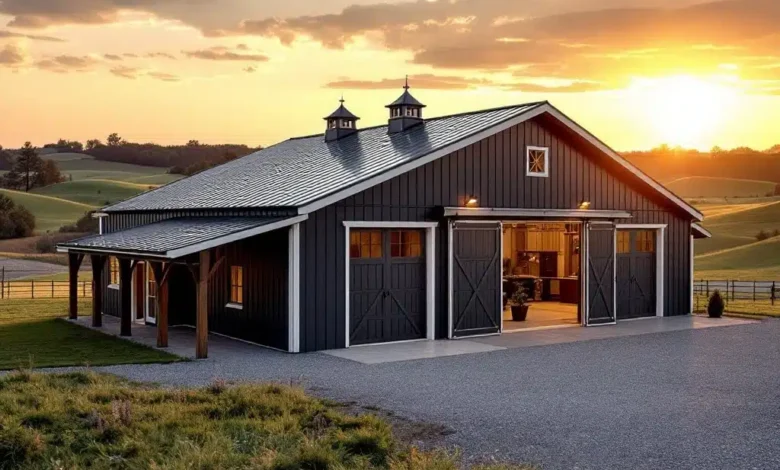
Pole barns come in all shapes and colors. For inspiration, pole barn pictures on building sites and Pinterest show red barns, green barns, wood-finish barns, and more. The common thread is the post-frame look: tall, straight walls and often a cupola or porch overhang. Modern pole barns often have low-pitch metal roofs (for shedding snow) and vertical corrugated siding.
Imagine a workshop: inside, you’d see big posts and open rafters, perhaps with insulation in the ceiling. Or a pole barn home: drywall covers the walls, but you still might see a wooden post left exposed in the living room. Horse barns might have half-walls between stalls, but the posts are still visible and part of each stall wall.
Conclusion
Pole barns (post-frame buildings) are a smart, cost-effective way to get large covered space quickly. The pole barn pole – the deep-set post – is what makes these buildings unique. By using fewer, stronger posts, you reduce foundation work and materials, speeding construction. Pole barns are incredibly adaptable: from farm storage to modern homes, they can serve many needs. We’ve covered the basics of what they are, why they’re named that way, and how they compare to traditional barns and metal buildings. We also discussed common materials (treated lumber and steel panels), typical uses (commercial, agricultural, residential), and even budget considerations.
If you’re planning a pole barn, remember: start with a solid plan for your poles and roof trusses, use quality treated posts, and take advantage of the open interior for your intended use. Whether you dream of a spacious workshop or a cozy barndominium, a pole barn delivers big space for fewer bucks.