Window Condensation: Why Windows Get Wet and How to Fix It

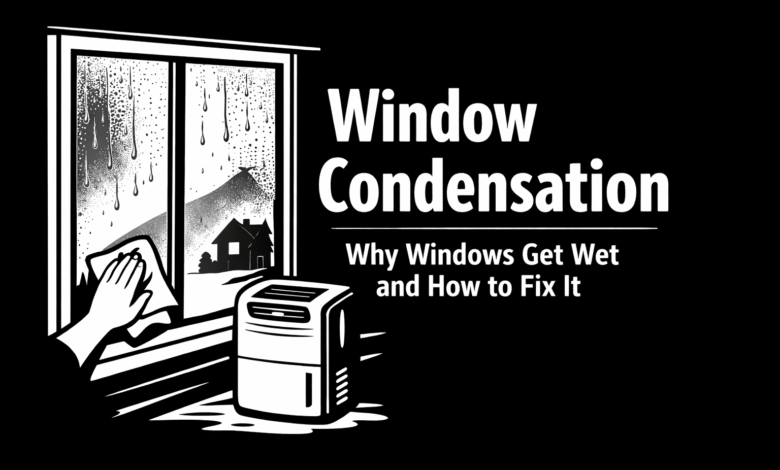
What Makes Windows Wet? Window condensation happens when warm air inside your home touches cold glass and turns into water drops. Many people notice this problem in winter when their windows get wet or foggy. When it becomes cold, it transforms the water from steam into drops on the window.
Remember when you breathe on a cold glass window that fogs up? Your house is just like that, only much slower. This takes place most frequently in the wintertime when it’s really cold outside. The glass from the outside air sucks the warmth out of the room, the wet air is snowed through cooking, showers, and sometimes just breathing in.
When Is Window Condensation Normal?
When it’s really cold outside, a little bit of water or frost in the morning is acceptable or even expected. In case the temperature outside is below 0 degrees, the water will, of course, freeze which is OK, but if your entire windowpane looks like this, it may lead to water dripping situation.
Too many leaks of water are not normal. If you need to drag a tissue over the windows each day, or if you can see water dripping down, it means you have wet house air.
When it’s cold outside, you have to decrease the water in your house’s air. They suggest you can make the air drier when it’s cold outside.
Why Window Condensation Can Be Bad
As I have mentioned, only Window Condensation themselves are not risky at all. But they make us realize that there’s too much moisture in the house air, which is a bad sign. This can cause problems such as:
Sometimes it’s a wet home, and the mold just grows. If there is too much water in your house, mold tends to spread. Because of the spores, you can face a swollen face, a runny nose, or chest difficulties. The moisture causes mold to damage the wood and items in your house, too.
If rain from the windows falls on wood, the wood will rot away. This damages the house.
Moreover, the air is too dry, which will not be good at all. It can make the nose and skin dry. The appropriate amount of water for the house air is in between 30% and 50%. So, during winter, maybe you could go down more to stop the windows from getting wet.
How to Stop Windows from Getting Wet
Three main methods are typically used to deal with Window Condensation:
Lowering Humidity
Don’t create so much water in the house air. It would be very effective if we use fans while we cook or take a shower. Don’t dry clothes inside the house in the winter. Wrap the fish tanks and don’t place plants that receive too much light from windows.
Get a dehumidifier to solve this issue: the dehumidifier is an appliance that removes moisture from the air. You can buy single or whole-house devices; the high-end ones cost between $200 and $700. You should empty the water bucket and clean the filter every month.
Smaller packs that are placed within the cooled area and which absorb moisture from the air fast enough are available as well. One of these packs costs $10 through $30, but research has it that it doesn’t do as much as machines. Hence, you will have to replace them frequently.
Improving the Insulation on Windows
Replace your windows. New high efficiency windows having two or three layers will have a decreased temperature gradient. This solution will cost around $300 to $1200 for the completion of one period of installation, but it will assure you of remedying the leaky windows.
Fix the windows by putting a plastic film on them in the winter. This will create a layer of warm air on the inside of the window glass, thus reducing the heat that escapes through the window, among other things. These upgrades can cost about $5 to $15 per window.
The area close to your windows will be heated. Make your space beside the window warmer by putting a small heater there, or you can also ensure that warm air can reach the glass. Don’t use a dark color curtain, because it can block the entire window, and that will make the house air completely dry.
Officer Air Flow Movement
Fans used in laundry rooms and bathrooms that are set up to push the humid air outside can do wonders in the whole process of air freshening. As it is only the place where water is removed, it is therefore the fastest.
Time-to-time opening the windows can be another solution, but during winter, too much opening of the windows is sometimes not a good idea because it wastes the heat.
Get the air exchanger that helps you to bring in the outdoor air while retaining the heat. These window units are the most efficient and cost from $2000 to $5000, but they work at the top of the chart as they help to kill moisture.
Special Tips for Bedrooms
Humans produce moisture in the indoor air by breathing while they sleep.
- To get the bedroom warmer, open the curtains at night so that the warm air from the heating can reach the windows.
- Adding a dehumidifier in your room can help too. These ones are usually the cheapest.
- At nighttime, always keep the bedroom door ajar for an adequate air exchange efficiency.
- When you put the humidifier in the winter sleeping zone, then you get the wrong air. Let’s be smarter than doing that.
Special Tips for Cars
Around the car, the window gets wet. To prevent this:
- Leave a window slightly open when the car is parked.
- Place the water soaking packets on the dashboard.
- Keep away from keeping wet things in the car, like umbrellas.
Try the car’s defroster to blow warm air on the windows and thus eliminate the window condensation.
What Works Best and How Much It Costs
If we analyze the market of dehumidifiers, they cozily fit in just about any budget from $200 to $700, where some use electricity, and some need to be emptied.
This one- New windows are, undoubtedly, the best decision. However, their price, which stands at a peak of three hundred dollars ($300) to one thousand two hundred ($1200), is enormous.
Moreover, using the fans when making meals and showering is advantageous, and it is also almost free. These machines work well, but they can also cost a small fortune, up to 5 grand.
Using window plastic film is another way to keep at least some of the humidity out of the house. Although this will not have a massive effect, you will pay $5 to $15 per window, so you may as well give it a try.
Suppose the humidity meter shows over 50% in the wintertime. You should take action, and you should use fans whenever you cook or take showers, stay away from the windows, and avoid using the humidifier.
Do not dry clothes outside on a window in winter. Ensure the windows are kept warm by opening curtains and not obstructing them. For the wet window treatment, you need a dehumidifier, and it is also indicated for the room where windows are fixed.
Winter Tips
During winter, windows get colder, thus it would be a great idea to have low humidity levels through air ventilation.
- The peak activity time for moist windows that you might actually experience the most is in the morning when the heat from your house during the night is starting to cool off.
- Gas and kerosene heaters should not be used indoors as they produce water in the air without being exhausted. They afford proper ventilation.
A well-situated house and the ability to steer humidity problems in the right direction should be at the top of your list if air escapes only a little, if air does not leak when it is too dry, but you need to keep your energy costs from rising in the process.