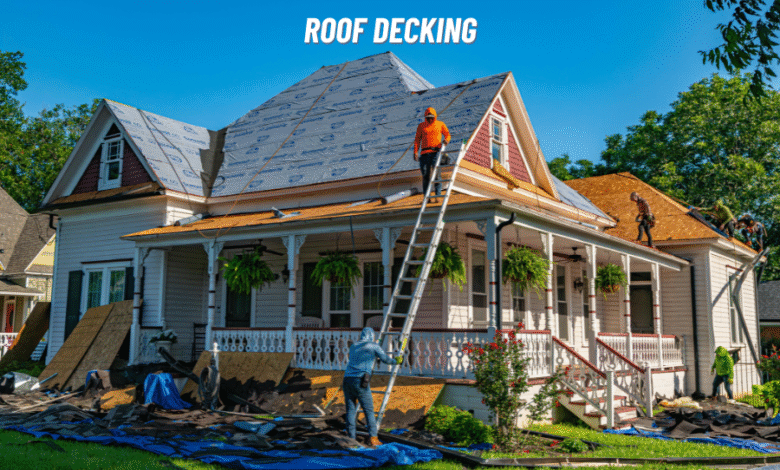
Roof decking is described as the floor of your roof. It is a solid layer that is laid on top of the main beams and supports the roof covering, such as shingles or metal plates. Consider it a kind of platform that keeps everything in place. If the decking is not good, the roof can become crooked, it can leak, or worse collapses if something heavy, like snow, is on it, for instance.
Join the millions of individuals discovering the simplest way:
- What is it? It is the base, a part that needs to be attached to the beams of the roof.
- Other Names: Roof sheathing and roof subdeck.
- Made From: Wood, metal, or even concrete.
- What it Does: It is attached to the roof covering, it brings the elements together, and it shares the load out evenly.
- How Thick: In general, the thickness can range from 3/8 to 5/8 inch of the wood.
- How Long it Lasts: They last about 25-30 years for wood and longer for steel or concrete.
- How it’s Put On: Nail to beams with a nail every couple of inches through it.
The reliable quality of roof decking is a top priority, too. Roofers check the tightness and safety of all the boards so that the roof is strong.
Why Roof Decking Matters
Strong decking goes a long way in maintaining the strength and durability of your roof. The deck is the area on which roof shingles or tiles are attached, and hence, it stops them from bending. Primarily, it is the decking that determines whether or notthe roofing will be attached. An authority gives this analogy. It acts the same as solid bones in your body. If you don’t have good decking, you may experience leaking and great damage.
There are regulations concerning the need for sturdy decking before a shingle can be installed. Durable decking helps your roof to face strong winds and heavy snow, and bear the weight of people walking on it. Moreover, it also keeps the roof in position and gives warmth.
However, if the decking is weak or rotten, problems can occur, such as:
- Water Leaks: The holes allow moisture to come in, and then it damages the interior.
- Roof Problems: Sluggish decking causes the roofs to fall or airlift during heavy storms.
- Short Roof Life: Strong shingles will not last if the base is weak.
Types of Roof Decking Materials
A house may be built using a variety of materials. However, the most frequent ones are those listed below:
- Sheet Decking (Panels): These are flat wood pieces like plywood that are fastened together. They gain a lot of popularity.
- Plank Decking: These are long wood pieces that the older homes used to have in the past
- Metal Decking: These are wavy steel sheets that can be found in commercial and residential roofing projects
- Concrete Decking: These are strong concrete pieces used to science or play on.
- Engineered & Composite Decking: These are new materials made from special wood and other things.
Plywood Roof Decking
The still-popular plywood technology for roof construction variant has been a steadfast member of the construction industry and has been a very excellent choice in low-slope:
Pros:
- Strong: It can hold a lot of weight, like snow and workers.
- Handles Wetness: It does not swell easily, and when it gets wet, it dries up quickly than any other material.
- Trusted: It’s been reliable in different weather for a long time.
Cons:
- Price: Other materials are usually cheaper than it is.
- Heavy: Because of its weight, it needs more people to carry and put it up.
- Layer Problem: If it gets soaked too often the layer can split.
The thicker the plywood, the better it is, however, at least 3/8-inch thick plywood is required. The best option is 1/2-inch to 5/8-inch thick plywood, as it is extra strong. In places with lots of snow, use thicker plywood (5/8-inch or more) to counteract the bending of the roof under heavy snow.
OSB (Oriented Strand Board) Roof Decking
OSB is short for Oriented Strand Board, it is made by pressing the wood pieces together with glue. OSB is in high demand now and it’s not hard for anyone to find it because you can buy them in many places. Here are some facts about it:
Pros:
- Cheap: OSB is, in fact, cheaper than plywood.
- Same Size: They all have uniform dimensions of thickness and size which makes increases their fitting easiness.
- Easy to Find: The shop has multiple sizes, both big and small, of OSB that you can find by using your eyes easily.
Cons:
- Water Problems: If the edges of OSB become wet then they will be damaged and swell. The drying period of OSB is likewise prolonged compared to the drying period of plywood.
- Less Strong: OSB is less sturdy in very wet or snowy areas which causes the material to weaken if the moisture content in the material remains high.
If OSB gets wet when building is in progress, it must be dried before it is used. Dry and spotlessly clean OSB or plywood both are the same and well nailed will suffice.
Plank (Spaced) Decking
Some of the traditional houses use wood planks for decks rather than large-sized panels. You can use long strips of wood mainly 1×6 or 1×8 inches and put them next to each other. Sometimes, they fit tightly.
Pros:
- Lasts Long: Old decks that are made of solid wood, have a lifecycle of more than 50 years provided that they do not get wet.
- Nice Look: Wood planks that are so well matched give a nice view from below.
Cons:
- Hard Work: It takes a much longer time to nail each plank than to lay one big piece of wood.
- Gaps and Bumps: Planks might change shape and hence some gaps appear, which can cause water to get in and weak spots to develop.
- Not Easy for New Roofs: The surfaces are not level that’s why it’s difficult to add more roofs, maybe you shall do put one flat layer of wood first.
- Expensive: Big pieces of material cost less than real wood planks.
Metal Roof Decking
Metal roof is not so common in houses as it is very much a favorite in large buildings like the supermarkets and factories. It is made of metal sheets which are wavy and we use the building’s structure as a support to the waves.
Pros:
- Very Strong: Metal decks are lightweight, yet they are very strong, so they are good to be installed in such big, open places, for example, in warehouses.
- Fast to Install: One big-sized piece of metal, and then the other big-sized next metal panel just connect side by side on the same rail, which makes the work of the roof panels link on the go a lot faster.
- Matches with Different Roofs: An outstanding underlying article for flat roofs or other multilayer roofing contents.
- Safe from Fire: Metals do not burn.
Cons:
- Rusts: These metal systems are more commonly the one to get rusty due to the lack of corrosion protection coating.
- Gets Very Hot and Noisy: Metal sheets can trap and then release heat into the building in summer, and they can turn into a source of noise when it rains or hails.
People need to be trained with special techniques like welding and with screws that have the secret heads, for this work is difficult to do itself.
Concrete & Composite Decking
In the case of robust structures, concrete is used by the builders.
Concrete Decking can be in the form of slabs or poured on the site directly. They are also very stout and are not combustible, which they are good for tall buildings, schools, and hospitals. It is not even a problem for it to carry heavy things.
Downsides
- The only thing is that the building should be strong enough, because it’s really heavy.
- It’s also an expensive and challenging process to repair if anything is damaged.
LWIC Decking (Lightweight Concrete)
It is the lighter type of concrete that is generally mixed with foam or insulation, and then poured over boards or steel. It even combines the function of the two, that is, both strengthening and insulating the building structures.
- Pros: It is really tough and a healthy structure without any dumb coverings.
- Cons: The thing is that it costs more than just metal decks and which if not sealed properly can retain water.
Engineered & Sustainable Decking
Some people are developing new types of durable and earth-friendly decks:
- SIPs: The inside of these foam panels is filled with foam and outside is wood. They provide a solution to make building time shorter and save on energy expenses.
- LVL/CLT: These are special panels that are made from wood and are very durable and straight. They are used in eco-friendly homes.
- Bamboo or Recycled Panels: Some decks made of bamboo that is light and strong, or with recycled materials that are bug repellent or rot-resistant, are available.
- Fiber Cement Panels: These cement panels, which are manufactured from cement and fibers, are not inflammable, though they are heavy.
These modern decking materials are not commonly found everywhere currently. However, while they can be quite expensive, they also have a very long shelf life, and they are also energy-saving.
Installing and Fastening
Panel Direction
To make a strong roof, put the panels across the bars (rafters). Additionally, move the ends as if they were bricks. Doing so will make the roof more stable.
Leave Space
Boards should be kept spaced apart from one another to ensure air flow. The rain will not impact the constructed roofs. Instead of damaging the roofs, the rain will only leak down through poorly sealed windows and from there develop healthy green moss on the walls.
Use Nails
Screws should be replaced with 1-inch-long nails in its place. The screws in the corners must have rings for better strength. Flat-head nails of the size 4d to 6d are also recommended constructions.
Nail Pattern
A nail distance of 6 inches should be their placement at the edges. In most cases, one can see that in the middle, placement is 12.5 inches apart. Nail placement is closer in areas exposed to strong winds than in areas not exposed to them.
Extra Protection
Another method of waterproofing without the hassle is to use clear silicone caulk over the edges of the panels. This is extra, not always needed.
Follow Rules
The considerations of shrinking and swelling must be taken into account before putting the sheets on the roof. One should follow the building rules. Do each step exactly. It is enough to break through the roof membrane on any beam.
Check Your Work
Check from below after laying out each board. The nails must hit the bars. All missed nails should be fixed.
Keep in mind that first you must uninstall the old roof, as it is in the way. You may have solved the moisture problem when you changed the window weatherstrip. If leaky, find the source of the leak, and change a few specific boards, whether necessary or many boards if it’s really necessary.
People work together, one person putting on boards and another with a hammer and nails, and this speeds the job up quite a lot.
Identifying and Replacing Damaged Roof Decking
- Roof Sags: If the roof appears to sink or is soft to the touch, then the boards will likely have to be replaced due to their weak condition.
- Water Marks or Mold: Brown water marks or even the flora in the attic look like it’s going to get lots of water will run through the soil.
- Soft Spots: Any part of the house which seems spongy or soft can be indicative that the wood has deteriorated by rotting.
- Holes or Big Gaps: If you see big holes or the like, it’s a sign that the boards are bad.
- Black Rot or Peeling: The appearance of wood that is black or that it falls apart is a serious injury that it not only needs replacements but it also is something that is just becoming more affordable.
- Outside Clues: Broken roof tiles or leaks inside may mean bad boards underneath.
Just fix what you have to. Get them to cut a part off and set in a new one as a replacement. The workers will occasionally replace bad 4×8 plywood panels with new ones.
Replace the Whole Deck If:
- A couple of boards got double bent, got molds, or became wet due to high temperature
- New load heavy to light roof materials this time. The new codes may need additional boards to provide more support.
- The roof has had a lot of mitigation work and the old boards have outlived their useful lives.
Insurance and Warranties: If your roof was damaged by the weather, insurance usually pays for the damage. Now, the major incorrect things to break warranties are old boards below new shingles. Therefore, put new shingles in place while at it demolish the bad boards.
Roof Deck Costs and How Long They Last
- OSB: It costs $2-$3.50 per square foot and will last for 25-30 years.
- Plywood: It costs $3.50-$5 per square foot and will last 30-40 years.
- Wood Plank: It costs $4.50-$6.50 per square foot and lasts over 30 years.
- Concrete: It costs $10-$15 per square foot and will last over 50 years.
- Steel: It (steel) costs $9-$12 per square foot. It lasts over 50 years.
OSB is the cheapest among them. Concrete and steel are more expensive than OSB. If the roof is protected from water, it will be long-lasting. The life of OSB is determined by the time it takes to get dry, which would be 25-30 years in the case of OSB. Plywood has a 30-40-year life span.
The others, concrete and steel, will last for at least 50 years, whichever the case is. There are other factors which can shorten the life of these materials e.g., bad weather or leaks. Therefore, leaking roofs can disrupt the wood and convert it into rotted aggregate.
Maintenance Tips and Best Practices
Here are simple tips to keep your roof deck strong:
- Air Should Circulate: Be sure that the air is able to pass under the roof to keep it dry. This way, mold and rot are prevented.
- Clean Gutters: Take out all the leaves and dirt so that water can go away. The roof will be safe like this.
- Report to the Bugs: Find out if there are bugs that eat wood like carpenter ants.
- Check Very Often: Examine for leaks and broken shingles after the heavy showers.
- Initiate Leaks: If you come across a leak, then remove the layer under the roof to evade water.
- Hire Help: Before getting a new roof, it is better to have a professional check for the issues under the shingles.
- Use Powered Wood: Install the plywood that dispels the water when it comes to showering at the place you are living in.
Key Takeaways
Choose the right foundation. It’s the bottom level under your rooftop, just like the ground. Make a wise choice for the roof material. OSB is cheap, the plywood is the best, while the planks are outdated, and metal as well as concrete are for huge Public Buildings.
Get it placed properly. The panels should have the nails very close together and should be in the correct spot. Follow the building guidelines. Inspect regularly. Check for bulges, water issues, or spongy areas.
On average, guys have to pay only $2 to $5 for one square foot of typical materials. Contemplate the expense of a new roof as well. A well-founded life lasts for many years. Protect it from being repaired.
Your roof base is an essential part of the entire system, and some necessary knowledge will help you keep your roof in good condition. Get a proper base, tune in to the rules, and repair some issues immediately because you need to protect your home and keep it dry. If you want more home improvement ideas and guides, add us to your wishlist.