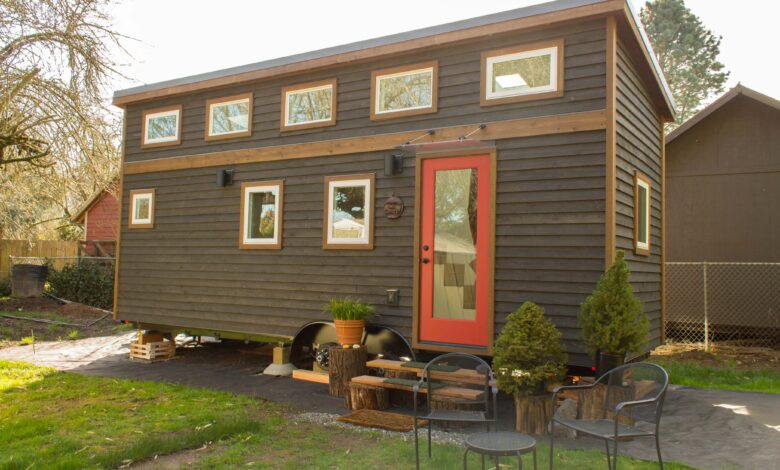
Small homes can save you money, but the tiny house movement cost isn’t just the sticker price. Tiny homes (often 100–400 sq ft) have much lower total costs than traditional houses, but their budget has many parts. From DIY builds vs. contractor quotes, to land, permits, utilities, and maintenance, each factor adds up. In this guide, we break down tiny house costs step-by-step – using real data, case studies, and tables to show exactly what you’ll pay.
| Cost Factor | Tiny Home | Notes/Source |
|---|---|---|
| Average Tiny Home Price | ~$52,000 | 87% less than the average home (US) |
| DIY Build Cost | $20,000–$45,000 | Material-only DIY range (project) |
| Pro Build Cost | $60,000–$120,000 | Completed tiny home (turn-key) |
| Land (per acre) | $3,000–$60,000 | Rural vs. urban variation |
| Building Permit | $900–$2,500 | Typical range (varies by region) |
| Monthly Utilities | $100–$250 | Electricity, water, heating, etc. |
| Annual Maintenance | $500–$1,000 | Approx. 1% of home value per year |
Understanding Tiny House Movement Cost
Tiny houses are not just about smaller footprints; you still need almost every feature of a normal house. A typical tiny home still costs roughly $400 per square foot to build, because you pack full kitchens, bathrooms, and insulation into that small space. By comparison, a standard home might be around $150/sq ft. The per-sq-ft cost is higher, but your total materials and labor bill stays low. In the U.S., the average tiny house runs about $52,000, versus hundreds of thousands for a traditional home.
Construction & Materials
Framing, walls, roof, flooring, and finishes. Even though a tiny house is small, you need windows, doors, insulation, plumbing, and wiring. DIY builds often cost $20k–$45k for materials, and professional builds $60k–$120k (see the next section for details). Premium designs or appliances can raise the total. Tiny home construction tends to run about $400/sq ft (much higher than $150/sq ft for standard homes), because of efficient use of space. But your total materials bill stays far lower – in fact, on averag,e a tiny home is 87% less expensive than an ordinary house.
Land & Site Prep
Unless you own property already, plan for land costs. Rural acreage might be very cheap ($3,000 per acre), but suburban/urban lots run into the tens or hundreds of thousands. Clearing, grading, or pouring a pad typically costs $3k–$15k. A steep or wooded lot will increase this. Some tiny owners rent a space in a community or RV park (around $300–$600/mo) instead of buying land, which changes the cash flow.
Permits & Zoning
Tiny houses almost always require permits. Expect $900–$2,500 in permit fees just to break ground. In high-cost areas (like California ADUs), fees can be much higher, ranging $5k–$20k. You may need separate permits for plumbing, electrical, or septic. Zoning rules differ: some communities treat tiny homes as RVs, others allow them only as accessory dwellings. Building codes, HOA rules, and required inspections can add time and cost, so check local regulations early.
Utilities Hookups
Connecting utilities can add thousands to your budget. Typical costs: $3k–$10k for water/sewer hookup and $1k–$5k for electrical service if not already on site. If you go off-grid, count the cost of solar panels, batteries, rainwater systems, etc. (these cut monthly bills but raise the build cost). Many opt to stay hooked up to avoid those high upfront off-grid system costs.
Zoning & Miscellaneous
If you’re renting land (in a tiny-home community or mobile park), budget monthly rent or pad fees. Check if you need special RV certifications or ferry permits (for homes on wheels). Also factor in a contingency of about 10–15% of your budget for surprises (like needing engineered plans or extra permitting). These “miscellaneous” items can catch first-timers off guard, so include them.
Building Costs: DIY vs. Professional
Your choice to build or buy sets the base cost. Building yourself (DIY) can save a lot of money but requires time and skill. Hiring a builder adds cost but cuts hassle.
- DIY Builds ($20k–$45k): Many tiny-home enthusiasts act as their own contractor. Buying a shell or kit and finishing it yourself often costs $20,000–$45,000 in materials (for a basic tiny house). Remember: that assumes you do all the labor. DIY projects often take 6–18 months of evenings/weekends.
- Professional Builds ($60k–$120k): A turnkey tiny home from a builder usually falls in the $60,000–$120,000 range for a 1–2 bedroom model. You get a finished house (on wheels or foundation) in 2–5 months. Luxury or larger layouts (400+ sq ft) can reach $150k+. You pay more for labor and convenience, but save time and ensure code compliance.
- Cost Comparison: A quick comparison table:
| Aspect | DIY Build | Professional Build |
|---|---|---|
| Cost | $20k–$45k | $60k–$120k |
| Build Time | ~6–18 months | ~2–5 months |
| Skill Required | High (you do most tasks) | Low (crew handles it) |
| Customization | Nearly unlimited | Limited to builder’s plans |
| Warranty | None (you fix it yourself) | Often included on workmanship |
Land, Permits & Site Costs
So far, we covered the house itself. Next comes the site:
- Land: Buying an affordable plot can greatly affect cost. In rural areas, prices might be $3k–$6k per acre, whereas a suburban lot easily hits $100k or more. If you already own a lot, subtract this; if not, treat it as part of your total investment.
- Site Prep: Clearing, grading, and foundation pad work typically runs $3k–$15k. For example, pouring a concrete slab can cost several thousand. A sloped or rocky lot will push this higher.
- Utilities Access: If utilities aren’t on site, factor running fees. In some regions, pulling electric power can be $1k–$5k, and extending sewer/water lines $3k–$10k. These are one-time costs to turn on the lights and water.
- Local Fees: Besides building permits ($900–$2,500), check if your city has impact fees or meter connection fees. Sometimes utility companies charge a hook-up or meter installation fee (could be a few hundred dollars each).
- Property Taxes: A permanently sited tiny home is taxed as part of your property, but at its low value. Often it adds only a few hundred dollars annually. If mobile, you might pay DMV registration instead of property tax.
Financing a Tiny Home
Financing tiny homes differs from standard mortgages. Here are common routes:
- Personal Loans: Many tiny homeowners use unsecured personal loans (up to $100k). These can be quick to get but carry higher interest (~8–12% on good credit). Lenders like LightStream offer fixed-rate tiny home loans starting at ~8.99% if you qualify.
- Home Equity (HELOC/Second Mortgage): If you own a home with equity, you might borrow against it. A HELOC gives a revolving credit line, handy for funding each build phase. Rates are lower (since it’s secured by your home), but you must manage the risk of using your house as collateral.
- RV/Chattel Loans: If your tiny home is on wheels (an RV plate), some lenders classify it like an RV loan. This usually requires it not be your primary residence. Interest can be lower than that of personal loans, but these loans often have shorter terms and require higher down payments.
- Builder Financing: Some tiny home companies offer in-house financing. Terms vary, but these can sometimes be more favorable than bank loans if you have good credit.
- Traditional Mortgages: Generally not available for tiny homes unless they’re on permanent foundations and meet all local building criteria. If you qualify for a conventional loan (rare), you’d need it built like a regular home on land.
Utilities and Ongoing Costs
Living in a tiny house dramatically cuts monthly bills, but let’s break down typical recurring costs:
Electricity
Heating, cooling, and appliances in a tiny space use far less power. Tiny-house residents report bills under $50 per month in moderate climates. Well-insulated tiny homes, plus efficient LED lighting and Energy Star appliances, often run just tens of dollars a month for electricity.
Water
Smaller kitchens/baths mean lower water usage. Many tiny homeowners pay only $20–$40 per month for water (and that can approach $0 if you harvest rainwater and minimize waste). A low-flow fixture setup helps keep costs down too.
Heat/Cool
Tiny homes typically use mini-splits, wood stoves or small HVAC units. Because the volume is low, heating and cooling can be $20–$50 per month. In warm climates, a good window unit might do; in cold climates, a wood stove often suffices. Proper insulation and natural light design further reduce heating needs.
Inside a tiny home: compact design means less volume to heat/cool and simpler upkeep. Minimalism cuts costs – you won’t have a big lawn or guest room eating your budget. Many report utility bills much lower than a normal house, especially if you prioritize efficiency.
Maintenance
Tiny houses have low maintenance needs. A common rule is to budget 1% of the home’s purchase price per year. On a $50k tiny home, that’s about $500 per year ($40/mo). This covers the usual: inspecting the roof, touching up paint, and replacing small appliances (like a fridge or water heater when they age).
Insurance
Insuring a tiny home costs significantly less than a full-size house. A tiny on a foundation (an ADU) might add $400–$800 per year to your homeowner’s insurance. A mobile tiny (RV) often insures for $250–$500 per year. Either way, it’s only a few hundred dollars annually, a small line item compared to normal home insurance.
Property Taxes
If your tiny home is on a permanent foundation, it’s taxed like a regular home improvement – usually a small amount because of its low value. If it’s classified as an RV/mobile home, you may pay no property tax (just registration fees). Always check local tax laws; tiny homes can be surprisingly tax-friendly.
Overall, expect your ongoing housing costs (utilities + maintenance + insurance) to be only a few hundred dollars per month. One summary found tiny owners paying $300–$800 total monthly (including land lease if any), versus well over $1,000 for a traditional mortgage and bills.
Tiny vs. Traditional: A Cost Comparison
To see the differences, consider this side-by-side:
| Expense | Tiny Home | Traditional Home |
|---|---|---|
| Upfront Price | $30,000–$100,000 | $300,000–$400,000 |
| Monthly Housing Cost | $300–$800 | $1,200–$2,500 |
| Annual Maintenance | $500–$1,000 | $2,000+ |
| Insurance (yr) | $250–$800 | $1,500+ |
| Property Tax (yr) | Minimal (or none) | $3,000+ (varies by locale) |
Case Studies & Examples
Real numbers help. Here are some illustrative examples:
Family DIY Tiny Home
A couple in Texas built a ~350 sq ft tiny house for about $30,000. Contractors had quoted them $63,000 for that size. By doing most of the work themselves (framing, drywall, etc.), they saved at least $30K. The finished home was livable and comfortable, proving that DIY can dramatically cut costs.
Extreme Budget Build
In Iowa, two college students converted a 260-sqft grain silo into a tiny home for just $489. They scavenged nearly all materials for free. This case is an outlier (and took 500 hours of labor), but it shows how low you can go with ingenuity. Most people will spend a few thousand even with reused materials, but you could see costs below $5k if you recycle extensively.
Prefab Purchase
If you have a budget, buying new is an option. For example, a luxury 2025 prefab tiny home (2-bed, ~400 sqft) might list for $60k–$100k. Some high-end tiny houses (400+ sqft, top finishes) can reach $150k+. Buying new saves time: you get a complete home without sweat equity. But note, your first mortgage payment on a $60k home is still much lower than on a $300k home.
Bottom line: Tiny homes can be built for vastly different budgets: under $10k for extreme upcyclers, $30k–$60k for frugal DIYers, and $80k–$150k for finished models with amenities. Compare that to the national median home price (around $400k) and you see why tiny living is attractive.
Planning Your Tiny House Budget
To avoid surprises, break your project into phases:
Design & Materials
Decide size and layout up front. Order quotes for framing, windows, insulation, and fixtures. Consider used or discounted materials. Always price out everything you think you need, plus a few upgrade options.
Labor
If building yourself, list every major task (framing, plumbing, etc.) and estimate the time/skill needed. If hiring, get multiple bids. Include costs for specialty subcontractors (plumbers, electricians) if you lack those skills.
Land/Pad
Shop for land in your desired area and add its cost. If renting, note the monthly fees. Include site prep: clearing, grading, foundation, or trailer pad. If you already have land, account for building an access road or utility trenches.
Permits/Fees
Contact your local building department early. Find out all required permits and fees (building, electrical, mechanical, etc.). Don’t forget meter connection fees or other utility charges. Ask for a rough itemized quote so you can budget accurately.
Utilities
Get bids for running utilities. If off-grid, price solar panels/batteries, septic or composting toilet, and water catchment. If on-grid, check with providers on hookup fees. These costs can each range from a few hundred to a few thousand dollars.
Miscellaneous
Always include a contingency of 10–15%. Factor in insurance premiums, inspection costs, certification fees (if needed), and any HOA or community fees. A small pad of extra cash will cover those unexpected hiccups that inevitably arise.
Conclusion
The tiny house movement cost is a sum of many parts: construction, land, permits, and ongoing expenses. On average, building and owning a tiny home saves you tens of thousands over a standard house. You’ll avoid a 30-year mortgage and pay far less each month for utilities and maintenance. But it’s crucial to budget carefully for each expense category – especially land and permits – so you don’t get caught off-guard.
Whether you spend $30k or $100k, the tiny house lifestyle can dramatically cut your cost of living. Use the cost ranges and examples above as a guide, and adjust for your local prices. With smart planning, a tiny home can be an affordable, comfortable solution, letting you keep more of your hard-earned money in your pocket.
KDArchitects Landscape Ideas by Roger Morph: Innovative Outdoor Design Guide