The Ultimate Guide to Leaf Vacuums: Clean Your Yard Faster and Smarter

Every autumn, the trees put on a spectacular show—crimson, gold, and amber. Beautiful on the branches. A real headache on your lawn. If you’ve spent hours raking only to wake up the next morning to a yard covered again, you already know the frustration. That’s exactly where a leaf vacuum steps in to save both your weekend and your spine.
| Quick Facts: Leaf Vacuums at a Glance | |
|---|---|
| Primary Function | Suck up, shred, and collect fallen leaves |
| Types Available | Handheld, backpack, walk-behind, tow-behind |
| Power Sources | Corded electric, cordless (battery), gas |
| Mulching Ratio | Up to 16:1 (16 bags reduced to 1) |
| Typical CFM Range | 200–800+ CFM |
| Price Range | $40 (budget) to $500+ (professional) |
| Best Use Case | Fall cleanup, flower beds, driveways, large lawns |
What Is a Leaf Vacuum?
So, what is a leaf vacuum, exactly? Think of it as the opposite of a leaf blower. Instead of scattering debris everywhere, it sucks leaves through a tube and deposits them into a collection bag — much like a household vacuum, just built for outdoor chaos. Many models go a step further and mulch the leaves as they go, grinding them down at ratios as impressive as 16:1. That means 16 garbage bags of loose leaves get compacted into one. Less hauling. Less waste. More weekend.
While leaf blowers disperse leaves by pushing air, leaf vacuums suck up fallen foliage through a tube and into a waste bag. Many also mulch the debris they collect, so the material can benefit the garden as compost.
Types of Leaf Vacuums: Which Style Suits You?
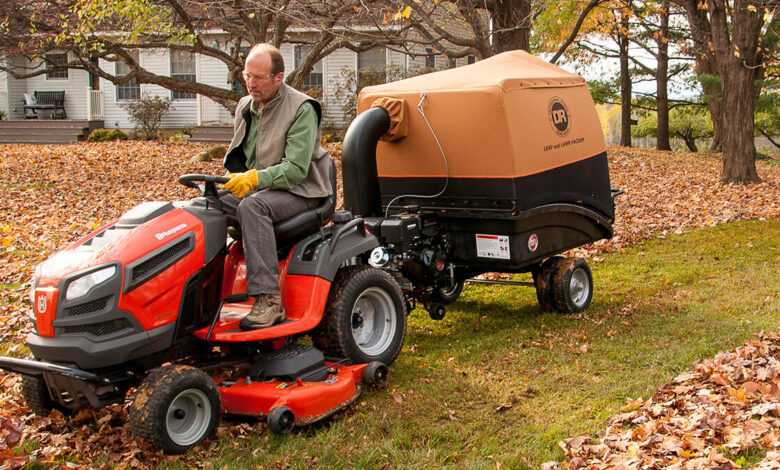
Not all models are built alike. Handheld leaf vacuums are the most common style for homeowners — easy to carry and aim, often with a shoulder-mounted collection bag. Backpack models distribute the weight across your back, while large walk-behind units work like lawn mowers and are best suited for large properties or commercial use.
Here’s a quick breakdown:
| Type | Best For | Pros | Cons |
|---|---|---|---|
| Handheld | Small to medium yards | Lightweight, affordable, easy to store | Bag fills quickly |
| Backpack | Medium yards, flower beds | Weight distributed evenly | Pricier, hotter in warm weather |
| Walk-Behind | Large properties | High capacity, fast coverage | Expensive, bulky |
| Tow-Behind | Commercial/acreage | Maximum capacity | Requires a tractor |
Gas vs. Electric vs. Cordless: The Power Source Showdown
This is where most buyers get stuck. Here’s the honest truth: each power source has a sweet spot.
Gas-powered models hit hardest. The Stihl SH 86 C-E, for instance, runs on a 27.2 cc gas engine capable of producing 444 CFM of air volume — putting it among the top handheld leaf blowers on the market. It even includes an anti-vibration system and Stihl’s Easy2Start system for a smoother experience. But gas means noise, fumes, and carburetor maintenance. Not everyone’s idea of a relaxing Saturday.
Corded electric models are workhorses for medium-sized yards. The Toro UltraPlus, a standout electric option, runs a 12A motor that moves up to 410 CFM at speeds of 250 mph. In vacuum mode, its impeller shreds debris to a 16:1 ratio, with 97 percent of shredded material measuring less than half an inch in diameter. Reliable power, zero emissions — though you’re tethered to an extension cord.
Cordless (battery-powered) models offer freedom but come with trade-offs. A Ryobi 40V model, for example, is really only useful for dry leaves on sidewalks and patios — on grass or flower beds, it’ll struggle to pick up stragglers. Higher-voltage batteries (40V and above) close that gap significantly.
Is There a Leaf Vacuum That Actually Works?
Is there a leaf vacuum that actually works? Short answer: yes — but the right one depends on your yard size, leaf volume, and patience for maintenance.
The Family Handyman testing team spent roughly 45 hours collecting over 450 data points across nearly a dozen models, vacuuming and mulching over 500 gallons of leaves. Their overall winner? The Craftsman Corded Electric Backpack — a 3-in-1 machine that vacuums, blows, and mulches, switching between modes with ease.
That said, no single model is perfect for everyone. Here are the top-rated picks across categories:
| Model | Type | Power | Best For | Approx. Price |
|---|---|---|---|---|
| Toro UltraPlus 51621 | Handheld | Corded Electric | Most homeowners | ~$90 |
| Craftsman Corded Backpack | Backpack | Corded Electric | Large leaf volumes | ~$130 |
| Stihl SH 86 C-E | Handheld | Gas | Professional/heavy use | ~$400 |
| Husqvarna 125BVx | Handheld | Gas | Mid-to-large yards | ~$200 |
| Greenworks 40V Cordless | Handheld | Battery | Small to mid yards | ~$150 |
| WORX WG509 Trivac | Handheld | Corded Electric | Budget-friendly | ~$65 |
| Billy Goat KV601SP | Walk-Behind | Gas | Large/commercial yards | ~$1,200+ |
Can I Use a Vacuum for Leaves?
Can I use a vacuum for leaves — like a shop vac or a regular household vacuum? Technically, a shop vac can pick up dry leaves in small quantities. But it’s not designed for it. It clogs fast, the suction isn’t optimized for light debris, and you’ll empty the canister every few minutes. A dedicated outdoor leaf vacuum is built differently: the impeller (the fan blade inside) is engineered to shred as it sucks, so the bag doesn’t fill up after three minutes of use.
The mulching function is a game-changer. Instead of compressing whole leaves into a bag, the impeller shreds them down dramatically — making disposal or composting far more manageable.
Which Is the Best Leaf Vacuum? Key Features to Look For
Which is the best leaf vacuum for your specific situation? Before you click “Add to Cart,” think through these factors:
- CFM (Cubic Feet per Minute): This is the suction power metric. Higher CFM means it can handle heavier debris loads. Look for at least 300 CFM for reliable performance.
- Mulching Ratio: A 16:1 ratio is excellent — that’s industry-leading compression.
- Bag Capacity: Bigger bags mean fewer stops. But bigger also means heavier. Balance matters.
- Weight and Ergonomics: A 10-pound tool feels like 20 after an hour. Look for shoulder straps, anti-vibration features, and balanced designs.
- Ease of Mode Switching: Many 3-in-1 models let you toggle between blow, vac, and mulch modes. How smooth that transition is varies wildly by brand.
- Wet Leaf Performance: Most models prefer dry leaves. Check manufacturer specs if you’re in a wetter climate.
Beyond vacuuming, many models also mulch leaves into compost-ready material, protect your lawn from mold and dead spots caused by soggy leaf piles, and reduce the back strain of traditional raking — all while offering eco-friendly cordless options that run quieter and cleaner.
Pro Tips for Getting the Most Out of Your Leaf Vacuum
- Wait for dry days. Wet leaves clog impellers fast. Even the best machines perform better on dry foliage.
- Don’t vacuum sticks. Twigs and acorns can damage the impeller or jam the chute. Stick to leaves and light debris.
- Empty the bag before it’s completely full. A bag packed to the brim restricts airflow, reducing suction significantly.
- Overlap your passes. Like vacuuming a carpet, overlapping slightly ensures you don’t miss any patches.
- Use mulched leaves as compost. Don’t throw it all away. Shredded leaf mulch is excellent for garden beds and around tree roots.
Final Verdict
Autumn cleanup doesn’t have to eat your entire Saturday. A good leaf vacuum can transform a two-hour raking marathon into a 30-minute power session. Whether you pick the corded Toro for reliable everyday use, the gas-powered Stihl for serious horsepower, or a cordless model for cord-free convenience — the right tool genuinely makes a difference.
The leaves are coming whether you’re ready or not. Might as well meet them properly equipped.