Wondering how much does termite treatment cost can keep any homeowner up at night—much like termites munching through your walls. Termites quietly devour wood, often unseen until damage appears. When they strike, you want clear answers: What’s a fair price to protect your home? In a nutshell, typical termite treatment costs fall in the low hundreds for minor problems and can climb to several thousand dollars for severe infestations. For example, HomeAdvisor reports an average treatment around $621 (range ~$263–$1,032), with simple cases as low as about $75 and extreme cases up to ~$1,750. A strong termite barrier or bait system might cost $225–$2,500, whereas whole-house tenting/fumigation can reach $2,000–$8,000 when a colony is deeply entrenched.
To make sense of these numbers, we break down pricing by treatment type, home size, and termite species. This guide digs into every factor so termite treatment cost won’t feel like a hidden mystery.
| Treatment / Metric | Typical Cost |
| Perimeter chemical barrier | $225 – $2,500 |
| Whole-home fumigation (tenting) | $2,000 – $8,000 |
| Average termite treatment (US) | ~$621 |
| Cost per linear foot | $3 – $20 |
| Cost per square foot | $1 – $4 |
What Is Termite Treatment?
Termite treatment involves various methods to eliminate colonies inside and around a home. If you spot swarming winged termites, frass (sawdust-like droppings), or mud tubes on foundations, it’s a clear sign an infestation is underway. At that point, you’ll likely call in a pro to inspect and apply treatment.
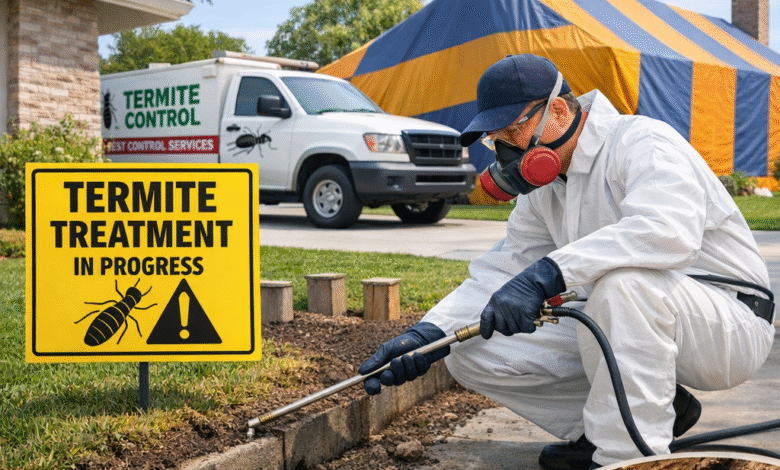
When technicians treat termites, they might drill into the soil around your foundation and inject liquid termiticide, set out poison bait stations, or even tent the entire house with fumigants. Each approach carries its own termite extermination cost. Generally, spot treatments or barrier sprays (using poisons in the soil) are cheaper upfront. Whole-home solutions like heat or gas tenting cost more but kill entire colonies.
When Homeowners Need Termite Control
You’ll need termite treatment when evidence suggests active termites. Many homeowners first notice bubble-like wall damage or piles of termite wings. Catching them early can save big: a small localized treatment might only be a few hundred dollars. But if termites have roamed wide, you’ll face termite control costs toward the higher end of the scale.
It’s worth noting that treating termites often comes with a warranty or maintenance plan. Many companies offer annual contracts (sometimes called termite bonds) for roughly $200–$900 per year, which include inspections and repairs. These ongoing agreements add to long-term termite control cost, but they also keep the pests from returning.
Termite Treatment vs. Extermination
You may hear “termite treatment” and “termite extermination” used interchangeably, but they can imply different scopes. Extermination often refers to a one-time eradication of an active colony. For example, a tent fumigation is a form of extermination: it kills all termites in the house at once, at a high cost. Termite control or treatment, on the other hand, might include ongoing measures (baits, monthly checks, soil treatments) to prevent future infestations.
In either case, the cost impact is similar. Extermination (like tenting) is usually pricier upfront, sometimes several thousand dollars. Preventive treatments or barriers are cheaper initially (a few hundred dollars) but may require annual renewals. For budgeting, think: a big, one-shot fix (extermination) vs. a smaller, repeated service (control). Both aim to protect your structure, but in different cost patterns.
Termite Treatment Cost Overview
To make sense of pricing, let’s look at averages and ranges. Data varies by source, but most agree termite work costs in the hundreds to low-thousands for a typical home.
According to HomeAdvisor (2025 data), national averages sit around $621 per treatment. Their breakdown shows costs as low as $75 for very minor jobs and up to $1,750 for large jobs. HomeGuide (2025) similarly notes that basic methods (chemical spray or bait station) generally cost $225–$2,500.
If you have only a small corner infested, expect to pay toward the lower end of that scale. If termites have tunneled through half your house, costs jump dramatically: tenting or heat treatment can run $2,000–$8,000. These figures align: a chart of home sizes shows that tenting a 2,000 sq.ft. house typically costs $2,000–$8,000, echoing the HomeGuide range.
One useful way to budget is by area: per square foot or per linear foot of barrier. Many exterminators charge $3–$20 per linear foot for liquid soil treatments. Bait stations often run about $7–$12 per linear foot. Whole-house heat or fumigation is typically priced per square foot. A rough rule is $1–$4 per sq.ft. for these services. (For context, treating a 1,500 sq.ft. home by tenting might cost $1,500–$6,000).
Finally, don’t forget collateral costs: if termites damaged wood framing, repairs add another $600–$3,000 on top of treatment. HomeAdvisor notes that minor damage fixes are in the high hundreds, but rebuilding major beams can push repairs past $6,000. In sum, treatment itself prevents catastrophic repair bills later, but it’s good to consider both pieces when budgeting.
Factors Influencing Termite Treatment Cost
A key reason termite bills vary so much is what’s being treated and how. Let’s break down the main cost drivers:
- Infestation Size and Location: A small, localized infestation (say, in a corner of your basement) might only need spot treatment, often under $300. A house-wide infestation with colonies throughout foundation walls demands full perimeter or tenting, easily a few thousand dollars. Essentially, more termites = more labor and product.
- Termite Species: Some termites are more challenging to eliminate. Subterranean termites (the most common) live underground and generally require extensive soil treatment around the foundation. Drywood termites, by contrast, live in wood above ground (like roof beams). They often call for tenting or heat, which is pricier. HomeAdvisor data illustrates this: subterranean treatments average $225–$900, while drywood or dampwood treatments can hit $2,500.
- Treatment Method: Different methods have different costs (see next section for details). Simpler barriers or baits cost less; fumigation and heat cost more. For instance, liquid pesticide barriers might be a few dollars per foot, whereas raising the house heat or fumigating it involves special equipment and prep (removing people and plants), so it’s a bigger bill.
- House Size and Accessibility: A bigger home means more perimeter to treat. Some exterminators charge by linear foot of foundation. HomeAdvisor notes labor is often priced per foot: expect $3–$20 per linear foot depending on infestation size. If your home has complex features (many corners, a deep crawlspace, or lots of landscaping), the tech may need extra time and materials, bumping up cost.
- Damage Severity: If termites have eaten beams or walls, repair work adds cost. Even if the treatment itself is done, fixing structural damage can be 2–3x the price of the treatment. You’ll see contractors replacing wood or patching drywall on your bill.
- Location: Prices also shift by region and climate. Warm, humid areas (think Southern U.S.) have more termite pressure, so demand and costs are higher. A pest control site notes Chicago average fees ($152) vs. Boston ($504) – states with major termite issues often have higher prices.
- Labor vs. Materials: Surprisingly, the chemicals themselves aren’t very expensive – labor drives most of the cost. So hourly rates and required crew size matter. Quick spot treatments by a single tech can be cheap, whereas multiple technicians spending a day tenting your house is expensive.
- Warranty and Follow-ups: A one-time treatment might cost less at first, but a warranty/monitoring plan adds annual fees. For example, many bait systems cost $200–$400 a year for checks. If you skip a contract, you might save money short-term but risk missing a recurrence.
Common Termite Treatment Methods
Different approaches target termites in different ways. Here are the major methods and their cost profiles:
Chemical Soil Treatment (Liquid Barrier)
This is often the first-line defense. Technicians drill holes in the soil around your home and spray liquid termiticide (like fipronil or imidacloprid) to create a toxic barrier. It’s common and relatively affordable. Typical costs run about $3–$20 per linear foot. On average, treating a whole medium-sized home might cost $500–$2,000, depending on the size and severity. Liquid treatments can last 5–10 years before reapplication is needed.
Termite Bait Stations
Baiting systems use plastic stations around the perimeter filled with cellulose material laced with insect growth regulators. Worker termites carry the bait back to the colony, slowly wiping it out. Initial installation costs around $7–$12 per linear foot of stations (so about $1,000–$2,500 for an average house). Then you pay annual monitoring fees (often $200–$400/year) for refilling and checks. Baits are attractive because they’re targeted, but the upfront and ongoing costs add up over time.
Heat Treatment (Whole-House Tenting)
For drywood or severe infestations, technicians may set up a tent and elevate the internal temperature to around 120°F (51°C) for over an hour. This kills termites in wood (and other pests). It’s eco-friendly (no chemicals indoors) but expensive. Costs run about $1–$3 per square foot. For a 2,000 sq.ft. home, that’s $2,000–$6,000. (One pest service notes roughly $3/sq.ft., or $5,000–$6,000 total, for heat treatments.) Heat is often chosen for wood structures like cabins or furniture because it permeates wood fully.
Gas Fumigation (Tenting with Gas)
This is the traditional “tent your house” method. The home is sealed under a tarp and injected with a fumigant (usually sulfuryl fluoride gas). It penetrates all wood and kills every termite. It’s the most drastic option. Expect $1–$4 per square foot, or roughly $2,000–$8,000 for an average home. Costs include tent setup and a 2–3 day process where no one can stay inside. Use fumigation when drywood termites have infested inaccessible areas, or after extremely heavy damage.
Spot/Micro Treatments
For very small, caught-early spots (maybe a few termites under a floorboard), pros might use targeted sprays or heat guns. These spot treatments might cost $6–$8 per square foot treated. So a small localized job might be just a few hundred dollars. Homeowners sometimes call this a “drill and treat” in attics or crawlspaces. It’s cheapest, but it only works if you truly catch the infestation before it spreads.
Borate Wood Treatment
Less common on existing homes, but if you catch termites early or during construction, spraying or painting exposed wood with borate chemicals can stop drywood infestations. Costs are similar to liquid barriers but require access to all affected wood.
Cost of Preventive Termite Control
It’s often cheaper to prevent an infestation than to fix one. For termite protection, this means:
Regular Inspections and Contracts
In termite-prone regions, many pest companies push annual contracts (sometimes called termite bonds). These might cost $200–$900 per year depending on coverage. In exchange, the company inspects your home yearly and treats for termites at no extra charge if they find any. The annual fee is an ongoing termite control cost, but it spreads out the expense and can catch problems early. Over 5–10 years, a bond might add up to more than a single treatment (e.g., $500/year × 10 years = $5,000), but it’s like insurance: it includes repairs and peace of mind.
DIY Preventive Steps
Small measures can reduce the chance of needing big treatments. For example, keeping gutters clean, draining excess moisture, and not stacking firewood against the house keeps termites away from your foundation. These fixes cost little (maybe a one-time landscaping change or gutter work). Installing a preventative liquid barrier yourself (if you’re very handy) is cheaper per gallon than having it professionally applied, but takes more time and skill.
Neighborhood Plans
In some areas, especially condo complexes or row homes, groups of homeowners share a termite bond and hire one company to treat the entire block. This can be economical because the company treats multiple homes at once at bulk rates. If this is available, it can lower per-house termite control cost significantly.
Warranty Coverage
Always ask about warranties. Many companies offer free re-treatments or even repair coverage if termites return under their watch. This doesn’t lower initial cost, but it saves money on any follow-ups later.
DIY vs. Professional Termite Treatment
You might be tempted to DIY to save money. While homeowner products exist (termiticidal sprays, stakes), consider this:
DIY Termite Treatment Costs
Over-the-counter termite sprays and stakes are cheap (often under $100), but they rarely solve a real infestation on their own. An inspection might be free, but real treatments typically require more potent chemicals and expertise. People often buy a bottle of termiticide and a few stakes, thinking it will do the job, but without addressing the colony directly, the problem often returns. So DIY costs might seem low upfront, but if termites persist, you end up paying again — often more to the pros later than if you’d hired help originally.
Professional Exterminator Costs
Pros charge more for chemicals and labor, but they have specialized equipment and warranties. A licensed technician can correctly identify the termite species, find hidden colonies, and apply solutions safely. Their initial fee (hundreds to thousands) might be higher than DIY products, but they usually guarantee the work. For example, many companies include follow-up visits for 1–2 years if termites reappear. That warranty value means you won’t have to pay out of pocket again if the job wasn’t done thoroughly.
When to Call a Pro
If you know you have termites (swarms, damage), professional treatment is strongly recommended. Cost-savvy homeowners compare multiple quotes. Get at least 2–3 estimates from licensed exterminators to find competitive rates. Each estimate should explain exactly what the price covers (initial treatment, monitoring visits, etc.). Sometimes companies will waive the initial inspection fee if you hire them.
Techniques and Safety
Professionals use products that homeowners can’t easily obtain. They also have safety gear and know how to apply treatments without damaging lawns or indoor air quality. Misusing pesticides can be hazardous. Hiring a pro puts the liability on them, and often comes with insurance in case of accidental damage.
How to Save on Termite Treatment Cost
Termite treatments aren’t fun expenses, but there are ways to ease the financial bite:
- Get Multiple Quotes: Prices vary by company. Sometimes a less-known local pest service will undercut a big national brand. When collecting quotes, make sure they’re comparing apples to apples (same treatment scope). Don’t automatically pick the cheapest, but use the quotes to negotiate or add services.
- Ask About Discounts: Seasonal or combo discounts exist. Pest control companies often run promotions (e.g., “20% off first year” or reduced rate if you bundle with other services like mosquito control). It never hurts to ask, “Are there any specials today?”
- Bundle Services: If you need pest control for other issues (ants, rodents), consider a combined package. A pest company might give a discounted termite treatment if you sign on for general pest management too.
- Prevent and Protect: As noted, keeping your home in good repair saves money later. Simple steps like sealing cracks, fixing leaks, and trimming plants away from the foundation can reduce the chance that termites ever move in. The cheapest termite treatment cost of all is the cost of no termites ever finding your home!
- Tax Credits/Insurance: Check if any local programs offer credits or assistance for home repairs. Note: Most standard homeowners insurance policies explicitly exclude termite damage or treatment. (MoneyTalks confirms that “insurance typically does not pay for termite damage”.) Unfortunately, you usually have to pay out of pocket.
- Prep the Home: If going the fumigation route, your cost may include tenting charges. You can save a bit by doing prep work yourself (moving furniture, removing plants) if the service offers a discount for it.
- Stay Informed: Knowing the latest treatment technologies can help. For instance, some newer products might be more effective and require fewer follow-up visits, trimming long-term costs. Ask about options that fit your budget (e.g., some systems spread the cost over time through a subscription model).
Conclusion
Termite treatment costs range widely, but understanding the numbers puts you in control. Small infestations may cost only a few hundred dollars, while major infestations and whole-house treatments run into the thousands. The exact price depends on your home’s size, the termite species, and the chosen method.
In general, budget at least several hundred dollars for a proper solution, and factor in possible repair work if damage is found. Regular inspections and maintenance plans can spread out costs and often save money long-term by catching termites early. Whether you go DIY or hire pros, shop around, compare quotes, and ask questions about what’s included.
With termites, the old adage holds: a stitch in time saves nine. Investing a bit sooner in termite prevention and early treatment can avoid a much bigger bill down the road. By staying informed and proactive, you’ll know exactly what to expect when it comes time to pay the pest control company—so those termites won’t catch you off guard.