Finding termites in your home can feel overwhelming. Your first question is usually simple: What’s the termite tenting cost going to be? Fumigating, or “tenting,” a house isn’t cheap. The average cost runs around $3,000. But think of it as an insurance policy against thousands of dollars in future structural damage.
Termite tenting is an intensive process that eliminates entire infestations. The price may sting at first. Still, it often costs far less than repairing weakened beams, damaged framing, or compromised walls later. In this guide, you’ll learn everything you need to know about termite tenting cost. We’ll cover what affects pricing, what happens during treatment, how long it takes, and whether it’s truly worth it.
You’ll also get clear answers to common questions like “How many days does termite tenting take?” and “Will termites come back after tenting?” so you can plan confidently and protect your home the right way.
Understanding Termite Tenting
What is termite tenting?
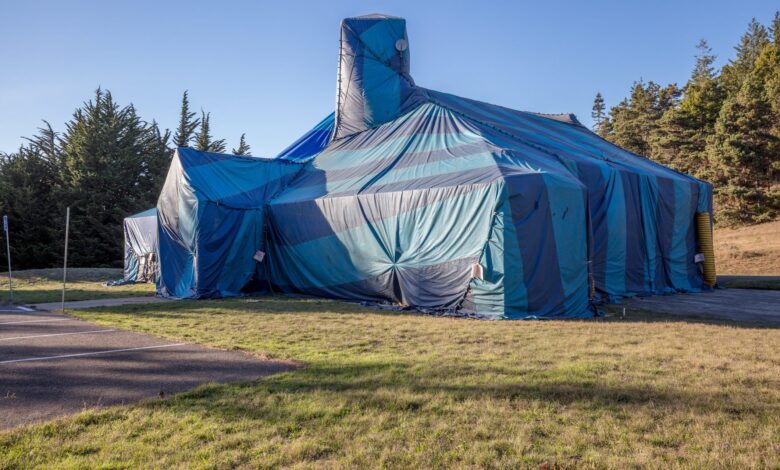
Termite tenting, also called fumigation, is a pest control method in which the entire structure is draped in a large, gas-tight tent and filled with a lethal pesticide gas. The gas (often sulfuryl fluoride) penetrates wood and cracks, reaching termites (and their eggs) hidden throughout the house. This is a one-shot, whole-house treatment designed for serious termite infestations. Because the gas can reach every corner, it has a high success rate: many professionals report that tenting eliminates termites 90%+ of the time. In short, think of termite tenting as dropping a bomb on termites – it’s drastic, but it kills every last one.
Why and when to use tenting?
Homeowners typically consider tenting when termites are well-established or have spread to multiple areas. Signs might include piles of wings, mud tubes on the walls, or holes in wood. If you discover widespread drywood termites or multiple colonies, tenting is often recommended. It’s the most comprehensive option for a full-house infestation. In contrast, for very minor or localized issues (such as a single corner of deck boards), spot treatment or baiting might suffice. But if experts tell you termites have invaded many parts of your home, tenting is the way to ensure none are left behind. In summary, tenting is a necessary investment when your home’s structural integrity is at risk. It’s one of the priciest pest control methods, but often the only way to protect a heavily infested house.
Factors Affecting Termite Tenting Cost
Several key factors determine the cost of your termite tenting. Here are the biggest ones:
- Home Size & Layout. Larger homes require more tenting material and pesticide, and take longer to cover and vent, so they cost more. Tent costs often scale linearly or by square footage. For example, many companies charge $5–$20 per linear foot of exterior, or about $1–$4 per square foot of interior space. A small 1,000 ft² home might be quoted under $3,000, while a 3,000 ft² house could run $10,000 or more.
- Treatment Type (Fumigation vs Heat). Traditional tenting uses chemical fumigants, whereas heat treatments heat the wood to kill termites. Heat treatments cost less. Angi notes that fumigation runs about $5–$20/linear ft, while heat treatments average ~$10/linear ft. Both aim to achieve the same result, but chemical tenting is more common for entire structures. If heat is an option in your area, it could shave a few hundred dollars off the bill.
- Infestation Severity. The more termites you have, the more fumigant (and time) is needed. A mild infestation might cost less to eradicate than a “termite swarm” scenario. As Angi explains, severe infestations drive up costs due to additional fumigant, longer exposure times, and more prep work. If termites have caused visible damage, you might even need follow-up treatments, all of which add to the price.
- Location & Timing. Prices vary by region. Pest control costs are often higher in warm, termite-prone states (like Texas, Florida, or California) due to demand. Also, scheduling tenting during an off-season or slow time (if your provider has one) may yield a small discount. Some companies suggest bundling services or checking any home warranties for coverage. If your area is termite-prone, plan to pay on the higher end of estimates.
- Access and Home Features. Oddly shaped homes, multiple levels, or lots of attached structures (garages, porches) can raise costs. More entry points require more sealing and monitoring. Similarly, if your home has extra items that require special care (such as large fish tanks or greenhouses), the prep work is heavier.
- Inspection Fees. Before tenting, an exterminator usually does a termite inspection ($100–$300). Often, this fee is rolled into the final bill if you go ahead with treatment. But include it in your budget, since it might appear as a separate line item.
- Square footage/Linear footage of home (bigger = more tenting material).
- Fumigation vs heat (heat is usually slightly cheaper).
- Infestation level (severe colonies cost more to eliminate).
- Region and demand (local market rates).
- Inspection & prep (usually a few hundred dollars).
Each of these can push the price up or down.
Average Termite Tenting Cost & Pricing Breakdown
Based on recent data, most homeowners pay between $2,000 and $5,000 for termite tenting. In fact, Angi reports an average around $3,000, with a wide range from roughly $1,500 on the very low end to $8,000+ for large or complex jobs. To visualize this, consider how home size influences pricing. The table below, based on Angi’s data, shows typical tenting costs by square footage:
| Home Size (sq ft) | Typical Termite Tenting Cost (USD) |
|---|---|
| 1,000 ft² | $1,000 – $4,000 |
| 1,500 ft² | $1,500 – $6,000 |
| 2,000 ft² | $2,000 – $8,000 |
| 2,500 ft² | $2,500 – $10,000 |
| 3,000+ ft² | $3,000 – $12,000+ |
Other key price details:
- Cost per Square or Linear Foot: Pest pros often use either linear feet of foundation or total interior area to calculate costs. Typical rates are about $1–$4 per interior square foot for fumigation (or around $5–$20 per linear foot). Heat treatment costs are slightly lower on average.
- Severity and Follow-ups: If termites have already caused damage, you may face additional structural repair costs (often $250–$3,000, depending on the extent of damage). Worse infestations might even require multiple applications or yearly inspections afterward, which add extra visits and fees.
- Inspection: Plan for a pre-tenting inspection fee ($100–$300). Many companies apply that inspection fee to your total if you proceed with fumigation.
How Many Days Does Termite Tenting Take?
A common question is “How long is my house going to be under a tent?” The full process isn’t instantaneous, but typically you’re looking at about 3–5 days total. This includes preparation, the actual fumigation, and the ventilation period. Here’s a rough timeline:
- Day 1–2 (Preparation): Before the tent goes up, you’ll prep the house. This can take a day or two. It includes removing items listed below, rolling out of town, and letting the exterminator seal doors/windows.
- Day 2–4 (Fumigation Under Tent): Once everything is ready, the tent is erected, and the gas is introduced. The structure usually remains under tent for 24 to 72 hours (1–3 days) to ensure the fumigant penetrates deeply. During this time, you cannot enter the house. The gas will kill the termites, eggs and all.
- Day 4–5 (Aeration and Re-Entry): After the gas has done its job, the tent is carefully removed, and the house is ventilated. Even after the tent is off, technicians will ventilate (often with fans) for about 24 hours to clear any residual gas. Only once a clearance certificate is given (typically the next day) can you safely return home.
Will Termites Come Back After Tenting?
You might hope that after tenting, your termite worries are over forever. Unfortunately, there is still a chance termites can return. Termite tenting kills every termite present at the time of treatment, but it doesn’t create a permanent barrier to future invasions. As one pest control expert bluntly puts it, “It is possible for termites to return after tenting, unfortunately”. The tenting alone gives no ongoing protection – it only kills the active colony.
Why might they come back? Termites are prolific breeders. Even after tenting a house, new swarms or nearby colonies can move in later if conditions are favorable (wet wood, wood-soil contact, mulch next to the foundation, etc.). If you had undetected termites in outbuildings, fence posts, or neighboring trees, a new colony could find its way. Also, if repairs after fumigation leave fresh wood exposed (like replacing a beam), that can attract new activity.
That said, tenting is still highly effective for the infestation at hand. It just isn’t a one-time cure that guarantees 20 years of peace. Cascade Pest Control’s blog emphasizes that “the answer is yes – termites can return after a termite treatment” (note: not specific to tenting, but applicable). The key is ongoing vigilance. After tenting, most experts recommend putting the home on a yearly monitoring plan – whether with bait stations or soil treatments – to catch any invaders early.
In practice, here’s how to minimize a comeback:
- Soil treatment and barriers. After fumigation, some homeowners set up a chemical barrier in the soil or install termite baits. These steps aren’t foolproof either, but they add layers of defense.
- Regular inspections. Check for any new mud tubes, damage, or swarming termites, especially in the years following tenting. Quick action on a minor reinfestation can prevent a bigger job later.
- Correct underlying issues. Fix things that attract termites: keep wood off the ground, repair leaks, and avoid excessive mulch against the house. These don’t cost much and can keep new colonies at bay.
Is Termite Treatment Worth It?
At this point, you might be wondering: “Is all this worth the expense?” Consider this: Termites cause about $5 billion in property damage each year in the U.S., and unfortunately, most home insurance policies don’t cover termite damage. By the time you see obvious signs of an infestation, thousands of dollars in structural damage may already be done.
Professional termite tenting (or other treatments) ranges from about $1,000 to $3,000+, depending on your infestation. That might sound like a lot, but compare it to the alternative: repairing termite damage. Angi reports that simple repairs (replacing a few boards or drywall) run $250–$1,000, while more serious fixes (walls, framing, moisture damage) can cost $3,000-$6,000. In extreme cases, you might end up with structural failure (like a sagging floor) if you ignore termites long enough.
Preventive treatment wins by saving money in the long run. The BattenToBeam blog puts it bluntly: “The price of prevention is just a fraction of what termites can cost you.” Home inspections (around $75–$300) and termite contracts ($200–$800/year) are small investments compared to a full-blown infestation cleanup. Think of termite tenting as paying for your home’s safety: it’s cheaper to spend a couple thousand now than face tens of thousands in repairs later.
So, “Is termite treatment worth it?” Yes, especially once termites are confirmed in your home. Early intervention keeps your structure intact and lowers your costs. If left unchecked, even a small drywood termite colony can grow for years and cost far more in hidden damage. By investing in professional treatment (such as tenting or barriers), you’re banking on peace of mind and on protecting the value of your house.
Preparing for Termite Tenting
Even before the tenting crew arrives, there’s work to be done. Proper preparation is crucial for both safety and success. Pest professionals will give you a detailed checklist, but here are the must-do steps:
- Pack and Vacate: Plan to be out of the house for at least 48 hours straight. Plan a trip to stay with family or friends, or at a hotel. (Angi notes you’ll need alternative accommodations during the 2–3 days your home is fumigated.) Do this for all household members and pets.
- Remove or Secure Food and Medications: Take all food out of the house (or place it in special sealed containers), and move medications, pet food, and toiletries to a safe location. Even shampoo and lotions should be considered potential sources of fumes, so pest control pros usually advise removing them from the premises.
- Empty and Cover Aquariums & Plants: Fish and reptiles need special care. Cover or remove fish tanks to keep gas out of the water. Move potted plants indoors or water them well and keep them out of the tented area. Also, trim back any live plants that are against the house siding.
- Clear the Indoor Area: Clear the wall and floor space near the foundation. Move furniture a few inches away from walls, remove framed pictures, and turn off ceiling fans. This allows the fumigant to circulate freely, making it easier to wrap and unwrap furniture.
- Clear the Yard Perimeter: According to Angi and BugWiser, remove or move all outdoor furniture, grills, potted plants, and decorations at least 10–20 feet from the house. This ensures the tent can fully seal. Store toys, propane tanks, and any flammables away from the home.
- Secure Valuables: Store money, jewelry, and important documents in a safe outside of the home during tenting. Fumigation specialists recommend this to avoid any risk of damage or misplacement.
- Follow Utility & Appliance Prep: Some appliances (such as gas ovens and water heaters) may need their pilots turned off. Pest pros will advise shutting off gas lines and disconnecting fridge/freezer power as a precaution. Verify what appliances should be turned off or unplugged.
In summary, here’s a quick pre-tenting checklist to follow:
- Pack any valuables and remove all food, medicine, and pet items.
- Move furniture a few inches away from the walls and remove fragile objects.
- Vacate: make living arrangements for 2–3 days for everyone (people, pets).
- Remove or cover fish tanks and plants (protect them from fumes).
- Clear outdoor debris (furniture, toys, grills) from around the home.
- Turn off gas/electric appliances as instructed.
- Double-check with your exterminator for any specifics to your situation.
Alternatives to Termite Tenting
While this article focuses on tenting costs, it’s worth knowing the alternatives in case tenting isn’t right for you:
- Spot Treatments & Liquid Barriers: For very localized infestations, exterminators can inject pesticides into walls or soil or set baits. These treatments are less invasive and cheaper than full tenting. However, they only cover known problem areas. If you have hidden termites elsewhere, spot treatment might miss them.
- Heat & Cold Treatments: Some companies offer heating the structure or cryonite (liquid nitrogen) as a non-chemical tenting alternative. These can cost about the same or slightly less than tenting, but availability varies by region and home size. They also require vacating the home while the equipment is running.
- Borate Wood Treatment: Borate solutions can be applied to exposed wood in attics or crawl spaces as a preventive measure. This isn’t a fix for an active infestation, but a supplemental treatment that can deter future attacks. It’s inexpensive but won’t eliminate termites hiding inside walls.
- Baiting Systems: Installing termite bait stations around your property is a preventive measure that targets subterranean termites. It’s relatively cheap (often a few hundred dollars per year for monitoring), but it doesn’t address an existing drywood termite infestation under your roof.
Cost-Saving Tips for Termite Tenting
If termite tenting is in your future and you’re worried about the bill, here are a few strategies to reduce the cost:
- Get Multiple Quotes: Pest control companies vary in price. Ask at least three licensed exterminators to bid on your job. Make sure each quote specifies exactly what is included (tent setup, chemicals, removal, etc.). Sometimes, a company might waive the inspection fee if you sign up or include a year of follow-up monitoring.
- Bundle Services: If you have other pest issues (bed bugs, rodents, ants), see if one company can do a package deal. Some exterminators offer discounts when you book termite tenting along with treatments for other pests.
- Use Off-Season Rates: In some regions, booking tenting in cooler months (when fewer people are thinking about pest control) may get you a lower rate. Ask if they have any slow seasons for fumigation.
- Ask About Payment Plans or Financing: Some pest companies offer financing or installment plans for large jobs. This won’t lower the cost, but can make it easier to pay.
- Prevent Future Treats: After tenting, maintain good termite prevention (repair leaks, remove wood-soil contact). Preventing a repeat infestation means you (hopefully) won’t need another expensive tenting job anytime soon.
Conclusion
Termite tenting is a serious investment, and yes, the termite tenting cost can feel overwhelming at first. But when you compare it to the potential damage termites can cause—sometimes tens of thousands of dollars in structural repairs—the decision becomes much clearer. You’re not just paying for a service. You’re protecting your home, your equity, and your peace of mind.
Plan ahead. Expect to be out of your home for a few days. Follow the preparation steps carefully. After treatment, stay proactive with regular termite inspections and basic prevention habits. Tenting eliminates the current infestation, but long-term protection depends on what you do next.
At the end of the day, ignoring termites never saves money. Acting early does. When you handle the problem decisively, you protect both your home’s structure and your financial future. And that’s always worth it.
FAQs
How long do I have to stay out of my house during tenting?
Typically, you’ll vacate for at least 48 hours. The fumigation itself takes about 24–72 hours, and technicians will ventilate the house (often about a day) before giving the all-clear. Many people leave on a Friday and return on Sunday or Monday.
Can tenting damage my belongings or home?
Modern fumigants (like sulfuryl fluoride) are designed to be non-corrosive. However, you should cover or remove items like plants, fabric, electronics, and especially aquariums. Professionals will guide you on what to protect and what to pack away. When done properly, tenting should not harm the structure or most household items.
Will homeowners’ insurance cover termite tenting or damage?
In most cases, standard home insurance does not cover termite damage, nor the cost of treatment. Termites are typically excluded because infestations are considered preventable with proper maintenance. Always check your policy, but plan for treatment costs as your own expense.
How often should I have termite inspections?
Even after tenting, annual or biennial termite inspections are wise, especially in high-risk areas. Early detection is key. Many pest pros recommend an inspection at least once a year to catch any new activity. If you have a termite prevention plan, they may service traps or barriers more frequently.
Is there anything I can do to prevent termites after tenting?
Yes. Keep wood debris and mulch away from your foundation, fix any leaks promptly, ensure good drainage around the house, and seal cracks in the foundation. Installing termite bait stations or a chemical soil barrier can also deter future termites. These steps, along with regular monitoring, greatly reduce the chance of reinfestation after fumigation.