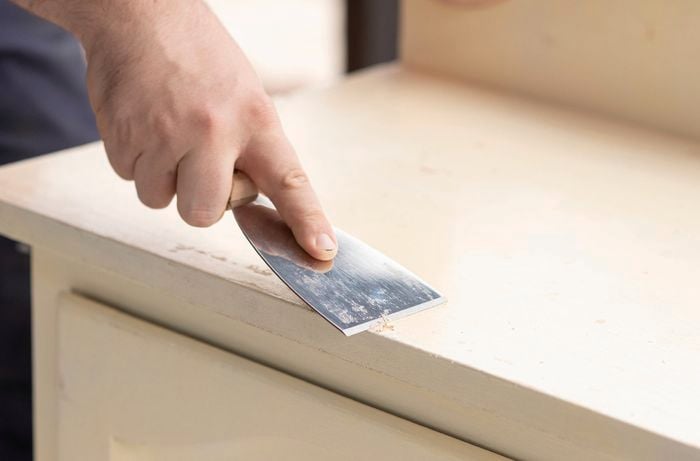
If you’re wondering how to remove paint from wood, there are several safe and effective methods you can use, depending on the surface and paint type. Choose the best way according to the requirements of the specific paint and wood. To ensure the durability of the items in the room, you should use tools that are gentle. In vast areas like floors, where big cleaners are used, things still need to be tried out in such a spot initially.
How to Remove Paint from Wood Floors Safely
Check for lead
If wood is painted before 1978 in the United States or in the 1990s in the European Union, the presence of lead paint should be investigated. If you find lead, follow the safety rules or hire a pro to do the job.
Ventilation
Perform the project outdoors or in a location that is well ventilated. Some of the removers emit fumes, so use a ventilator or open windows. Keep flammable removers at a distance from the fire.
Protective gear
Ensure that you have protective gear like gloves, goggles, and a mask, which should be on throughout the activity. Wear long sleeves and wear old clothes. Cover the table where the paint drips are caught.
Tools and Things You Need
For Chemical Removal: Apply paint remover gel/paste, scrapers, and putty knives. Brushes for applying a remover (be sure to use some bristle brushes, not foam ones that will adhere the remover better), steel wool/scrub pads to scrub off thick paint particles. Arranged the remaining chemicals, and/or water, and plastic wrap. Make a container filled with the пccerrimer and r\u015ccgla
- For Heat Removal: A heat gun that changes heat levels, a metal scraper or spatula, and heat-resistant gloves.
- For Sanding: Sandpaper/a sanding machine, a vacuum with fine filters, and a dust mask.
- For Natural Ways: Use a large bowl, sponge or brush, warm white vinegar, baking soda paste, or citrus or soy-based gels.
- Always protect yourself with gloves, goggles, masks, long sleeves, and old clothes
- Ways to Remove Paint from Wood
- Removing paint by means of naturalistic methods is often considered as a great way to proceed with such a task.
Severe chemicals are used in some varieties, while in others, gentle ingredients like lemon or soy are used. A gel or liquid that makes the bond loose and allows the paint to be scratched off.
When learning how to remove paint from wood, choosing the right method is essential to avoid damaging the surface. A booster to metallic and perishable materials with more longevity is considered with the use of radical chemicals. Did you see the word “cryptanalysis” there? Some use strong chemicals, while others use gentle ingredients like citrus or soy.
- Heat: To make the paint bubble and lift away, run a heat gun over it, just being sure such a process won’t do any damage to it.
- Scraping and Sanding: The method suggests removing the paint from the small area that is already coming off through the use of scraping and sanding. Great for small paint locations. Remember, blowing creates dust.
- Natural Solutions: The use of safe vacuums like vinegar or citrus oil is effective in softening water-based paint so it can be removed easily. Some special soy gels are useful on a few spots, too.
Cheaper choices and safety are the main features of each method, besides the kind and the amount of material used. It’s often the case that some methods are combined to get the best results.
Chemical Paint Removers (Solvent/Citrus/Soy)
The fastest way for how to remove paint from wood is usually using a chemical stripper or a heat gun. Paints of many layers are good to remove with these.
- Solvent-based Strippers: Use harsh chemicals such as methylene chloride or safer ones like acetone, but don’t directly apply them to the surface because they can severely damage it… They make use of alkaline as a major component while bonding with oil paints.
- Natural/Biobased Strippers: The smell is less when using the eco-friendly version, soy gel/citrus oil. Also, it spares the planet. Always use PPE.
Steps to Use
- Test First: Apply a little bit of the paint tarpaulin on the surface and see how it reacts.
- Apply Stripper: Use a brush to put on a layer of the paint remover, and make sure you apply the whole layer wet. Perform the task outdoors or under a ventilated sky.
- Cover (Optional): Cover it with plastic wrap so that it doesn’t dry out too quickly; this way it will work better.
- Wait: Set it to rest. Time is not fixed. Check that it’s still wet before the time finishes.
- Scrape: Gentry remove it with a scraper or a knife. Be kind to the wood.
- Repeat if Needed: Get the stripper to work by adding it, and take off the difficult part with a wire brush for a thin coat.
- Clean Up: After the paint is removed, wipe the stripper off with mineral spirits or water. This is a new solvent that can only be rinsed off with soapy water. Dry the wood afterwards.
What You Need
You can have a winstrup rope, for example, scrumbag or a stir pad, a putty knife, towels, or water for cleaning up.
Make sure to follow the instructions on the bottles of the chemicals. You need to wear glasses and gloves. Also, ensure the presence of fresh air. Don’t let the liquid spill on the clothes or other landscape surfaces.
- Pros: The option of one coat or multiple coats, both to the other, is still there, so it’s quick and cheap.
- Cons: You can smell it quite badly, possible harm accidents when you are not cautious, and you can’t throw the waste in the regular appearance to be drawbacks as well. This procedure will definitely consume a good portion of your time.
It takes 30 to 120 minutes for the Stripper, plus another 10 to 30 minutes for the removal of one square foot. Removing paint from small pieces of furniture, as an activity, will take 2 to 3 hours.
Heat Gun Stripping
Heat guns are among the fastest tools to dry paint by causing its bubbles to break without the help of chemical substances.
- How to Use: Dress with safety gear, remove any sources of flame, and discharge the gun a couple of inches from the paint surface, moving it a little to make every inch of the paint bubble. Scrape the paint away without destroying the wood.
- Pros: Small areas can be done very quickly, and the process is good for trims of wood too.
- Cons: They may start fires, burn planks, or show off vapor that can be a hazard to the workers. Sensitive surfaces should rather stay away from them.
Scraping and Sanding
Manual Scraping: Remove any flaking pieces of paint using the scraper with the grain only. Put the mask on to protect yourself from dust if you’re planning to sand it. It is a good way of tackling the situation if the paint is softened.
Sanding: Only sanding of non-hazardous paint is allowed. Pick the correct grit sandpaper, particularly, beginning with the coarser sandpaper and then working to finer pads. Wearing a mask is crucial for health reasons. It can take hours and should be done in a safe manner. To escape rage, be very cautious when freeing the wood from unwanted rough spots.
Natural & Non-Toxic Methods
White Vinegar: Dissolve the water-diluted emulsion by applying heat to the water paint using the vinegar method. Use a piece of cloth to clean off the stains with water.
Baking Soda Paste: Mix the water and mix with the paint to soften the small parts of the paint.
Citrus Oil/Soy Gel: Perfume and healing properties. Let it settle for a night or more, depending on the particular item. Then, take good care of each cleaning.
Example: Chemical Stripping
Go to the garage, put on your gloves, and, wearing a mask, apply the paint stripper. You shield the spot with a plastic cover and wait until the paint gets chinked and peeled off. Gradually and with care, separate the paint layer from the wood. If it is still required, come back again with another layer of paint stripper.
- Clean it with water and soil chemicals.
- Paint Removal On Furniture and Tables
- Citrus and soy gel strippers are safest on furniture.
- Do not use excessive heating on them to create burnt spots.
Use a scraper with caution so as not to hit too hard. Periodically perform ultralight sanding after the big ones.
Paint Removal On Floors and Decks
Floors: Tools we use include heat guns, paint strippers, or sanders. Make sure it’s really clean before it settles in.
Decks: Clean using the pressure washer and then remove with a stripper. Follow the instructions, be well-equipped, and protect yourself.
Troubleshooting
- Paint not softening: This may fasten the process in the case of an oil substance, we can thus apply a stronger stripper to this kind of stubborn compound, and light heat guns can also be applied. Moreover, if you have polyurethane, a particular recommender of it is a particular solvent to be used also.
- Wood grain raised: Cleanse wood and sand it to the normal level of the board after using a caustic stripper or vinegar.
- Sticky residue: Clean with a solution of warm water and trisodium phosphate (TSP) or dish soap. For the removal of sticky films, the solvent mineral spirits can also be used, so make sure that there is good airflow through the room.
- Gouges or scratches: One common technique is using the finer tools. Sand lightly over the whole surface, and then reapply the other surface treatments when correction is done.
Stop it by switching off the machine and letting the area ventilate. No stripper should produce harmful fumes. Now that you know how to remove paint from wood, you can confidently choose the best method for your project.
Now that you know how to remove paint from wood, you can explore more expert tips on My Homes Improvement.