Cleaning glass shower doors doesn’t have to feel like a chore. With the right approach, you can make your shower glass look brand new without elbow grease or toxic chemicals. This guide walks you through every step—from gathering the best tools to tackling stubborn stains and daily upkeep. You’ll learn how to clean shower glass effectively, safely, and even naturally. Let’s dive in!
Essential Tools and Supplies
Before you start, assemble the right supplies. A spray bottle filled with a homemade cleaner (like a vinegar solution), soft microfiber cloths, and a rubber squeegee are non-negotiable. A gentle scrubber or soft-bristle brush helps in corners, but never use steel wool or harsh pads that scratch the glass. Wearing rubber gloves will protect your hands from any irritation, especially if you’re using citrus acids or store-bought cleaners. Having white vinegar, baking soda, and even a bit of dish soap at the ready gives you powerful options for homemade solutions.
-
White vinegar: A top-rated, non-toxic acid cleaner. It dissolves mineral deposits (hard water stains) and soap scum.
-
Baking soda: A mild abrasive that lifts dirt and neutralizes odors. Great for making paste for tough stains.
-
Lemon juice: Another natural acid. Use lemon to spot-treat stains or freshen the glass with its scent.
-
Dish soap: Cuts grease and adds a light protective film. A couple drops in your vinegar solution boosts cleaning power.
-
Microfiber cloth: Soft and lint-free, it cleans without scratching. Always use microfiber for wiping and polishing.
-
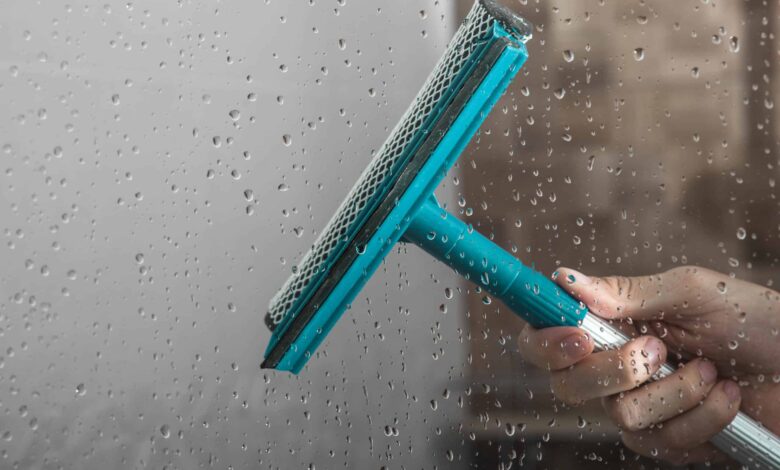
Rubber squeegee: Eliminates water and cleaner in one swipe. It’s essential for a streak-free finish.
Cleaning Solutions to Try
-
Vinegar + Water: Mix equal parts white vinegar and warm water in a spray bottle. This solution is ideal for breaking down soap and hard-water films without chemicals.
-
Vinegar + Dish Soap: Combine white vinegar, a few drops of dish soap, and water. The soap adds extra grease-cutting power and can leave a protective coating that slows future buildup.
-
Baking Soda Paste: Stir 2 tablespoons of baking soda with just enough water (or vinegar) to make a paste. This scrub paste clings to tough spots for deep cleaning.
-
Lemon + Salt: For spot treatments, sprinkle salt on a cut lemon and rub the glass. The salt adds grit while the citric acid dissolves mineral scale.
-
Commercial Cleaners: For very heavy limescale, products like CLR or Lime-A-Way contain strong acids (e.g. citric or lactic acid) that cut through buildup. Use these with caution and ventilation.
Whatever mix you use, always test it on a small area first to ensure it won’t etch or dull your particular glass.
Step-by-Step Guide to Cleaning
Cleaning your shower glass is easiest in stages. Follow these steps for a spotless finish:
-
Prepare the area. Clear the shower of bottles, towels, and any items on shelves. Ensure the glass is dry so you can identify the dirtiest spots. Lay down a towel or mat to catch drips.
-
Apply the cleaning solution. Spray your vinegar-water (or chosen) solution generously over the glass. Focus on areas with visible soap scum or hard water stains. Let it sit for 5–15 minutes. The vinegar’s acidity will start dissolving the grime.
-
Scrub gently. Using a soft sponge or cloth, scrub the glass in circular motions. Pay attention to corners and where calcium builds up. For heavier stains, sprinkle baking soda on those spots and scrub with a wet sponge. Baking soda’s mild abrasiveness loosens stubborn films without scratching.
-
Rinse thoroughly. Turn on the shower and rinse the glass with warm water, washing away all residue. Make sure no cleaner or powder is left clinging to the surface, as that could streak once dry.
-
Squeegee dry. Starting at the top, drag a rubber squeegee down the glass to wipe off all water and suds. This final step prevents water spots and streaks. If any moisture remains, blot it with a clean microfiber cloth. The end result should be crystal-clear glass with no hazy film.
Avoiding Damage: Cleaning Without Scratching
One common concern is how to clean shower glass without scratching it. The answer is to use gentle tools and techniques. Always use non-abrasive cloths (microfiber is ideal) and soft sponges. Avoid anything metal or gritty that could etch the glass. Even baking soda, though an abrasive, is very fine and safe for glass when used as a paste (it won’t scratch like sandpaper). Wipe or scrub in smooth circles, not hard back-and-forth scrubbing. And never drop harsh cleaners (like unbuffered chlorine bleach) on glass—it can damage seals and finishes.
For example, Yorleny’s Cleaning Service notes that professionals “know exactly how to clean shower glass without scratching, etching, or leaving residue behind” by relying on the right tools. In short, to protect your glass, keep it wet with cleaner while scrubbing gently, and always finish by squeegeeing or drying – that way you never have to use extra force.
Removing Hard Water and Limescale
Limescale and hard water stains are often the toughest obstacles. If your shower glass has white streaks or dull patches, try these tips:
-
Vinegar Soak: Spray full-strength white vinegar on the glass and let it soak 10–15 minutes. This will soften mineral deposits. Then rinse or scrub; the stains should come off much easier.
-
Baking Soda Paste: Mix baking soda with a little water and apply to stubborn spots. Let it sit ~30 minutes, then wipe off. This paste gently scrubs away deposits without harsh chemicals.
-
Citrus Acid: Rub half a lemon (or orange) directly on the affected areas, or sprinkle salt on lemon first. Let the citric acid work for 10–15 minutes, then rinse. Lemon also deodorizes your bathroom.
-
Commercial Remover: For really severe buildup (off-white haze), consider a specialized cleaner. Products like Lime-A-Way contain citric or lactic acid that dissolve calcium fast. Always follow label instructions and ventilate the area.
So what removes hard water stains from glass shower doors? In most cases, the effective DIY answer is vinegar plus baking soda. The ProHousekeepers blog confirms “white vinegar and baking soda is the best way to treat a hard water stain”. When these fail, resort to commercial limescale products as a last resort. The key is persistence: allow the solution to soak in and then gently scrub, repeating if necessary.
Cleaning Without Vinegar
Not a fan of vinegar’s smell or acidity? You can still clean effectively without vinegar.
-
Lemon Juice: Citrus’s natural acid is a great substitute. Mix equal parts lemon juice and water and spray it on the glass. Let it sit, then scrub as usual. This also leaves a fresh scent.
-
Baking Soda + Soap: A paste of baking soda and liquid dish soap can break down grime. The grease-cutting soap helps the baking soda penetrate soapy films.
-
Diluted Castile Soap: For daily spray, use a mild liquid soap (castile or any gentle detergent) diluted in water. Spray and wipe for everyday cleaning.
-
Commercial “Green” Cleaners: Many eco-friendly cleaners (plant-based formulas) clean glass well. For example, simple unscented window cleaners (ammonia-free) or a product like Grove Co Shower Cleaner can be used routinely. These avoid vinegar but still lift scum.
Maintenance and Prevention
Once your glass is clean, make maintenance easy with good habits:
- Squeegee Daily: After every shower, use a squeegee to wipe away water droplets. This quick step alone prevents most hard-water spots from forming.
- Wipe Weekly: Even with daily squeegeeing, give your glass a weekly wipe-down with the vinegar-water spray or a gentle cleaner. A microfiber cloth does wonders to polish and keep it gleaming.
- Ventilate: Keep humidity low. Run the fan or crack a window so glass dries faster between showers. Dry glass resists mold and scale.
- Rain‑X (Optional): For extra protection, some use a Rain‑X coating (made for glass) after cleaning. It repels water so beads roll off, greatly slowing new buildup. (Note: Rain‑X isn’t a cleaner—wipe glass perfectly first, then apply it as a final protective layer.)
- Routine Schedule: Stick to a simple routine as shown below:
Professional and Hotel Tips
Wondering what do hotels use to clean glass shower doors? Surprisingly, many upscale hotels avoid harsh chemicals. They often use organic or natural cleaners that are gentle and leave no strong odors. In fact, Pro Housekeepers explains that most major hotel chains prefer homemade, non-toxic solutions. Some even have their own branded plant-based cleaners.
Pro cleaners (or you, wearing rubber gloves) may use concentrated eco sprays or ammonia-free glass cleaners for a fast shine. But even pro teams rely on the basics: microfiber cloths, squeegees, and acid-based sprays (usually diluted white vinegar) for tough spots. The moral? Stick with what works: hotels show that “less is more” and that gentle, natural methods are often the best way to keep shower glass crystal-clear.
Cleaning the Shower Head
A bonus tip: you should also know how to clean shower head as part of bathroom upkeep. Mineral build-up can clog the nozzles and even harbor bacteria. Here’s how pros tackle it:
-
Rub the nozzles: If your shower head has rubber tips, simply flexing them with your finger or a toothbrush can pop off light scale.
-
Vinegar soak: For deeper cleaning, soak the shower head in white vinegar. You can do this without removing it: tie a bag of vinegar around the head and leave it for a few hours. Or take it down and submerge it in a bucket of warm vinegar for 3–4 hours. The acetic acid dissolves calcium and lime.
-
Rinse and scrub: After soaking, run hot water through the head and brush away any loose gunk. Reattach and flush water again to wash it clean.
This simple vinegar trick restores water flow and prevents that dirty appearance. Cleaning your shower head not only helps hygiene but also keeps your glass looking new (no clogged streams spraying onto the door).
Conclusion
A sparkling shower glass is within your reach. By using gentle cleaners like vinegar or lemon with the right tools (microfiber cloths, squeegee) you can banish soap scum and hard-water stains without scratching the surface. The secret is to clean thoroughly and then keep up with quick maintenance. Wipe or squeegee the glass after each use, and do a weekly vinegar cleaning. These habits will make your glass look like new again and keep it that way.
Remember the golden rules: soak first, then scrub gently, rinse completely, and dry. Follow our tips and techniques, and how to clean shower glass will no longer be a mystery. With consistent care, your shower doors will stay crystal-clear and inviting—no professional service needed!
FAQs
What is the best thing to clean shower glass with?
A mix of white vinegar and water works best for most shower glass. It’s affordable, natural, and removes soap scum and mineral buildup easily. For tougher spots, add a little dish soap or use a baking soda paste. Non-ammonia glass cleaners also work if you rinse well afterward.
How do you get hard water stains off shower glass?
Spray undiluted white vinegar on the stains and let it sit for 10–15 minutes. Gently scrub, then rinse. If stains persist, use a vinegar and baking soda paste or lemon juice to break down the minerals.
How do you remove limescale from shower glass?
Limescale dissolves with mild acids. Vinegar or lemon juice works well when left on the glass for a few minutes before scrubbing. For heavy buildup, a commercial limescale remover may be needed. Always rinse and dry to prevent new deposits.
What do hotels use to clean glass shower doors?
Most hotels rely on microfiber cloths, squeegees, and gentle cleaners. Many prefer eco-friendly or vinegar-based solutions because they clean effectively without leaving residue or strong odors.
How to clean shower glass without scratching it?
Use soft tools like microfiber cloths and rubber squeegees. Avoid abrasive pads or harsh powders. Clean with gentle pressure and circular motions, letting the cleaner do the work instead of scrubbing hard.