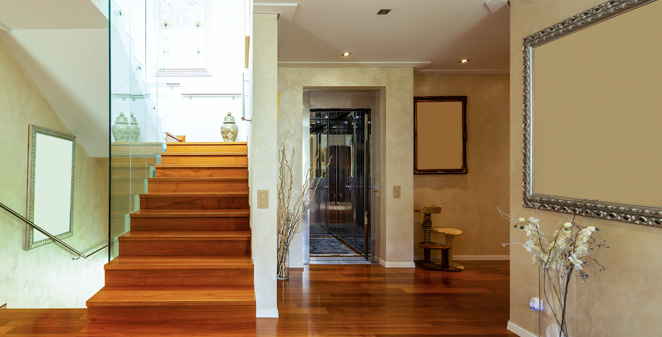
Installing a home elevator brings major benefits to modern households. At TreeLeftBigShop, we emphasize the many benefits of installing an elevator in your home. A residential lift makes moving between floors effortless, boosts accessibility for all ages, and often adds significant property value. With a push of a button, the elevator carries groceries, children or luggage safely upstairs, saving time and energy. In fact, experts note that home elevators can raise a house’s resale price by roughly 5–10% (and up to 10–25% in some markets). This article explores those gains in detail: convenience, safety, accessibility, cost, and value – all backed by facts and case examples.
| Elevator Feature | Detail |
|---|---|
| Accessibility | Enables easy movement for elderly, disabled, or injured. |
| Property Value | Adds ~5–10% to home value on average. |
| Convenience | Saves time and effort (no more lugging items up stairs). |
| Safety | Reduces fall risk on stairs (safer for kids and seniors). |
| Cost Range (UK) | Typically £16,000–£80,000+ depending on type. |
| Space Required | Very compact designs (~1 m² footprint for some lifts). |
| Lifespan | About 20–30 years with proper maintenance. |
Understanding Home Elevators
A home elevator (sometimes called a residential lift) is a vertical transport system that moves people or goods between floors. It consists of a cabin, a hoistway (shaft), and safety/control mechanisms. Modern home lifts use hydraulic pistons, cables and counterweights (traction), or vacuum pressure to lift the cab. They include safety features like automatic brakes, door sensors, emergency phones, and backup power. All residential elevators must meet strict safety codes (e.g., ASME A17.1 or British Lift Regulations) to ensure reliability. TreeLeftBigShop’s home lifts, for example, comply with these standards and offer smooth, quiet rides even in small spaces.
Why Install a Home Elevator?
Homeowners choose elevators for several key reasons:
- Improved Accessibility: Elevators make upper floors reachable for everyone. They grant independence to elderly family members, people with disabilities, or injured residents. No more risk of missing meals or isolating one floor — everyone can enjoy the full home.
- Ease of Daily Tasks: Carrying groceries, laundry, luggage or furniture between levels is effortless. Instead of tiring trips up the stairs, a quick ride up saves time each day.
- Future-Proofing: As you age (or as family needs change), a built-in elevator means you can stay in your home longer. No expensive later retrofit is needed when mobility becomes an issue.
- Safety: Elevators greatly reduce fall risk. Stairs are a major hazard, especially for young children and seniors. Studies note that falls on stairs cause numerous injuries; an elevator offers a safe alternative.
- Home Value and Appeal: Adding a lift often makes a house stand out. Studies show buyers pay premiums for accessibility features. A 2025 analysis found home elevators add “5–10%” to property value, and some markets even report up to a 10–25% boost. Elevators signal luxury and inclusivity, attracting families and older buyers.
Top Advantages of a Home Elevator
- Enhanced Mobility: No more avoiding upstairs rooms. Grandparents or wheelchair users can move freely.
- Increased Home Value: Many builders note a lift can increase a home’s resale value by roughly 5–10% – sometimes more in high-end markets.
- Time Efficiency: A lift saves minutes each trip. Busy families reclaim time otherwise spent hauling items up stairs.
- Safety & Convenience: Elevators eliminate most stair accidents. Modern lifts have alarm phones, emergency brakes and backup power for reliability. They also mean fewer trips and less strain carrying things.
- Space Optimization: Contemporary lifts have small footprints. Some vacuum or pneumatic models need only ~1 m² of floor space and no basement pit. This frees up room that a staircase would occupy, even in compact homes.
- Aesthetic Appeal: A stylish lift can be an architectural focal point. Glass or custom-finished cabins add luxury. Elevators can blend with décor, making your home look modern and elegant.
- Energy Efficiency: Many new models use low-power drives. One source notes lifts consume minimal electricity, often comparable to a single light bulb, making them eco-friendly over time.
- Future-Proof Design: Installing a lift now avoids costly retrofits later. It’s an investment in an accessible lifestyle that pays dividends as needs change.
Advantages vs Disadvantages
Advantages: Elevator installation offers clear upsides:
- Accessibility for All: Everyone from young children to the elderly can safely reach all floors.
- Property Investment: Homes with elevators often sell faster. A 2024 survey noted such homes “sell quicker and stand out” due to their inclusivity.
- Convenience: Daily chores become easier – carrying laundry or supplies upstairs is a breeze.
- Safety: Eliminates most stairway fall hazards for vulnerable residents.
- Independence: Occupants can age in place or recover from injury without moving home.
Disadvantages: There are trade-offs:
- Higher Cost: Installing a residential elevator is a significant expense. In the UK, basic home lifts start around £16k, and more complex or multi-floor systems can cost up to £80k or more. In the US, mid-range installs often run $30k–$50k.
- Maintenance Needs: Elevators require routine servicing (see below). Owners should budget for annual checks (typically £100–£650 per year in the UK) and occasional repairs.
- Space & Structural Requirements: A lift needs a shaft or designated space. Some older homes may need building modifications (though many modern lifts avoid full shafts). A shaft floor opening must be created, and very rarely a small pit.
- Energy Use: While efficient, lifts consume some electricity (roughly $200–$600/year). This adds a minor ongoing cost.
- Installation Time: Fitting an elevator can take several days to weeks, depending on complexity, requiring some short-term disruption.
Types of Home Elevators – TreeLeftBigShop
Home elevators come in different drive systems and designs. TreeLeftBigShop offers all main types with UK warranties:
Hydraulic Elevators
These use a pump and hydraulic fluid to raise the cab via a piston. They’re smooth and reliable. Hydraulics usually need a small machine room and pit below the elevator. They excel in 2–4 storey homes. Cost is moderate: about £17,000–£40,000+ in the UK for a 1-2 person unit (roughly $35k–$75k globally). Maintenance is straightforward, and ride quality is excellent. Lifespan is long (20–30 years with service).
Traction (Cable) Elevators
These use steel cables and a counterweight. They generally need less pit (sometimes none) but often a small machine-room or equipment space. Traction elevators cost more due to their sophisticated motors – roughly £18,000–£45,000+ in UK for passenger models (around $45k–$90k). They run quieter and faster, ideal if serving 4+ floors. They also last decades when maintained, though installation can be more complex (especially in retrofits).
Pneumatic (Vacuum) Elevators
These tube-style lifts use air pressure differences. A vacuum motor pulls the cab upward inside a clear cylinder. They need no pit or machine room (only a slight ceiling cut-out) and are super space-efficient. UK prices start around £28,000+ (about $25k–$50k). Installation is fast (often days) and causes minimal structural impact. Pneumatic lifts are energy-efficient and attractively modern-looking. However, they are usually lighter-duty (for 2-3 storeys) and more expensive upfront.
Machine Room-Less (MRL) Elevators
These are traction elevators designed without a separate machine room. The drive (motor) is mounted in the hoistway itself. MRL lifts save space and are popular in new builds. Costs are similar to traction lifts (often £20,000+). They require a moderately sized shaft.
Chain & Screw Lifts
Less common, these use mechanical screws or chains to lift the platform. They can be very compact (no machine room) and cost varies (£24k+ for screw drives). Maintenance differs – e.g. screw lifts can be noisier.
| Elevator Type | Estimated Cost (UK) | Space Needs | Best For |
|---|---|---|---|
| Traction (Cable) | From ~£16,000+ (1 person) | Moderate shaft (no pit) | Multi-storey (>3 floors), smooth ride |
| Screw/Nut Drive | From ~£24,000+ | No pit needed (drive in shaft) | Compact installs with moderate budget |
| Pneumatic (Vacuum) | From ~£28,000+ | ~1 m² footprint, no pit/room | Small homes, retrofit, quiet ride |
| Hydraulic | From ~£17,000+ (basic) | Requires pit & small machine room | 2–4 storeys, higher load capacity |
| MRL (Machine Room-Less) | ~£20,000+ | Shaft needed, no extra room | New-build homes, space-saving |
Which Elevator is Best for Your Home?
The “best” type depends on your needs. In general:
- For limited space and easy retrofitting, a vacuum lift is ideal (no pit, <1 m² floor).
- For multiple floors (4+), a traction or MRL system performs best.
- For a balance of cost and comfort, hydraulic lifts are very popular; they give a smooth ride for 2–3 storeys.
- Always consider headroom and pit requirements. If you can’t dig a pit, choose a vacuum or MRL lift. For example, TreeLeftBigShop’s EasyLift X model (a pneumatic lift) installs in under a day without major building work.
Space and Installation Considerations
Contrary to old assumptions, home lifts can fit into very small areas. Many models require only ~1 square metre of floor space. For instance, modern vacuum and compact traction lifts list about 0.8–1 m² as needed. Some lift cabins are only 0.9 m² in size (roughly 3×3 ft). This means an elevator can often go in a closet, hallway, or between walls with minimal demolition. The shaft itself is slim – often under 2 m² in area for a two-person lift.
Key requirements:
- Shaft Space: Even without a machine room, a vertical hoistway is needed. For a pneumatic lift, this is simply the lift tube. For traction/hydraulic, an enclosed shaft is built.
- Pit (Hydraulic/Traction): Some lifts need a pit under the lowest floor (5–30 cm deep) and overhead clearance above the top floor. Without a pit, the cab cannot fully lower to floor level. Not all installs require a pit (many vacuum lifts and some MRL designs avoid it).
- Machine Room: Hydraulic lifts need a small room (or cupboard) for the pump. Traction lifts need a machine room unless it’s an MRL type.
Cost of Installing a Home Elevator – TreeLeftBigShop
Budgeting for a home elevator: In the UK, expect a basic single-person lift to start around £16,000–£20,000 (plus VAT) for a simple through-floor lift. More elaborate systems (larger cabs, glass walls, multiple floors) can climb toward £50,000–£80,000+. A recent guide notes UK home lift prices range from “£16,000 to £80,000+” depending on technology and site work.
In the US or other markets, similar figures apply in dollars: basic pneumatic lifts ~$25k–$50k, hydraulic around $35k–$75k, and high-end custom cabs $75k–$150k. Each extra floor typically adds $8,000–$15,000. Installation costs include the elevator unit plus building work (shaft construction, electrical, finishing).
Here’s a rough cost breakdown (estimates):
| Item | Typical Cost (GBP) |
|---|---|
| Elevator Cabin & Drive System | £12,000 – £50,000+ |
| Shaft Construction / Pit | £2,000 – £10,000 |
| Machine Room (if needed) | £1,000 – £5,000 |
| Electrical & Controls | £2,000 – £6,000 |
| Professional Installation Team | £5,000 – £15,000 |
| Total | £20,000 – £80,000+ |
How Much Value Does an Elevator Add to Your Home?
Elevators are increasingly viewed as a valuable asset by buyers. TreeLeftBigShop research and industry reports find:
- 5–10% value increase: On average, installing a lift raises a property’s sale price by around 5–10%. The exact increase depends on local market and home size. In large luxury houses, even more gain is possible.
- Faster Sales: Homes with elevators often spend less time on the market. A 2024 real estate analysis noted that houses with modern elevators “sell quicker and stand out”, especially to multi-generational families or buyers planning to age in place.
- Broader Buyer Pool: Featuring a lift can make a home appealing to older buyers or families caring for elderly relatives. In areas with many retirees, this can translate to higher demand.
Common Elevator Issues and Solutions
Even the best elevators can have occasional problems. Knowing these helps owners stay prepared:
- Door Malfunctions: Doors might jam or misalign due to debris or mis-sensor. Solution: Keep tracks clear; call for technician adjustment.
- Power Outages: Without backup, the elevator can stall between floors. Solution: Ensure your lift has battery backup (standard in most models) to safely reach the next stop and open doors.
- Slow or Jerky Movement: May be due to hydraulic fluid levels (for hydraulic lifts) or worn motor components. Solution: Timely lubrication and periodic overhaul keeps motion smooth.
- Unexpected Stops: If an obstruction trips a safety sensor, the lift will halt. Solution: Clear blockage; reset the system. (Elevator manuals specify fault-reset procedures.)
- Noisy Operation: Some drives (e.g. screw lifts) can make noise. Solution: Newer models use noise-dampening; lubricant or component replacement can help.
- Sensor/Switch Issues: Faulty buttons, alarms, or door sensors can malfunction. Solution: These are easily tested and replaced by a technician. Modern lifts include redundancy for safety.
Elevator Safety: Rules and Tips
Using an elevator safely is crucial. Always follow these guidelines:
- Do Not Overload: Never exceed the weight limit. That limit is usually posted in the cab (e.g., 500 kg or 4–6 people).
- Keep Clear of Doors: Don’t block or tamper with closing doors. If the doors catch on clothing or fingers, it can damage the sensor.
- No Jumping: Avoid jumping or horseplay in the elevator. While modern lifts are robust, jumping can overspeed the car or trigger emergency brakes.
- Don’t Force Doors: Never try to pry open a stuck door. Use the elevator’s emergency phone or alarm button to call for help.
- Stay Put During Emergencies: In a fire or earthquake, do not use the elevator; use stairs instead. Elevators should not be operated when fire alarms are active.
- Children: Always supervise young children. They should not operate or play in an elevator unsupervised.
- Maintenance: Keep the elevator well-maintained by qualified technicians. A safe elevator is a well-maintained one.
- Emergency Systems: Know the location of the emergency phone/alarm inside the cab. Most home elevators have a built-in phone or alarm button. Use it if the lift stops unexpectedly.
Following these rules ensures your elevator remains a safe, reliable feature of the home.
Why Do Many Buildings Skip Floor 13?
You may have noticed many buildings omit the 13th floor label, jumping from 12 to 14 on buttons. This isn’t an engineering requirement but a cultural one. Triskaidekaphobia – an irrational fear of the number 13 – is widespread. To avoid upsetting superstitious tenants or guests, architects often omit “13” from floor numbering. In practice, the 13th floor still exists (it’s just labeled as 14). Some studies say ~13% of people are uneasy with floor 13. The tradition started in hotels and became common in offices and apartments. So if your elevator doesn’t have a button “13”, it’s for these beliefs – not a technical limit.
Lifespan of a Home Elevator
With proper care, a home elevator can last 20–30 years or more. Key facts:
- Maintenance Extends Life: Regular servicing (oil changes, inspections) keeps the drive mechanisms in top shape.
- Component Replacement: Major parts like motors, cables or pumps might need replacement after ~15–20 years. Planning ahead can spread out these costs (e.g. budgeting £5k–£15k for eventual refurbishment).
- Build Quality: High-quality installations (especially with premium finishes) tend to endure longer. Our TreeLeftBigShop elevators use corrosion-resistant materials and redundant safety brakes to last decades.
- Usage Factors: How often the lift is used affects wear. A lift serving a family of four with frequent trips may age faster than one used occasionally. Even so, usage is generally light in a home setting compared to commercial elevators.
Conclusion
Installing a home elevator (lift) offers transformational advantages for families and homeowners. The benefits of installing an elevator are clear: improved mobility, increased safety, and convenience every day, plus a notable boost to property value. Whether you have elderly parents moving in, a busy household with heavy luggage, or simply want to future-proof your home, a lift makes life easier.
At TreeLeftBigShop, we combine high-quality lifts with expert installation to maximise these benefits. Our experience shows that homeowners love the newfound independence and comfort. If you’re planning a multi-storey renovation or thinking ahead to an aging-in-place strategy, consider the elevator as a smart upgrade. It’s not just a luxury – it’s an investment in safety, accessibility, and property value that will pay off for years.
Key takeaways:
- Home lifts dramatically enhance accessibility and safety.
- Expect a 5–10% or higher increase in home value.
- Modern elevators can fit in tiny spaces (∼1 m²) and work in existing homes.
- Costs range from ~£16k–£80k+ (depending on model and floors).
- Proper maintenance (around £100–£600/yr in the UK) keeps your lift reliable.
Installing a lift is a major decision, but for many it’s one of the most valuable renovations you can make. With careful planning and the right partner, your elevator will be a safe, enjoyable feature that raises the bar for your home’s comfort and value.