ac not cooling but fan is running is one of the most frustrating problems a homeowner can face. You hear the fan spinning. You feel air coming out. But it’s warm. Not even slightly cool. Whether it’s a central AC not cooling house or a split unit acting up, the issue usually points to airflow restrictions, refrigerant problems, dirty coils, or a struggling compressor. The table below breaks down the most common causes and what you can do about them.
| Issue | Possible Cause | Quick Fix |
|---|---|---|
| AC set to Fan mode or Off | Thermostat not in Cool mode | Set thermostat to Cool mode; check batteries or settings |
| Dirty or clogged air filter | Restricted airflow | Clean or replace the air filter |
| Dirty outdoor condenser coils | Heat not escaping outside | Clear debris and gently clean the coils |
| Low refrigerant (gas leak) | Refrigerant leak or low charge | Call an HVAC tech for leak repair and recharge |
| Faulty compressor or capacitor | Compressor won’t start; humming noise | Professional HVAC diagnosis and repair |
Below, we explain each troubleshooting step. By the end, you’ll know why your AC isn’t cooling even though the fan runs and how to fix it (or when to call a pro).
| Attribute | Details |
|---|---|
| Symptoms | Fan runs, air stays warm |
| Common Culprits | Thermostat, filters, coils, compressor |
| DIY Level | Easy checks (mode, filter, breaker) vs pro for refrigerant or compressor |
| Typical Recovery | Filter clean, setting fix, or technician |
Thermostat & Settings
Even the best AC won’t cool if the thermostat isn’t set correctly. It happens more than you think – your AC could be in “fan only” or “heat” mode by accident. In this case the blower spins but the compressor never kicks in. Always double-check: the thermostat should be on Cool mode and set a few degrees below room temperature. Replace weak batteries and make sure no smart scheduling (like sleep or eco modes) is holding the system off.
Fan vs Cool Mode. If the display shows “Fan” or “Dry” instead of “Cool,” the AC won’t cool. This simple mix-up will make you feel the AC not cooling house despite the fan whirring. Fix: switch to Cool mode and listen for the click of the compressor starting.
Power-Outage Resets. After a power outage, some units delay restarting for a few minutes to protect the compressor. If you turned the unit off during an outage, wait a short while before switching it back on. Also ensure the breaker and disconnect switch outside are on. According to HVAC technicians, clearing tripped breakers or delayed restart settings often restores cooling.
Air Filter & Indoor Airflow
A clogged air filter is often why an AC not cooling but fan is running. The filter is like the AC’s lungs – when it’s clogged with dust, airflow collapses. Restricted airflow makes the evaporator coil freeze up or simply fail to cool the air. In fact, surveys show up to 30% of “no cool” calls are due to dirty filters. Fix it by inspecting the filter: if it looks gray, blocked, or is older than a month, wash or replace it immediately. A fresh filter often restores cold air quickly.
Blocked Vents or Ducts. Besides the filter, check all vents and returns. Closed or obstructed registers starve the system of air, making the AC run hot. In central systems, leaky ducts or closed vents can mean cool air never reaches rooms. Ensure return vents aren’t blocked by furniture. Good airflow is key to cooling performance.
Outdoor Unit & Condenser Coils
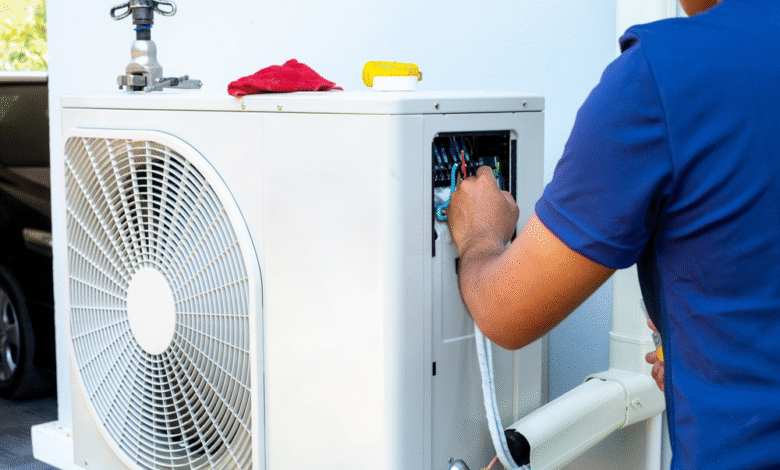
Your outdoor condenser must dump heat outdoors. If its coils are dirty or blocked by debris, the AC can’t shed heat – so inside air stays warm. Many cases of split AC not cooling but fan running trace back to a clogged outdoor unit. For example, leaves, grass clippings or dust packed in the fins will choke off cooling.
Check the outdoor unit (shown above): clear at least 2 feet of space all around, cut back weeds, and gently hose the fins (power off first). Bent fins can also trap heat, so straighten them with a fin comb if needed. A clean, well-ventilated condenser is one of the easiest fixes.
Refrigerant Issues
Refrigerant (Freon) is the lifeblood of cooling. If refrigerant levels are low, the system can run the fan but blow only lukewarm or warm air. Leaks in coils or lines cause pressure to drop, and the evaporator coil may ice up. Both central air not cooling house and split systems suffer this. Watch for ice on indoor coils or hissing noises – classic low-gas symptoms.
If you see frost or ice, turn off the cool cycle and set the fan to ON (as a thaw aid). However, handling refrigerant requires a licensed technician. They will find the leak, repair it, and recharge the system. Never just “top off” refrigerant yourself; it will leak out again without fixing the source.
Compressor & Electrical Problems
If the compressor (the big pump in the outdoor unit) fails, the AC can’t cool – even though its fan may still run. A failing split AC compressor not working but fan is running is often due to a bad start capacitor or a tripped overload. You may hear the outdoor unit hum but see no spinning compressor or feel only warm air. Unfortunately, compressor and capacitor issues aren’t DIY fixes. A technician will test voltages and replace the failed component.
Also check electrical supplies: reset breakers or fuses for the AC. A tripped breaker or blown fuse can kill the compressor’s power. Confirm all disconnects are ON. In short, if you hear unusual buzzing or find one part running and another dead, call for profe\ssional help.
Central AC vs Split AC Differences
Though many causes overlap, central AC systems have extra factors: leaky ducts, clogged condensate drains, and large coil freezes. For instance, most central units have a drain pan and float switch – if the drain is clogged, the float can shut off cooling entirely. Also, ducts running through uncooled spaces can lose up to 20–30% of cold air.
In contrast, split AC units (including mini-splits) isolate indoor/outdoor hardware. A common split-specific issue is a dead outdoor fan/compressor: even if the indoor fan runs, a split AC not cooling often means the outdoor unit has no power or is malfunctioning. Always check the outdoor disconnect. Split systems are more sensitive to refrigerant charge and air filter cleanliness.
In either case, the cure is similar: start with filters and airflow, then check coils and refrigerant. Only after eliminating those should you suspect wiring or compressor.
Resetting the AC & the 3-Minute Rule
Sometimes the fix is as simple as a reset. If the AC suddenly stopped cooling, power it down at the breaker for 5–10 minutes. This gives the system a chance to reset its electronics and defrost any frost. When you turn it back on, don’t fire it up immediately if it has a compressor: wait a few minutes.
This is the famous 3-minute rule for air conditioners. It’s a guideline to protect the compressor: after shutting off, wait about 3 minutes before turning it back on. This pause lets the refrigerant pressure stabilize. Adhering to this rule can prevent stress on the system and extend its life.
If a simple reset (breaker off, wait, then on) doesn’t restore cool air, move on to the troubleshooting steps above.
Preventive Maintenance Tips
Prevention is better than cure. Regular maintenance can keep your AC from needing an emergency fix. Change or clean filters every 1–3 months (more often if you have pets) to keep airflow strong. Scheduling annual tune-ups ensures refrigerant levels and electrical components are checked by a pro.
Other tips: keep the outdoor unit clean by trimming vegetation and hosing off coils twice a year. Seal and insulate ducts to prevent losses in central systems. And consider a smart thermostat – it can avoid frequent on/off cycling and ensures proper settings. Taking these steps now means less chance your AC stops cooling when you need it most.
Conclusion
An AC not cooling but fan is running is almost always fixable with some quick checks. Start at the thermostat and filters, then inspect coils and refrigerant. The biggest offenders are usually a wrong setting or a dirty filter. In fact, HVAC pros say most no-cool calls stem from restricted airflow or low refrigerant. By following the tips above, you should restore cold air to your home. If not, calling a licensed technician will prevent bigger problems and get your AC back to full chill.
FAQs
Why is my AC fan running but no cold air?
This symptom usually means the blower works but the cooling cycle isn’t engaging. Common reasons include the thermostat set to “fan” (so compressor never starts), a dirty filter or condenser, frozen indoor coils, or low refrigerant. Check those items first. If the outdoor compressor won’t run (humming or clicking), the issue could be a bad capacitor or refrigerant leak.
What is the 3-minute rule for air conditioners?
The 3-minute rule is a simple guideline: always wait about 3 minutes after shutting off the AC before turning it back on. This gives refrigerant pressure time to equalize and protects the compressor from short-cycling. In practice, if you power off the unit (or it stops), let it sit for a few minutes before restarting. This small delay can help avoid damage and prolong your AC’s life.
How do I reset an AC that’s not blowing cold air?
To reset, switch the thermostat to Off, then turn off the breaker (or disconnect) for 5–10 minutes. After waiting, turn the power back on and set the thermostat to Cool. Often this fixes glitches caused by power surges or lockouts. If the AC still blows warm air, proceed with the troubleshooting steps (clean filters, check coils, etc.) or call a technician.
Should I turn off the AC if it’s not cooling?
Yes. Running an AC that’s struggling to cool can cause damage. For example, an iced-up coil or a failing compressor will suffer further wear if you keep running it. HVAC pros recommend turning the unit off if you notice it’s not cooling while the fan runs. At least put it on Fan-Only mode to keep air circulating. Fix the underlying issue before turning cooling back on to avoid overload or refrigerant loss.
Why is my split AC compressor not working but fan is running?
This usually points to an electrical or compressor fault. If the indoor blower runs but the outdoor compressor doesn’t start, the issue may be a bad start capacitor or a failed compressor unit. It can also happen if refrigerant pressure is too low (a leak), causing the compressor’s safety switch to stay off. In either case, it’s best handled by a pro, who can test the capacitor and electricals and repair or replace the compressor as needed.