How to Remove a Stripped Screw: 2026 Mega Guide

Have you ever wanted how to remove a stripped screw? But the rusted screw was so stubborn that it moved only a little or not at all? This is what people call a stripped screw. Don’t be upset; it’s a frequent problem, but I know how to overcome it. Let’s learn how to remove a stripped screw in this guide.
Why Do Screws Get Stripped?
The most essential part of any procedure is its purpose. For better comprehension, note the following. If a screw fails to move, it’s called stripped. On the other hand, one may search the entire house, but the screw might not be found anywhere.
Don’t worry, that’s the example of a stripped screw. When you insert the wrong-size screwdriver or use one that is heavily rusted, the shank of the screw wears out, and the threads fall out. The screw’s threads might also be worn, so it won’t grab the screwdriver, making the screw hard to remove.
Tools You Will Need
Before proceeding with your work, collect the required tools. The equipment to be used here is readily available and very simple:
- Screwdrivers: Both a flat headed (standard) screwdriver and a cross headed screwdriver are the two types you should acquire. You can use the best size of the same to activate. A screwdriver with a handle is very helpful for gaining more control over the project.
- Locking Pliers (Vise-Grips): One of the pliers that can hold the screw very tightly should be the locking pliers. They can be small pliers or needle nose pliers, and they can also help in capturing the screw.
- Rubber Band or Steel Wool: It is advisable to use a thick rubber band or steel wool to hold the screw securely.
- Hammer: Besides, there is a small hammer that can be used to strike the screwdriver to tighten the screw further.
- Penetrating Oil: Use a tiny amount of oil or WD-40 to help loosen the screw if it is heavily rusted or very tight.
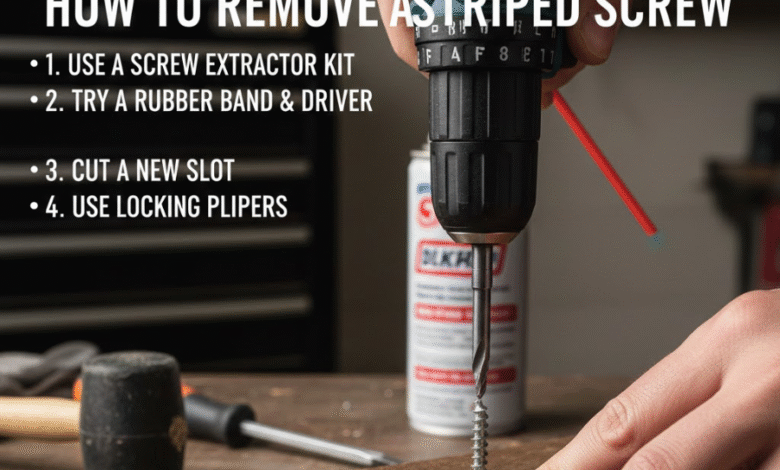
- Screw Extractor Kit (optional): If not, use a special manual tool to extract difficult screws that are stuck or on rough surfaces.
- Drill and Bits (optional): As a last-ditch effort, drill a small hole so you can apply the extractor more easily.
- Dremel or Hacksaw (optional): In addition, I use the former to cut a new slot in the screw head if needed.
- Masking Tape (for wood): Stick the tape around the screw to shield the timber from being damaged by the cause.
Remember to be really careful with these tools. Even if something breaks or any power tool or the hammer is used, do not be without safety glasses.
Steps to Take Out a Stripped Screw
1. Try Using a Screwdriver
Start simple. Disassemble the screw, making sure not to lose it and damage the threads.
- Pick the Right Size: Use a screwdriver that fits well. For the loose screws, a flat head will be best. Push slowly and turn tightly.
- Use Hands, Not Power: Do it by hand. A power drill makes it worse when it slips out of your hand.
- Tap It In: Position the screwdriver on the screw. Use the end of a small hammer to knock it gently. Then turn it counterclockwise.
- Older Tools Help: Sometimes the old screwdriver is better. It is flatter because it holds on more.
- Press Down Hard: This helps to keep the position by pushing and at the same time turning. The press-down method stays.
It is also possible that the above method is not successful, in which case you will need to resort to the one that follows immediately.
2. Use a Rubber Band or Steel Wool
If the screwdriver is off target, fold a piece of paper into fourths and stick it on the screw head as padding.
- Rubber Band Trick: Tie a rubber band overloosely the screw head. Insert the screwdriver and move it slowly back and forth.
- Steel Wool Tip: No rubber band? Use some steel wool or fine sandpaper.
Turn gradually by holding the raw brass bullet shell between your fingers and turning it with both thumbs.
3. Grab with Pliers
Also, skip this step if the screw is the #8 or less Nylon fastener and someone who works with your boat had it installed.
- Lock and Turn: Use a set of pliers that lock in place. Hold the screw tight and turn it right.
- Tight Spots: Prying-nose pliers are good in small areas. Hold on strong.
You can use this method if there is some part of the screw sticking out of the surface.
4. Drill Trick
Use your drill to grab but do not drift the fastener out.
- Use the Chuck: Unclamp a chuck of the drill. Screen through the screw head in between the two bars and tighten them.
- Reverse Slowly: Slowly switch the direction of the drill so that the screw can come out.
- Be Careful: Only do this if you have some of the screw sticking out.
5. Cut a New Slot
Create space for a flat screwdriver on the head.
- Make a Slot: Use a Dremel tool or saw to cut a slot through the screw head.
- Turn It Out: Now, if the screw is raised, just use a flat-head screwdriver to pull it up smoothly.
6. Use a Screw Extractor
This one is a special tool for getting screws free.
- Drill a Small Hole: Use a small drill bit.
- Extractor In: Insert the extractor in the hole and keep turning it anticlockwise.
- Go Slow: Keep the pressure steady.
7. Tips for Wood or Metal
The material is kind of small.
- Metal Screws: First, pound it with a hammer then oil it and lastly try the extractor method.
- Wood Screws: To protect wood, tape, a place and carefully use pliers. Bungee wraps or sandpaper can also work if you don’t have rubber bands or steel wool.
In short, how to remove a stripped screw from metal is usually, tap, oil, then extractor. And how to remove a stripped screw from wood is protect the wood with tape and use a tool or extractor. Tailor your approach to the material.
Removing Screws Without Special Tools
Don’t have fancy tools? That’s perfectly okay! Here’s how to do it:
- Use Pliers: The humble pliers can easily catch any loose or lost screws. Act. Press. Turn. They work!
- Rubber Band/Steel Wool: Keep a rubber band and steel wool with you at all times. These items come to the rescue in most instances.
- Hand-Powered Screwdriver: Give it a shot. Since your grip is likely pretty good, maybe it will do the trick.
- Cutting: Consider using a tiny file or a minor cut with a knife. This makes the screw easier to turn.
- Patience: Tap the top of the screw lightly with a hammer. In some cases, this will slightly turn.
Quick Tips
Take it slow. The fast pace of work might break the screw.
- Make sure to maintain the screwdriver perpendicular to the screw.
- Making Old Stripped Screws go to the Trash and replacing them with a new one is the solution.
- Stripping prevention: Use the correct size bit, press tight, and go slow.
It’s solving these problems without a drill. The question of how to remove small stripped screws without a drill or how to remove a stripped screw without a screw extractor gets easier. Persevere a bit and you will go round the obstacle!
How to Remove a Stripped Screw from Wood
Set your wooden surface by using the bands or similar tricks by the flathead screwdriver. Ensure that you are gentle and careful when working with wood. When you are treating a surface like this release the pressure and let patience be the way.
When All Else Fails
In case none of the above approaches yield any result, you might as well go for the last option, which is to drill the screw out. Let the level of adult assistance be high during this exercise. Just to be safe – do not destroy the surface, especially wood – only drill if there is no other solution left.
Key Tips and Safety
Always check if a driver is of the same size as a screw. Wearing safety glasses should be the mandatory part of the procedure any time, you are using a drill or a screw extractor. The lesson is all about being patient, so don’t sack the children if their speed and preciseness would lead to damage to the surfaces.
Conclusion
Finally, there are ample ways to get rid of stripped screws, as listed above which enable you to remove the fastener of any size. The actions that most suit your application are whether the screw is small or big, in wood or metal. Take all these instructions in, and you’ll be successful in dealing with stripped screws.